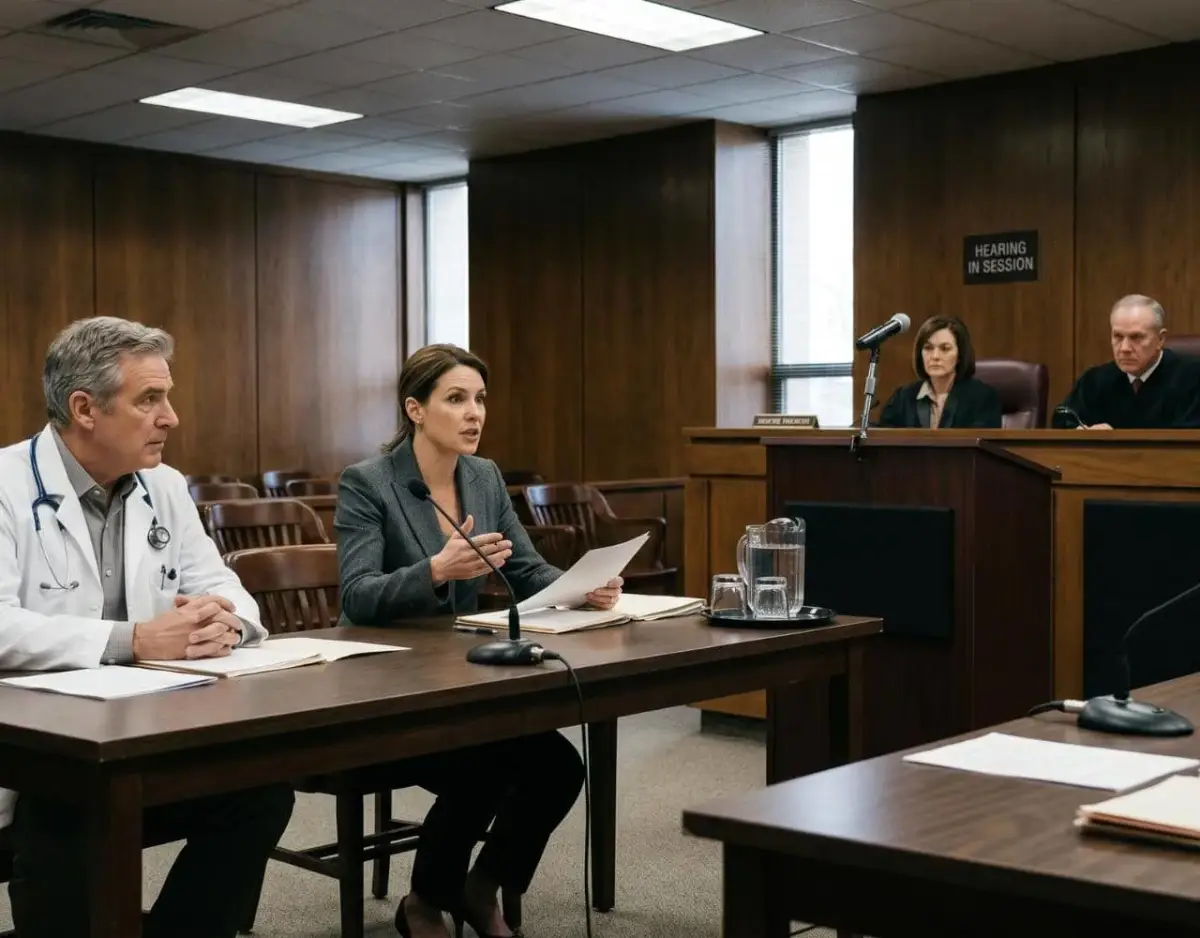
You spent years studying, passing exams, and investing in your training to earn your professional license. After a complaint, you may need a professional license defense attorney. When your career is on the line, you should not face the process alone.
Our legal team represents licensed professionals in LLR matters. If you have received notice of an investigation or a formal complaint, the choices you make in the next few days can affect how your case proceeds. A licensed South Carolina attorney at our firm must review the facts of your case before you rely on the general information on this page.
Touma Law Group has an office in Columbia. Contact our Columbia criminal defense lawyers today to talk about your situation before you speak with any investigator.
Contact: Touma Law Group offers free consultations for all criminal charges.
Understanding the South Carolina LLR Disciplinary Process
The South Carolina Department of Labor, Licensing and Regulation (LLR) supports dozens of professional and occupational licensing boards across the state, from nursing and medicine to real estate and accountancy (LLR boards list). Each board applies its own licensing act together with the general provisions in S.C. Code Ann. Title 40, Chapter 1.
When someone files a complaint, the administrative process can begin. Understanding how it works helps you respond on time and plan your defense.
The Initial Complaint Review and Investigation
If the director has reason to believe a licensee has violated the law or has become unfit to practice, or if a person files a written complaint, the director may initiate an investigation (S.C. Code Ann. § 40-1-80(A)). LLR’s Office of Investigations and Enforcement investigates complaints involving a possible violation of a professional or occupational practice act.
Within thirty days after an investigation is initiated, the director must send the licensee a letter saying that a complaint has been filed and an investigation has begun, and asking the licensee to respond in writing within fourteen days. The director must also send a copy of the complaint, the name of the complainant (unless the board believes good cause exists to withhold it), and all materials filed with the complaint (S.C. Code Ann. § 40-1-80(B)). The director may subpoena witnesses and require the production of relevant records (§ 40-1-80(C)).
Because the written response has a stated time frame, do not let the letter sit. Many license holders believe they can simply explain the situation and make it go away. What you put in writing or say to an investigator can become part of the record in a disciplinary proceeding, so speak with an attorney before you respond.
Formal Complaints and Disciplinary Hearings
The results of an investigation must be presented to the board. If it appears that a violation has occurred or that a licensee has become unfit to practice, the board, in accordance with the Administrative Procedures Act, may take disciplinary action. No disciplinary action may be taken unless the matter is presented to and voted on by the board, and the board may designate a hearing officer or hearing panel to conduct hearings (S.C. Code Ann. § 40-1-90(B)). Before a formal complaint is issued, the director must review the case to confirm that the department mailed the complaint to the licensee and gave the licensee an opportunity to respond (§ 40-1-90(A)).
A hearing resembles a trial in some ways. The state presents evidence of the alleged violations, and your attorney can present counterarguments, question witnesses, and offer mitigating evidence.

Possible Consequences of Licensing Board Sanctions
A board decision can affect more than your current job. It can change your long-term career prospects and become part of the public record.
Grounds for Discipline
In addition to the grounds in each board’s own chapter, a board may cancel, fine, suspend, revoke, or restrict a license on grounds listed in S.C. Code Ann. § 40-1-110. Those grounds include being convicted of or pleading guilty or nolo contendere to a felony or a crime involving drugs or moral turpitude, practicing while under the influence of alcohol or drugs, and committing a dishonorable, unethical, or unprofessional act that is likely to deceive, defraud, or harm the public. Each incident is considered a separate violation.
License Suspension and Revocation
Under S.C. Code Ann. § 40-1-120, once a board determines that grounds for discipline exist, it may issue a public reprimand, impose a fine not to exceed five hundred dollars unless otherwise specified by statute or board regulation, place the licensee on probation, restrict or suspend the license for a definite or indefinite time, or permanently revoke the license. A suspension means you must stop practicing for the period the board sets. A revocation permanently ends the license.
Public Reprimand, Practice Limitations, and Costs
A final order of a board disciplining a licensee is public information (§ 40-1-120(C)). A board may also place conditions on a license, such as additional education or a supervisory period (§ 40-1-120(A)(3)). A licensee found in violation may also be directed to pay the reasonable costs of the investigation and prosecution (S.C. Code Ann. § 40-1-170). If the board decides that discipline is not appropriate, it may issue a nondisciplinary letter of caution (§ 40-1-120(D)).
Discipline can have effects outside the board as well. For example, federal law allows exclusion from federal health care programs of an individual whose health care license was revoked or suspended by a State licensing authority for reasons bearing on professional competence, professional performance, or financial integrity (42 U.S.C. § 1320a-7(b)(4)). Employers and insurers may have their own rules, so ask about your situation.
Appeals
A person aggrieved by a final action of a board may appeal the decision to the Administrative Law Court in accordance with the Administrative Procedures Act and the rules of the Administrative Law Court, and serving a petition for review does not stay the board’s decision (S.C. Code Ann. § 40-1-160). Judicial review of a final agency decision in a contested case is also addressed in S.C. Code Ann. § 1-23-380. The Administrative Law Court’s rules require the notice of appeal from a final agency decision to be filed, and a copy served on each party and the agency, within thirty days of receipt of the decision (SCALC Rule 33(A)). Appeal deadlines are short, so check the date you received your decision and ask an attorney about it as soon as you receive it.

Who We Represent: Professional Licensing Across Industries
Our firm represents individuals facing licensing issues in South Carolina. Different professions are governed by different boards and rules, so the approach depends on the rules of your board.
Medical and Healthcare Professionals
Healthcare professionals can face investigations after a patient complaint, a medication error allegation, or a malpractice claim. We represent clients before licensing boards that include:
- Nursing: Matters involving RNs, LPNs, and Nurse Practitioners, such as allegations of substance use, charting errors, or negligence.
- Medical Examiners: Matters involving physicians and other licensees of that board.
- Chiropractic Examiners: Complaints about treatment practices.
- Psychology: Complaints about boundaries or ethics.
- Long Term Health Care Administrators: Facility compliance issues that involve an individual administrator.
You can see the full list of boards on LLR’s website.
Related: Learn more about our Columbia federal criminal defense lawyers
Law Enforcement Certification
- Criminal Justice Academy and Training Council: Law enforcement certification is handled by the South Carolina Criminal Justice Academy and the Law Enforcement Training Council rather than an LLR board. By statute, “misconduct” includes a conviction or plea to a felony or crime of moral turpitude, the repeated use of excessive force, and wilfully making false or misleading statements to a court or an agency (S.C. Code Ann. § 23-23-150).
- Right to a hearing: An officer against whom an allegation of misconduct has been received must be notified of the right to a contested case hearing, and must request it within the time the statute allows (§ 23-23-150(C) and (D)).
- Pending allegations: An officer with a pending misconduct allegation filed by an agency may not work as a law enforcement officer until the council issues a final decision or an appellate court rules (§ 23-23-150(G)).
Real Estate and Financial Services
In the real estate and financial sectors, allegations of mismanagement or ethical breaches can lead to board action. We represent clients before boards that include:
- Real Estate Commission and Real Estate Appraisers Board: Agents, brokers, and appraisers facing complaints about misrepresentation or other alleged violations of the practice act.
- Accountancy: CPAs facing complaints about alleged tax or auditing errors or failure to maintain professional standards.
Criminal Charges and License Denials
Professional licensing issues often overlap with criminal defense or with the initial application process.
The Impact of a Criminal Charge on Your License
If you are facing a criminal charge, such as a DUI, domestic violence charge, or drug offense, the impact can reach your license. A conviction or plea to a felony or a crime involving drugs or moral turpitude is one of the grounds a board may rely on (S.C. Code Ann. § 40-1-110(1)(h)). Some boards also have reporting requirements, so check the practice act and rules for your license.
Our legal team includes criminal defense lawyers who can look at how a criminal case may affect your professional standing. We can work on the criminal case with that in mind.
Initial Licensing Process and Application Denials
Sometimes the problem begins before you receive a license. A board may deny an applicant who committed an act that would be grounds for discipline, and must deny an applicant who has not shown the required qualifications (S.C. Code Ann. § 40-1-130).
A board may not deny a license solely because of a prior criminal conviction unless the conviction directly relates to the duties, responsibilities, or fitness of the occupation or profession. It also may not use vague terms such as “moral turpitude” or “good character” or rely on charges that were dismissed, nol prossed, or ended in a not guilty finding to deny a license. If a conviction may be the basis for a denial, the applicant must be given an opportunity to appear at an application hearing, and a denial based on criminal history must be issued in a written final order that is appealable to the Administrative Law Court (S.C. Code Ann. § 40-1-140).
Related: See our Columbia DUI lawyers
How Our Legal Representation Works
Licensing matters are administrative proceedings governed by Title 40, the board’s own licensing act, and the Administrative Procedures Act. We review the complaint, the deadlines, and the evidence, and we explain the choices in front of you at each stage.
We understand the emotional weight a formal complaint can carry for you and your family. Your career is tied to your identity and finances. Handing the case to an attorney lets you stay focused on your daily life while the legal work is handled.
Contact Us About Your License
A complaint is not a final decision. The earlier you speak with an attorney, the more time there is to review the deadlines that apply to you, but no lawyer can promise a particular result.
Contact Our Columbia Office Today
If you have been contacted by an LLR investigator, received a notice of a formal complaint, or are facing a licensing board hearing, call our Columbia office at (803) 879-4499 to schedule a confidential consultation.
Frequently Asked Questions
An investigation is a fact-finding step, not a final decision. Whether you may keep practicing depends on your board and on the facts. However, if an agency finds that public health, safety, or welfare imperatively requires emergency action, and says so in its order, it may order a summary suspension of a license while proceedings for revocation or other action are pending (S.C. Code Ann. § 1-23-370(c)).
The statute requires the director to send the licensee notice of the complaint within thirty days after an investigation is initiated, with a request for a written response within fourteen days (S.C. Code Ann. § 40-1-80(B)). We did not find an official source that sets the total length of an investigation, and it depends on the case. An attorney can ask the department about the status of your matter.
Read any letter carefully and note the response date. You may want to consult an attorney before you answer questions or provide a written statement, because what you say can become part of the record. Call Touma Law Group for a free consultation.