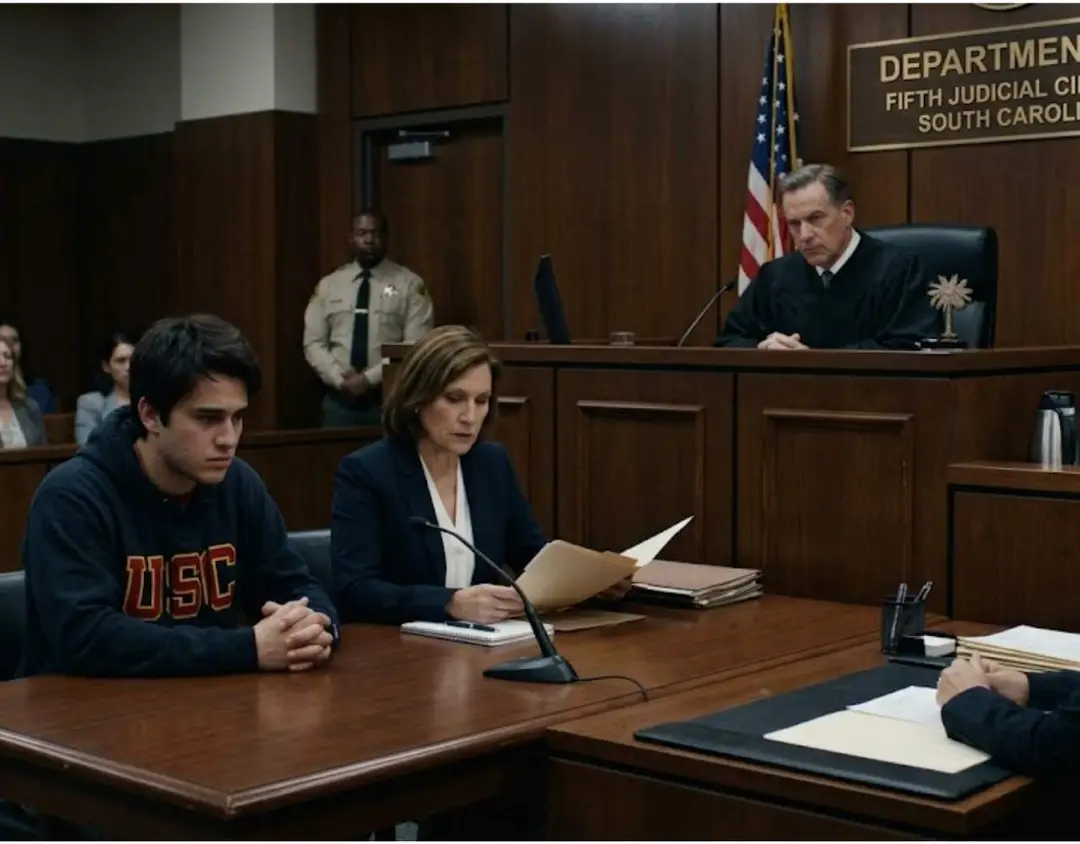
A criminal charge does not stay in one lane when you are a University of South Carolina student. A single arrest in Five Points or on the Columbia campus can trigger two separate processes at the same time: a criminal case in South Carolina’s court system and a disciplinary case through the USC Office of Student Conduct and Academic Integrity. Each one can affect your record, your housing, and your future on its own.
We are Touma Law Group, a South Carolina criminal defense firm with attorneys who are military veterans and former prosecutors. We handle everything from underage drinking charges to felony drug cases for USC students and their families across Columbia. If you or your student has been charged with a crime, contact us for a free consultation before you talk to anyone else about what happened.
What Happens if a USC Student Gets Charged with a Crime in Columbia

A criminal charge against a USC student moves through the Richland County or Columbia municipal court system separately from any USC conduct hearing. The Office of Student Conduct and Academic Integrity does not have to wait for the criminal case to finish, and a not guilty finding in court does not guarantee the university will clear the student.
Common charges for USC students include underage drinking, minor in possession of alcohol, simple possession of drugs, fake ID or false identification, public disorderly conduct, and assault and battery. A Columbia College Student Defense Lawyer can represent a student in both the court case and, as an advisor, in the university process.
Common Criminal Charges USC Students Face in Columbia
Columbia’s proximity to USC’s campus, Five Points, and the Vista means law enforcement is active around student housing, bars, and residence halls, especially on weekends and game days. The charges we see most often for USC students include the following.
- Underage drinking and minor in possession of alcohol. Being caught with alcohol or appearing intoxicated when you are under 21.
- Fake ID or false identification. Using a fake ID, or someone else’s ID, to buy alcohol or get into a bar.
- Simple possession of drugs. Marijuana, prescription drugs used without a valid prescription, or other controlled substances found on a student or in a dorm room or car.
- Public disorderly conduct and public intoxication. Being grossly intoxicated in public or behaving in a boisterous or disruptive way, often near campus or in Five Points.
- Assault and battery. Physical altercations at parties, tailgates, or bars.
- DUI. Driving under the influence, including refusing or taking a breathalyzer test after a traffic stop.
Some of these charges start as a report from campus police or a residence hall staff member, while others begin with a traffic stop or a call to local law enforcement. Either way, the same incident can lead to a criminal charge and a separate report to the university.
Possible Penalties and Consequences
Penalties depend on the specific charge, the facts of the case, and whether the student has any prior record. Here is a general outline for some of the more common charges, current as of South Carolina law. Treat these as a starting point, not a prediction for any individual case.
| Charge | Statute | Classification | Fine | Jail time | Diversion or other notes |
|---|---|---|---|---|---|
| Minor in possession of alcohol | SC Code § 63-19-2440 | Misdemeanor | $100 to $200 | Up to 30 days | Requires alcohol prevention education program; possession is prima facie evidence, and officers can request an alcohol screening test |
| Public disorderly conduct / public intoxication | SC Code § 16-17-530 | Misdemeanor | Up to $100 | Up to 30 days | Conditional discharge may be available for a first offense, with circuit solicitor approval |
| Simple possession of drugs (28 grams or less of marijuana, first offense) | SC Code § 44-53-370(d)(4) | Misdemeanor | $100 to $200 | Up to 30 days | May require a drug abuse program; eligible defendants may qualify for pretrial intervention; other drugs and larger quantities carry felony-level penalties |
| Fake ID or false identification to buy alcohol | SC alcohol beverage control laws | Misdemeanor | Varies | Up to 30 days | Penalty depends on the specific violation |
Penalties can vary based on prior history, the facts of the case, and the specific statute involved.
How USC’s Office of Student Conduct and Academic Integrity Gets Involved
The conduct process at the University of South Carolina is not attempting to determine whether a student violated the law. The university is trying to determine whether a student violated the Code of Conduct, so this administrative process runs on its own timeline and is not directly affected by outcomes in the criminal justice system.
Here is how the process typically unfolds.
- Administrative conference. An informal meeting with a conduct administrator to review the incident. Most students agree with the outcome here.
- Carolina Judicial Council hearing. A more formal hearing before a panel of students, faculty, and staff, available to a student who disagrees with the administrative conference outcome.
- Advisor support. Students may bring one advisor, such as a parent, friend, or attorney, to either step. Students often choose an attorney when a criminal case is also pending. The advisor’s role is limited to supporting the student rather than speaking for them.
- Interim actions. In more serious situations, the university can separate a student from campus, including housing and class attendance, before any hearing takes place if there is a reasonable belief the student poses a threat to health, safety, or property.
- Downstream effects. For students in competitive programs, such as the College of Pharmacy or College of Medicine, a conduct finding or a criminal record can surface later during background checks tied to clinical rotations, licensing applications, or admissions review.
Defense Consideration

There is no single playbook for every case, since the right approach depends on the evidence, the specific charge, and the court handling it. Some general considerations that come up in these cases include the following.
- Whether the stop, search, or arrest followed proper procedure.
- Whether a diversionary option, such as conditional discharge or pretrial intervention, is available for a first offense.
- Whether the alleged conduct actually meets the legal definition of the charge, such as whether a location truly counts as a public place for a disorderly conduct charge.
- How the criminal case and the university conduct case interact, since statements made in one process can affect the other.
An attorney can review the police report, any campus incident report, and the specific facts of the arrest to explain the realistic options. A charge is not a conviction, and having legal guidance early can affect how both the court case and the conduct case unfold.
What to Do After an Arrest or Charge
- Stay quiet about the details. Speak with a lawyer before making statements to police, campus security, or a residence hall staff member about what happened.
- Write down what you remember. Include names, times, and locations while the details are fresh.
- Save any notice from the university. Keep copies of every email or letter from the Office of Student Conduct and Academic Integrity, including deadlines to respond.
- Do not skip a court date or a conduct meeting. Missing either one can lead to additional consequences on top of the original charge.
- Talk to a criminal defense lawyer before your first meeting. An attorney can help you prepare and can attend as your advisor.
Columbia Court and Campus Context
USC’s Columbia campus sits within Richland County, and most student charges are handled in Richland County general sessions or magistrate court, or in Columbia municipal court depending on where the incident happened. The university publishes an annual security report with campus crime statistics under federal law, and local crime mapping shows law enforcement activity concentrated around Five Points, the Vista, and areas near student housing and residence halls, especially during football season and other high-traffic weekends.
Because a report can come from University of South Carolina police, Columbia police, or Richland County deputies depending on where the incident took place, it helps to have a lawyer who is familiar with both the local courts and the university’s disciplinary process.
How Touma Law Group Helps USC Students

We defend USC students facing charges that range from underage drinking and drug possession to assault and battery and DUI. Our attorneys include military veterans and former prosecutors, which gives us insight into how the state builds these cases and how to challenge them.
We can represent a student in Richland County or Columbia municipal court and serve as an advisor during meetings and hearings with the Office of Student Conduct and Academic Integrity. Our goal is to protect a student’s record and their path forward, whether that means graduation, a professional license, or a career that depends on a clean background check.
A criminal charge as a USC student can feel like it is happening on two fronts at once, in court and on campus, and both can shape your future. Schedule a free consultation with Touma Law Group at 803-879-4499 so our team can walk through your charge, your options, and what to expect from the Office of Student Conduct and Academic Integrity process.
Frequently Asked Questions
Does USC find out about an off-campus arrest? Local law enforcement agencies routinely share arrest information with universities, and the Office of Student Conduct and Academic Integrity can open a case based on an off-campus incident, especially one involving alcohol, drugs, or violence.
Can I be punished by USC even if my criminal case is dismissed? Yes. The university conduct process uses its own standard of proof and is not required to follow the outcome of a criminal case.
Will a minor in possession charge show up on a background check? A conviction for minor in possession of alcohol is a misdemeanor and can appear on a standard criminal background check unless the charge is dismissed, reduced, or expunged.
Can I bring a lawyer to my meeting with the Office of Student Conduct and Academic Integrity? Yes. Students may bring one advisor, including an attorney, to administrative conferences and Carolina Judicial Council hearings, though the advisor’s role is limited to supporting the student rather than speaking on their behalf.
Is pretrial intervention available for a first drug charge? Pretrial intervention may be available for eligible first-time offenders facing certain drug possession charges, but eligibility depends on the specific charge and the solicitor’s approval, so a lawyer should review the case first.