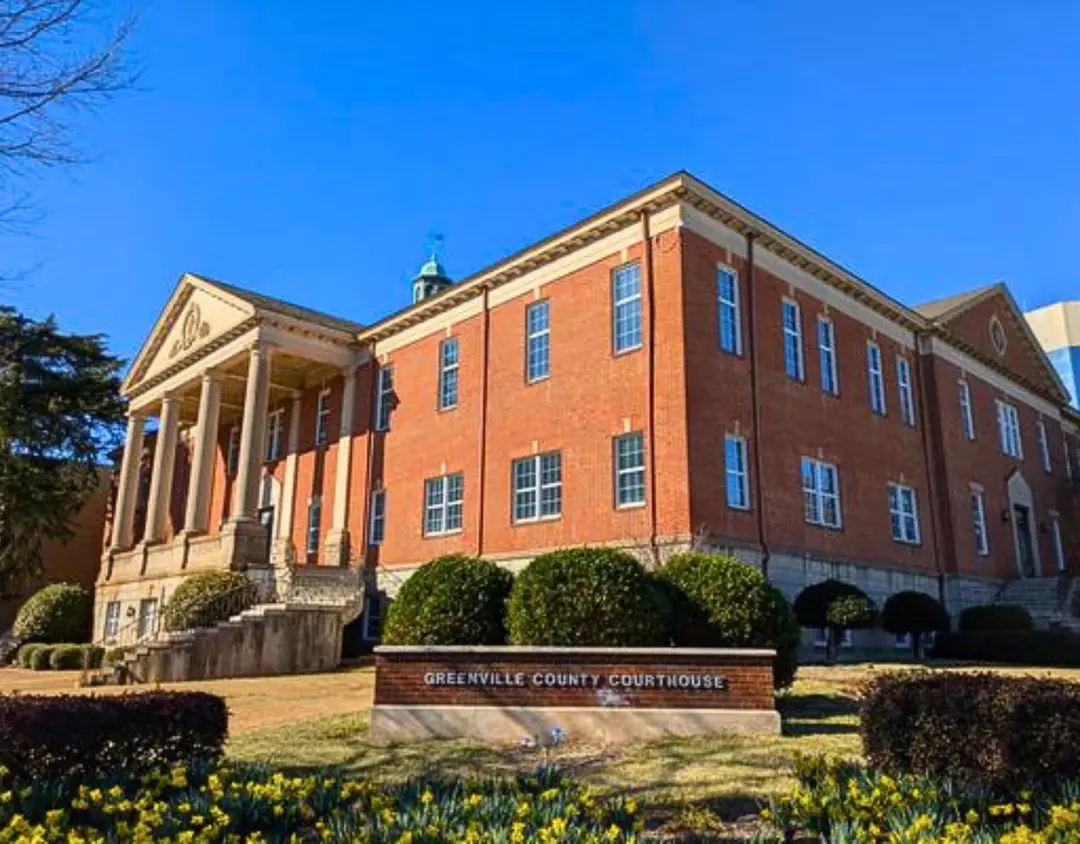
An arrest in Greenville County moves fast. Within hours of booking, the person in custody will usually stand before a bond court judge who decides whether they go home or stay in jail while the case moves forward. That decision shapes everything that follows, from whether someone keeps their job to whether they can help prepare their own defense.
Below, we walk through how the Greenville County bond court works, what the judge looks at, and how our experienced Greenville criminal defense attorneys guide you through the steps to take right after an arrest.
What is Greenville County Bond Court?
Greenville County bond court is the first hearing after an arrest, where a magistrate judge sets the conditions and amount required for a person to be released from custody while their criminal case is pending.
Bond hearings happen at the Law Enforcement Center at 4 McGee St in Greenville, and most defendants are seen within about 24 hours of arrest, though delays can happen for medical holds, intoxication, or serious charges that require a circuit judge instead of a magistrate.
What Happens at a Greenville County Bond Hearing
At the hearing, the magistrate reviews the charge, the arrest report, and the person’s background, then decides one of three things: release on personal recognizance, release on a monetary bond with conditions, or, in limited cases, no bond at all. The rules of evidence do not apply here, so the process moves quickly and informally compared to a trial.
Most people booked into the Greenville County Detention Center appear before the judge without an attorney present, since bond court happens so soon after arrest. That is one reason it helps to have a criminal defense attorney reach out to the court and the detention center as early as possible, even before the hearing takes place.
Related: Learn more about what happens at a bond hearing.
Factors the Judge Considers
South Carolina law directs bond judges to weigh several things when setting conditions of release. These generally include:
- The nature and seriousness of the charge, including whether it involves violence, drug trafficking, or weapons.
- The accused’s criminal history and any record of failing to appear in court.
- Ties to the community, such as employment, family, and how long the person has lived in the area.
- Risk of flight, including any out-of-state or international connections.
- Whether release would create an unreasonable danger to public safety or a specific person.
A judge weighing these factors is not making a judgment about guilt. Bond court exists to answer one question: Will this person show up for court and stay out of trouble while the case is pending?
Related: Do you know what a bail bond is in South Carolina?
Types of Bond Available in Greenville County
South Carolina courts can order release under a few different arrangements:
- Personal recognizance (PR) bond. The person is released on their word to appear, with no money required up front.
- Cash or surety bond. The court sets a dollar amount, and the person or a bail bondsman posts the cash bond with the clerk of court.
- Cash percentage in lieu of bond. In some cases, the court allows a deposit of up to 10 percent of the full bond amount instead of the full sum.
- Property bond. A property owner in Greenville County can pledge real estate as collateral instead of cash, using the Application for Pledge of Real Estate for Surety Bond, along with a certificate of value and a title search. Mobile homes do not qualify, and the property generally needs enough equity to cover the bond.
Judges can also add conditions of release, such as no-contact orders, travel restrictions, drug testing, or a mental health assessment, depending on the charge.
What to Do After an Arrest, Before Bond Court
- Contact a criminal defense attorney as soon as possible, even before the hearing.
- Give your attorney accurate information about your job, family ties, and any prior record so they can speak to those factors at the hearing.
- Avoid discussing the details of the arrest with anyone other than your attorney.
- Ask a family member to gather proof of community ties, like a pay stub or lease, in case it helps at the hearing or a later bond reduction motion.
Contact: Touma Law Group offers free consultations and case reviews!
Posting Bond and Getting Released
Once bond is set, the amount is paid to the clerk of court, either directly or through licensed bail bondsmen. The clerk issues a release letter, which goes to the Greenville County Detention Center to begin the release process. The detention center aims to release people within a few hours of receiving judicial authorization, though timing can vary based on how busy the facility is.
If bail bond conditions are violated, such as missing a court date or contacting a person covered by a no-contact order, the court can revoke bond and issue a bench warrant.
Did you know? Touma Law Group has extensive experience in DUI Defense.
Greenville County Court Context
For most criminal charges, Greenville County bond hearings are handled by magistrate judges at the Law Enforcement Center. For more serious charges that carry the possibility of life imprisonment or the death penalty, go to a circuit judge instead, which can take considerably longer than the typical 24-hour window. If a bond amount already set by a magistrate feels out of reach, an attorney can ask a circuit court judge to reconsider it later in the process.
Why Choose Touma Law Group to Help
Founding partner Adam Touma began his career as a public defender in Greenville County, so he has argued bond in this courthouse since well before he opened the firm and knows how these hearings tend to run.
We move quickly to reach the detention center and the court to find out when a hearing is scheduled, and we prepare to speak to the factors that matter most: community ties, employment, and the specific circumstances of the charge. If you or a loved one has a bond hearing coming up in Greenville County, don’t wait to get help. Get a free case review from Touma Law Group, available 24/7 at (864) 618-2323.
Most hearings happen within about 24 hours, though intoxication, hospitalization, or serious charges can push the timeline back.
A personal recognizance bond releases someone without any money required, while a surety bond requires a cash payment or a bail bondsman to secure release.
Yes, if the property sits in Greenville County and has enough equity, an owner can pledge it through a property bond instead of paying cash.
Yes, for certain violent offenses or when a judge finds no set of conditions would reasonably protect public safety or ensure the person appears in court.