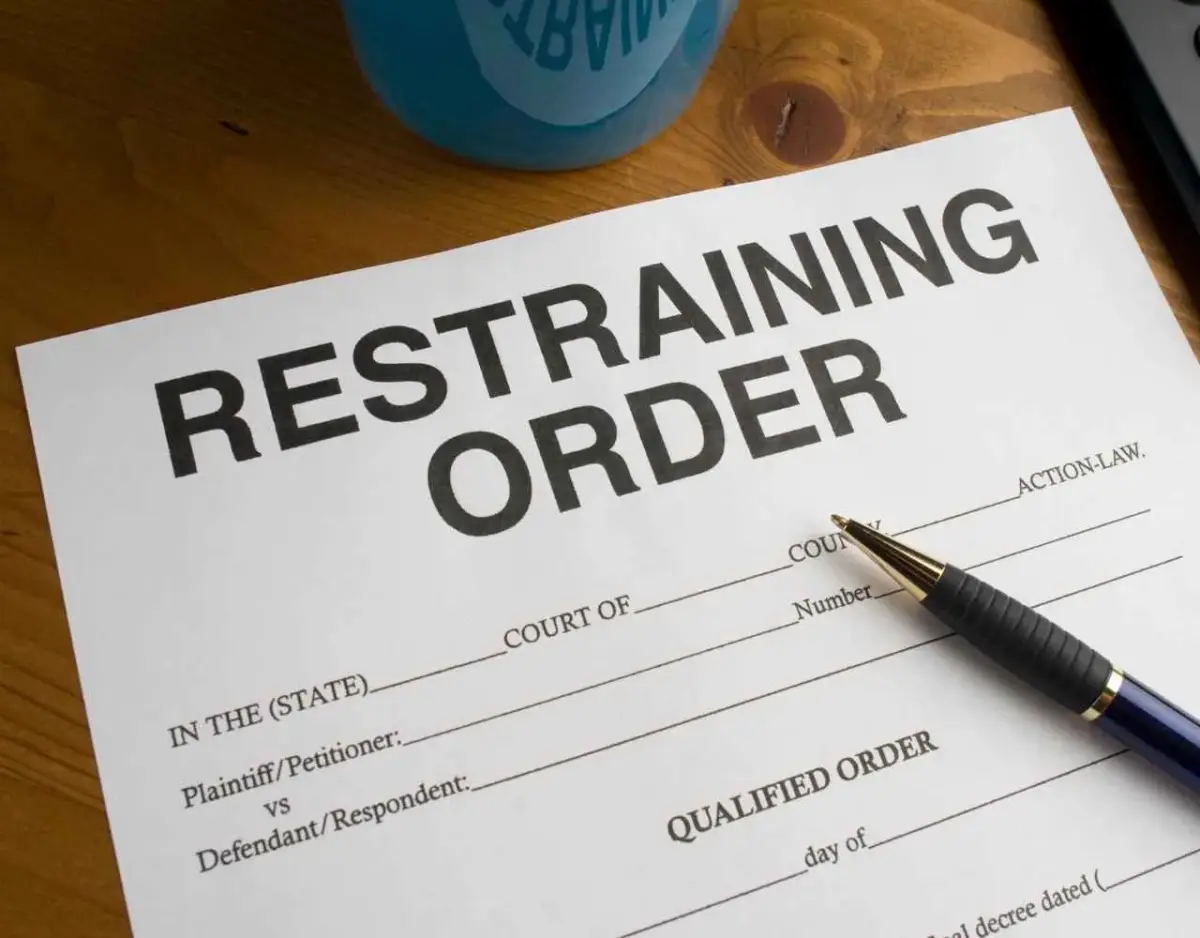
Restraining orders and orders of protection play a significant role in South Carolina domestic violence cases. They can limit where you can go and whom you can contact, which affects daily life and family relationships. If you have been served with an order, or if a bond condition bars contact, it is important to understand what it means, how it affects your rights, and what steps you can take to respond.
Violating a court order can lead to serious legal consequences, so handle the situation carefully. A domestic violence defense attorney in Columbia can help you understand the order and the criminal case. This page is general information, and a licensed South Carolina attorney at the firm must review the facts of your case before you rely on it. To discuss your case, call Touma Law at (803) 879-4499 for a free consultation.
Types of Orders in South Carolina Domestic Violence Cases
Several kinds of orders can restrict a person after a domestic violence allegation. Which one applies depends on the court that issues it and the relationship between the people involved.
Orders of Protection From the Family Court
An order of protection is issued by the family court under the Protection from Domestic Abuse Act. A household member who needs protection can petition for one, and the petition can also be made on behalf of minor household members (S.C. Code Ann. § 20-4-40). “Household member” means a spouse, a former spouse, persons who have a child in common, or a male and female who are cohabiting or formerly have cohabited (S.C. Code Ann. § 20-4-20). In Doe v. State, Opinion No. 27728 (S.C. Nov. 17, 2017), the South Carolina Supreme Court declared that definition unconstitutional as applied to an unmarried same-sex couple who lived together, and held that the family court may not use it to keep people in similar relationships from seeking an order of protection. The Court did not rewrite the statute, and the Code still reads “a male and female,” so whether a particular relationship is covered in a criminal case is a question for an attorney.
An order can temporarily enjoin the respondent from abusing, threatening to abuse, or molesting the petitioner, from communicating or attempting to communicate with the petitioner, and from entering the petitioner’s residence, workplace, school, or other location the court names (S.C. Code Ann. § 20-4-60(A)).
Emergency Hearings and Magistrate Orders
Within twenty-four hours after service of a petition, the family court may, for good cause shown, hold an emergency hearing and issue an order of protection if the petitioner proves the allegation of abuse by a preponderance of the evidence (S.C. Code Ann. § 20-4-50(a)). When the family court is not in session, the petition can be filed with a magistrate, who can issue an order granting only the relief of temporarily enjoining the respondent from abusing, threatening to abuse, or molesting the petitioner (S.C. Code Ann. § 20-4-30(A)).
Added Relief After a Family Court Hearing
After a hearing, the family court can add other terms to an order of protection. These include temporary custody and visitation for minor children, temporary financial support, temporary possession of the residence to the petitioner in some situations, restrictions on disposing of jointly owned property, temporary possession of personal property including pets, and costs and attorney’s fees (S.C. Code Ann. § 20-4-60(C)). For the respondent, these terms can significantly change family arrangements and daily life.
Bond Conditions and No-Contact Orders
In the criminal case, the court that sets bond can restrict your travel, association, and place of abode (S.C. Code Ann. § 17-15-10(A)). In South Carolina’s domestic violence statutes, a “protection order” includes an order of protection, a restraining order, and a condition of bond (S.C. Code Ann. § 16-25-10). When a court considers releasing a person charged with a violent offense against a household member, and the person is subject to a valid order of protection or restraining order or has a prior conviction for violating one, the court must consider specific factors and must consider whether to issue a restraining order or order of protection (S.C. Code Ann. § 16-25-120).
Restraining Orders in Harassment and Stalking Cases
South Carolina also has a harassment and stalking article, and it refers to restraining orders issued by the family court. Harassment or stalking committed while a restraining order is in effect can be punished more severely (S.C. Code Ann. §§ 16-3-1710, 16-3-1720, and 16-3-1730).
How Orders Affect Those Charged With Domestic Violence
When an order is issued in a domestic violence case, the accused may be barred from contact with the alleged victim and from returning to a shared home. This can create immediate challenges, such as finding other housing and being limited in seeing children or other family members. Violating a protection order can lead to additional criminal charges.
A no-contact condition is common in domestic violence cases. It can bar direct or indirect communication, including calls, text messages, email, social media, and contact through third parties. Read the order or bond condition carefully, because the exact terms control what is allowed. An order can also affect employment and housing, because background checks can reveal it.
A person who has been charged with domestic violence, or who is subject to an order of protection or a harassment restraining order, also commits a separate offense by entering or remaining on the grounds or structure of a domestic violence shelter where his or her household member resides, or the shelter’s administrative offices. The offense is a misdemeanor punishable by a fine of up to $3,000, up to three years in jail, or both, and it becomes a felony if the person has a dangerous weapon (S.C. Code Ann. § 16-25-125).
The Legal Process for Orders of Protection in South Carolina
The petition must be verified and must allege abuse to a household member, stating the specific time, place, and details of the abuse and other facts and circumstances (S.C. Code Ann. § 20-4-40(b)). The clerk of court may not charge a fee for filing a petition for an order of protection from domestic abuse (S.C. Code Ann. § 20-4-40(f)). “Abuse” means physical harm, bodily injury, assault, or the threat of physical harm, and sexual criminal offenses committed against a family or household member by a family or household member (S.C. Code Ann. § 20-4-20).
Related Content: The Long-Term Effects of a Domestic Violence Conviction
If the court denies a request for the twenty-four-hour hearing, or none is requested, the petitioner may request a hearing, and the court must grant a hearing within fifteen days of the filing of the petition. The respondent must be served at least five days before the hearing, and if service is not accomplished in that time, the respondent can ask for a continuance (S.C. Code Ann. § 20-4-50(b)). The respondent has the right to be heard on the petition, and a respondent should consult an attorney about how to respond.
An order of protection issued after a hearing must be for a fixed time of not less than six months nor more than one year. It can be extended or terminated by the court on motion by either party showing good cause, and the respondent has the right to a hearing on an extension within thirty days of the date the order will expire (S.C. Code Ann. § 20-4-70(A)). A mutual order of protection can be granted only if the court makes findings of fact or both parties consent (S.C. Code Ann. § 20-4-60(E)).
Consequences of Violating a Protection Order
Violating a protection order can lead to criminal charges, jail, fines, and a higher degree of a pending charge. The consequences depend on the kind of order and the nature of the violation.
Violating an Order of Protection
A person who violates the terms of a South Carolina order of protection issued under the Protection from Domestic Abuse Act, or a valid protection order related to domestic or family violence from another state, tribe, or territory, is guilty of a misdemeanor and must be imprisoned not more than thirty days and fined not more than $500 (S.C. Code Ann. § 16-25-20(H)). The Protection from Domestic Abuse Act separately requires every order to carry a warning that a violation “is a criminal offense punishable by thirty days in jail or a fine of two hundred dollars or may constitute contempt of court punishable by up to one year in jail and/or a fine not to exceed fifteen hundred dollars” (S.C. Code Ann. § 20-4-60(B)(1)). The two sections state different amounts, a fine of up to $500 in one and $200 in the other, and the Code does not say which one controls. Which penalty applies to a particular alleged violation is a question for an attorney. Contempt is separate from the criminal penalty, because nothing in the domestic violence chapter limits a court’s power to enforce its own orders by civil or criminal contempt (S.C. Code Ann. § 16-25-80).
Violating a Bond Condition or Other Protection Order
A violation of a protection order, which includes a condition of bond, can raise the charge when it happens while committing domestic violence. Violating a protection order while committing third-degree domestic violence can make the offense second degree, and doing so while committing second-degree domestic violence can make it first degree (S.C. Code Ann. § 16-25-20(B)(2) and (C)(2)). A court can also restrict association and place of abode as conditions of release, so ask your lawyer exactly what your conditions allow.
Violating a Restraining Order in Harassment or Stalking Cases
Harassment or stalking committed while an injunction or restraining order is in effect carries higher maximum penalties than the same conduct without an order. For example, second-degree harassment while an order is in effect is a misdemeanor punishable by up to one year in jail and a fine of up to $1,000, and stalking while an order is in effect is a felony punishable by up to ten years in prison and a fine of up to $7,000 (S.C. Code Ann. § 16-3-1710(B) and § 16-3-1730(B)).
Learn More: South Carolina Domestic Violence Statistics
Arrest and Firearms
An officer may arrest, with or without a warrant, a person the officer has probable cause to believe is committing or has freshly committed a domestic violence offense under § 16-25-20 or § 16-25-65, even if the act did not take place in the officer’s presence (S.C. Code Ann. § 16-25-70). Even unintentional contact can lead to legal trouble, so follow every term of an order carefully.
Firearms are affected too. South Carolina law makes it unlawful to possess a firearm or ammunition while subject to a valid family court order of protection when the judge made specific findings and ordered a prohibition (S.C. Code Ann. § 16-25-30(A)(4)). Federal law separately prohibits possession while subject to certain court orders protecting an intimate partner (18 U.S.C. § 922(g)(8)).
Defending Against an Order or a Related Charge
Being charged with domestic violence in SC is a serious matter that can affect your freedom, reputation, and future. Taking the right steps early can help protect your rights.

- Understand the charge against you: South Carolina law makes it unlawful to cause physical harm or injury to a household member, or to offer or attempt to cause it under circumstances reasonably creating fear of imminent peril (S.C. Code Ann. § 16-25-20(A)). The charge is graded in degrees, from a misdemeanor to a felony, depending on factors such as prior convictions, injury, and the use of a firearm.
- Do not violate any no-contact order or bond condition: The court can restrict contact and association as a condition of release (S.C. Code Ann. § 17-15-10(A)). Violating a condition can lead to additional charges or a higher degree of the pending charge.
- Exercise your right to remain silent: Anything you say to law enforcement, the alleged victim, or others can be used against you in court. Avoid discussing the case with anyone except your lawyer, and politely tell officers you wish to remain silent until you have a lawyer.
- Contact a criminal defense attorney promptly: An attorney can help you understand the charge and the orders, and explain your options. No attorney can promise a result.
- Gather evidence and witnesses: If possible, preserve text messages, emails, or other communications that provide context. Witness statements and surveillance footage may also matter. Your attorney can advise on how to preserve and present them.
Prepare for Court Appearances and Legal Proceedings
Domestic violence cases move quickly, so prepare for criminal court, attend all scheduled hearings, and follow your lawyer’s advice. A person charged under the domestic violence chapter must appear before a judge for disposition, unless the complaint is voluntarily dismissed or the charge is dropped before the scheduled trial date, or be tried in his or her absence (S.C. Code Ann. § 16-25-20(I)). Be ready for a bond hearing, which for a domestic violence charge must occur within twenty-four hours after the arrest (S.C. Code Ann. § 22-5-510(F)), as well as any order of protection hearing and later court dates.
Can an Order Prevent Me From Seeing My Children?
It can. After a hearing, the family court can award temporary custody and temporary visitation of minor children living in the home as part of an order of protection (S.C. Code Ann. § 20-4-60(C)(1)), and a bond condition or order barring contact with the alleged victim can affect arrangements when the children live with that person. The family court may modify the terms of an order issued under that chapter (S.C. Code Ann. § 20-4-70(C)), so ask an attorney whether a modification is appropriate in your situation.
Do Not Face a Domestic Violence Case Alone, Call a Lawyer
An order in a domestic violence case can have lasting effects on your freedom, reputation, and ability to see your family. Understanding the terms of the order and how to respond to it is important. Ignoring or violating an order can lead to criminal charges, so approach the situation with caution.
If you are facing an order in a South Carolina domestic violence case, speak with a licensed attorney about your options. An attorney at our firm can review your situation and explain what may apply. Contact Touma Law Group today to discuss your case.