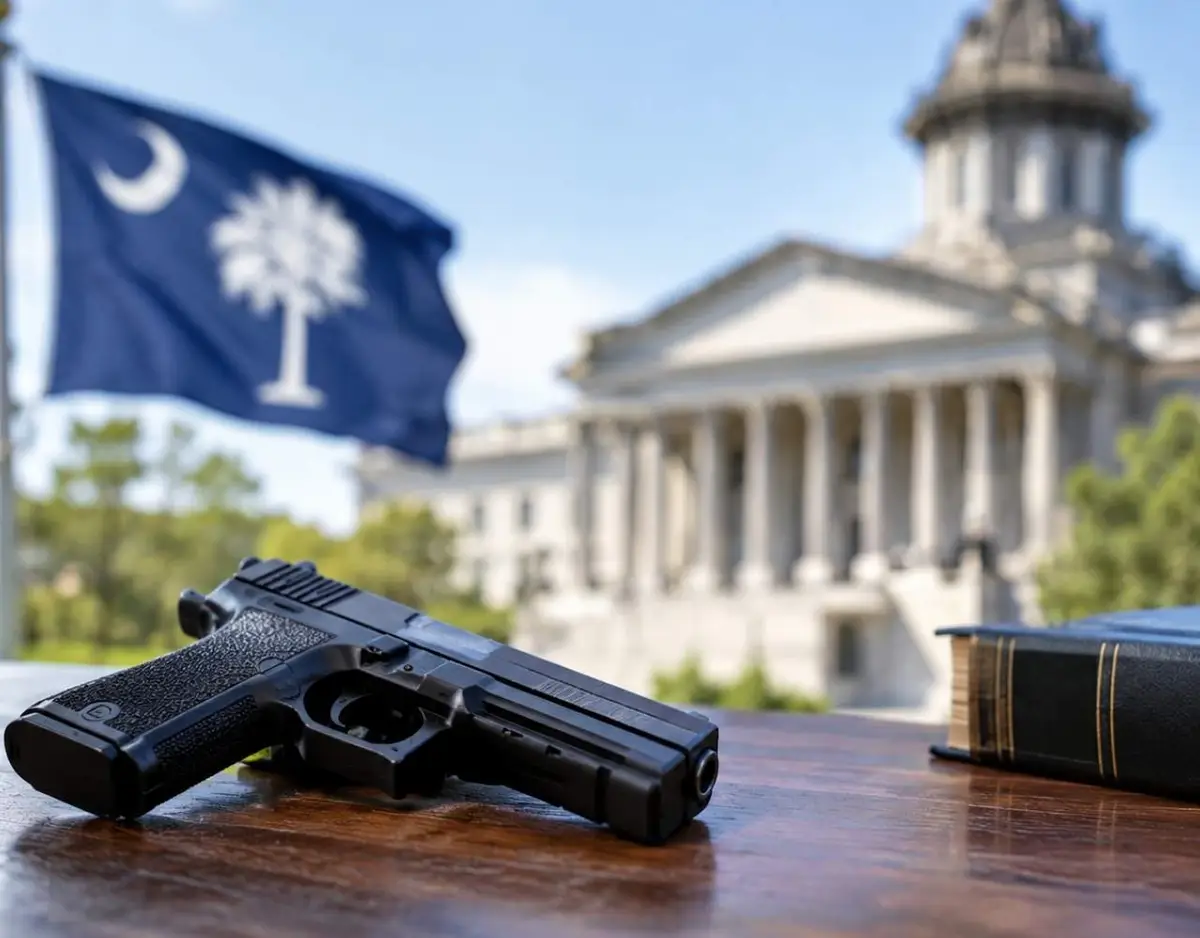
If you are facing criminal charges in Columbia, SC, one of the first things to understand is whether your case will be handled in state court or the federal court system. That distinction can significantly affect your defense strategy, the legal process, and the sentencing guidelines that may apply.
Most criminal cases in South Carolina are prosecuted in state court. However, certain federal crimes, including drug trafficking, drug conspiracies, federal gun charges, federal weapons charges, white collar crimes, and public corruption, may be investigated by federal agencies and prosecuted in federal court instead.
Federal prosecutions are often far more complex than cases in South Carolina General Sessions Court. They may involve a federal investigation, grand jury proceedings, a Grand Jury Indictment, plea bargaining, proffer agreements, and sentencing under the U.S. Sentencing Guidelines. If your case is being heard at the Matthew J. Perry Jr. Courthouse, working with an experienced federal criminal defense attorney is essential.
Understanding the differences between state and federal defense can help you better prepare for what lies ahead, protect your constitutional rights, and make informed decisions about your case from the very beginning.
Understanding the Difference Between State and Federal Criminal Cases
Although both state and federal cases involve alleged criminal conduct, they are prosecuted under different laws and handled in separate court systems.
State Criminal Cases in South Carolina
State criminal cases involve violations of South Carolina law and are typically prosecuted by local solicitors in General Sessions Court. Investigations are usually handled by local police departments, sheriff’s offices, and state law enforcement agencies such as the South Carolina Law Enforcement Division (SLED).
Common state charges include:
- DUI
- Drug crimes and drug possession
- Assault and Battery
- Domestic Violence
- Theft and Burglary
- Weapons charges
A criminal defense lawyer handling state charges must understand South Carolina statutes, local court procedures, and how prosecutors approach criminal cases in Richland County and throughout Columbia, SC.

Federal Criminal Cases
Federal charges involve alleged violations of United States law. These Federal Offenses are prosecuted by the United States Attorney’s Office on behalf of the United States Department of Justice and are heard in the United States District Court for the District of South Carolina.
Federal prosecutions often involve federal agencies such as:
- Federal Bureau of Investigation
- Drug Enforcement Administration
- Department of Homeland Security (Homeland Security)
- Bureau of Alcohol, Tobacco, Firearms, and Explosives
- United States Postal Inspection Service
Common Federal Crimes include:
- Drug Trafficking and large-scale drug conspiracies
- Federal gun charges and federal weapons charges
- Weapon trafficking and the trafficking of guns
- Offenses involving altered or removed serial numbers
- White collar crimes
- Public corruption
- Internet crimes
- Environmental crimes
Federal cases frequently involve complex issues of constitutional law, including probable cause, search warrants, and Fourth Amendment protections. They also carry significantly higher sentencing exposure under the U.S. Sentencing Guidelines.
Why a Case Might Move from State to Federal Court
Many defendants are surprised to learn that a case can begin with local law enforcement agencies and later become a federal matter. This usually occurs when the alleged conduct falls under federal jurisdiction or attracts the attention of federal agencies.
Common Reasons a Case Becomes Federal
A case may move from a South Carolina state court to federal court when:
- The alleged conduct crossed state lines
- The offense involved interstate communications or the internet
- Federal property or federal employees were involved
- The case includes substantial quantities of drugs or firearms
- Multiple defendants are accused of a conspiracy
- The investigation involves drug trafficking, drug crimes, or weapon trafficking
In many situations, individuals do not realize they are the subject of a federal investigation until agents contact them, execute a search warrant, or a Grand Jury Indictment is returned.
Learn More: Federal Drug Classification Explained
How Federal Investigations Typically Begin
Federal investigations are often far more extensive than state criminal investigations. In many cases, federal agencies spend months or even years gathering evidence before making an arrest or filing formal federal charges.
Investigative Tools Used by Federal Agencies
Depending on the allegations, federal law enforcement agencies may use:
- Search warrants
- Wiretaps
- Confidential informants
- Undercover operations
- Financial subpoenas
- Electronic surveillance
Federal investigations may also involve the United States Postal Inspection Service and a U.S. Postal Inspector when allegations include mail fraud, internet crimes, or other offenses involving the postal system.
These investigations frequently focus on drug trafficking, drug conspiracies, federal gun charges, white collar crimes, and other serious federal offenses. Throughout the process, constitutional protections, including the Fourth Amendment and, in some internet crimes or public corruption cases, First Amendment issues, may play an important role in the defense.

Grand Jury Indictments and Federal Charges
Most felony-level federal prosecutions begin with a grand jury. During this process, federal prosecutors present evidence to determine whether there is probable cause to issue a Grand Jury Indictment.
The defense does not participate in the grand jury process. If an indictment is returned, the defendant is formally charged, and the case proceeds in the federal court system.
For many people, receiving notice of a Grand Jury Indictment is the first clear sign that they are facing serious federal charges.
Key Differences Between State and Federal Defense
Although both state and federal cases involve criminal accusations, the legal process in federal court is substantially different.
Sentencing Guidelines and Penalties
One of the most significant differences is the use of the U.S. Sentencing Guidelines. These sentencing guidelines help federal judges determine recommended penalties based on:
- The nature of the offense
- Drug quantity or financial loss
- Criminal history
- Use of firearms
- Leadership roles in a conspiracy
Federal sentences are often much harsher than those imposed in South Carolina state courts, particularly in drug trafficking, federal gun charges, and white collar crimes.
Federal Firearm Laws
Federal weapons charges often involve complex firearm laws governing firearm ownership, semi-automatic firearms, the trafficking of guns, and offenses involving altered or removed serial numbers. Even individuals who lawfully own firearms can face serious federal charges if prosecutors allege violations of federal firearm laws.
Detention Hearings
In federal court, judges are often more likely to order pretrial detention. At a detention hearing, prosecutors may argue that the defendant poses a flight risk or danger to the community.
Plea Bargaining and Proffer Agreements
Federal cases frequently involve plea bargaining and, in some situations, proffer agreements. During a proffer session, a defendant may provide information to the government under limited protections.
Because statements made during proffer sessions can significantly affect sentencing and the overall defense strategy, these meetings should never take place without an experienced federal criminal defense attorney.
Learn More: Should You Take a Plea Deal for Federal Charges?
The Federal Criminal Process in Columbia, SC
If your case is prosecuted federally, it will likely be heard at the Matthew J. Perry Jr. Courthouse on Gervais Street in downtown Columbia. The courthouse is home to the United States District Court for the District of South Carolina, where the United States Attorney’s Office handles federal prosecutions.
The federal criminal process generally includes:
- Federal investigation
- Grand jury and Grand Jury Indictment
- Arrest and initial appearance
- Detention hearing
- Arraignment
- Discovery and pretrial motions
- Plea Bargaining or trial
- Sentencing hearing under the U.S. Sentencing Guidelines
Each stage presents important opportunities to challenge the government’s evidence and protect your rights.
Why Federal Experience Matters
Not every criminal defense lawyer regularly handles federal prosecutions. Federal cases involve specialized procedures, detailed sentencing rules, and high-stakes negotiations with the U.S. Attorney’s Office.
An experienced federal criminal defense attorney understands:
- Federal court procedure and rules of evidence
- Grand jury practice
- Proffer agreements
- Fourth Amendment and First Amendment issues
- U.S. Sentencing Guidelines
- Negotiations with the United States Department of Justice
This experience can make a significant difference in how your case is investigated, negotiated, and resolved.
What to Do If You Are Under Federal Investigation
If you are contacted by federal agents or believe you are the target of a federal investigation, the steps you take immediately are critical.
Protect Yourself by Taking These Steps
- Do not answer questions without a criminal defense lawyer present
- Do not consent to searches without legal advice
- Preserve relevant records and documents
- Avoid discussing the investigation with others
- Contact a federal criminal defense attorney immediately
Many people believe they can explain their way out of a federal investigation. In reality, statements to federal agents can become powerful evidence in a criminal prosecution.

Contact Touma Law Group for State and Federal Defense in Columbia, South Carolina
When it comes to State vs. Federal Defense in Columbia, South Carolina, the differences are significant. Federal charges often involve aggressive federal agencies, grand jury investigations, strict sentencing guidelines, and potentially life-changing penalties.
At Touma Law Group, we represent clients facing federal crimes and state charges throughout South Carolina. Whether you are under investigation for drug trafficking, drug conspiracies, federal gun charges, federal weapons charges, white collar crimes, or public corruption, we are prepared to build a strategic and effective defense.
If you have been contacted by federal agents or charged at the Matthew J. Perry Jr. Courthouse, do not wait to seek legal representation. Contact Touma Law Group today at (803) 879-4499 to schedule your initial consultation and take the first step toward protecting your rights and your future.
Frequently Asked Questions
What is the difference between state and federal charges in South Carolina?
State charges are prosecuted in South Carolina courts and involve violations of state law. Federal charges involve alleged violations of federal law and are prosecuted in the federal court system by the United States Attorney’s Office.
Federal crimes are often investigated by agencies such as the Federal Bureau of Investigation, Drug Enforcement Administration, Department of Homeland Security, or a U.S. Postal Inspector.
Why would a criminal case move from state court to federal court?
A case may move into federal court when it involves interstate activity, drug trafficking, drug conspiracies, federal gun charges, internet crimes, public corruption, or violations of federal firearm laws.
Federal investigations may also involve allegations related to firearm ownership, trafficking of guns, serial numbers, or semi-automatic firearms.
Where are federal criminal cases heard in Columbia, SC?
Most federal criminal cases in Columbia are heard at the Matthew J. Perry Jr. Courthouse on Gervais Street. The courthouse is home to the United States District Court for the District of South Carolina.
Federal cases typically involve grand jury proceedings, detention hearings, sentencing hearings, and strict sentencing guidelines.
Can constitutional rights violations help my defense?
Potentially. Constitutional law issues often play a major role in criminal defense cases.
A criminal defense lawyer may challenge:
- Illegal searches under the Fourth Amendment
- Improper interrogations
- Lack of probable cause
- Violations involving the First Amendment in internet crimes or public corruption investigations
If law enforcement agencies violated your rights, certain evidence may be suppressed.
Can federal investigations also lead to civil legal issues?
Sometimes. In addition to criminal charges, certain investigations may also involve civil litigation defense issues related to government liability, the Civil Rights Act, or claims against local governmental entities.
Related disputes can sometimes include:
- Civil Rights Litigation
- Defamation Claims
- Excessive Force allegations
- Zoning and Land Use Disputes
- School-Based Claims
- Public nuisance claims
The South Carolina Tort Claims Act may also apply in certain civil cases involving government agencies.
Why is hiring a federal criminal defense attorney important?
Federal prosecutions are far more complex than most state criminal cases. An experienced federal criminal defense attorney understands:
- Federal court procedures
- Grand Jury Indictments
- Plea Bargaining and proffer agreements
- U.S. Sentencing Guidelines
- Department of Justice procedures
- Federal investigation tactics
Having the right criminal defense lawyer can make a major difference when facing serious Federal charges in Columbia, SC.