If you have been charged with a felony drug crime in South Carolina, speak with a South Carolina criminal defense attorney about the charge as soon as you can. This page is general information, not legal advice, and an attorney at the firm must review the facts of a case before anyone relies on it.
Felony charges are always serious. A drug charge can carry added exposure if it is alleged to involve a person under 18 (S.C. Code Ann. § 44-53-440) or to have happened within one-half mile of a school, public playground or park, or college (S.C. Code Ann. § 44-53-445), on top of any jail time and fines for the underlying charge.
South Carolina treats a range of conduct as drug offenses, including possession, manufacturing, distribution, trafficking, and sale. Simple possession of most drugs is a misdemeanor on a first offense, but it can be a felony on a later offense or for more than two grains of fentanyl, and distribution, possession with intent to distribute, manufacturing, and trafficking are felonies (S.C. Code Ann. § 44-53-370). A felony drug conviction on your public criminal record can make it harder to find a job and can affect other parts of your life, such as custody and firearm rights.
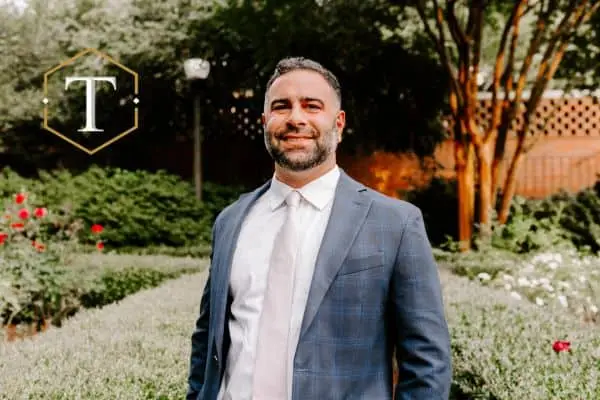
At Touma Law Group, our Greenville drug crimes lawyers represent people charged with drug offenses in Greenville and throughout South Carolina. We will review the facts of your case and explain your options, and no lawyer can promise a particular result. Call our criminal defense law firm today for a free initial consultation at 864-618-2323 about your alleged drug offense.
Defenses for Your South Carolina Drug Crime
To convict you of unlawful possession of a controlled substance, the State has to prove that
- You knowingly or intentionally possessed the substance
- The substance was a controlled substance listed in the state schedules
- You did not obtain it directly from, or under a valid prescription or order of, a practitioner acting in the course of professional practice
These elements come from S.C. Code Ann. § 44-53-370(c). You may have a legal defense if the substance was not found on your body. If it was found near you or in your vehicle or residence, the State has to prove more, and the case may come down to small details. A drug defense lawyer in Greenville can review the circumstances of your case to determine which facts may allow you to challenge the charges against you.

You may also have a defense if you did not know what the substance was, or if it was a prescription drug, including oxycodone, that you obtained under a valid prescription from a medical professional. If there are questions about what the substance was, it can be submitted for scientific testing to confirm whether it is a controlled substance. If it is not, the possession charge could be dismissed.
Drug cases typically involve questions about police searches and whether the officers met all legal requirements before searching your residence, body, or car. A Greenville drug possession lawyer can look for weaknesses in the evidence, if they exist.
Understanding Constructive Possession Vs. Actual Possession
South Carolina courts treat possession as either actual or constructive. Actual possession means the drugs were in a person’s physical custody. For instance, a person who has a baggie containing heroin in a pocket is in actual possession of the heroin. A person can also be in constructive possession of drugs that are not on the person.
For constructive possession, the State must prove that the person had the right and power to control the drugs and also that the person knew about the drugs and intended to control them (State v. Stewart, Opinion No. 28029 (S.C. 2021)). Whether the drugs belonged to you therefore can matter, and mere presence near drugs does not by itself answer those questions. Read more about constructive possession.
How Our Felony Drug Crime Lawyers Can Help
At Touma Law Group, our Greenville criminal defense lawyers can review the evidence in your drug charge case and explain your options. In some cases it is necessary to resolve the case through negotiation instead of only raising defenses or challenging the evidence.
Depending on the details of your case, other legal options may be available, including the following.
Pretrial Intervention
A lawyer can ask the circuit solicitor whether you may be considered for the pretrial intervention program, also known as a diversion program. If a person successfully completes the program, the solicitor enters a noncriminal disposition of the charge (S.C. Code Ann. § 17-22-150). Some people cannot be considered. Drug trafficking is listed as a violent crime in S.C. Code Ann. § 16-1-60, and a person charged with a crime of violence as defined there generally is not considered for intervention, unless the solicitor determines the elements of the crime do not fit the charge (S.C. Code Ann. § 17-22-50).
Plea Bargains
Our defense team can present facts and supporting evidence to the prosecutor and the court. Sometimes our attorneys direct clients to prepare for court by completing specific tasks before the hearing. A plea agreement can change a charge or lead to a program, but no result can be promised.
Conditional Discharge
For a possession charge, a person who has not previously been convicted of an offense under the state’s controlled substances article, or of a state or federal marijuana, stimulant, depressant, or hallucinogenic drug offense, may be eligible for a conditional discharge. The court, with the person’s consent, may defer proceedings and place the person on probation, and if the person completes the terms, the proceedings are dismissed without an adjudication of guilt. This can happen only once, and a fee applies (S.C. Code Ann. § 44-53-450). It does not apply to distribution, trafficking, or manufacturing charges.
Expungement
After a dismissal under a conditional discharge, a person may apply to the court to expunge the records of the arrest and proceedings (S.C. Code Ann. § 44-53-450(B)). A person who completes pretrial intervention may apply for an order to destroy the arrest records (S.C. Code Ann. § 17-22-150). Whether a record can be expunged depends on the statute that applies, so ask an attorney about your case.
Contact Our Greenville Felony Drug Charge Lawyer Today for Legal Advice
If you have been charged with a drug crime in Greenville or anywhere in South Carolina, contact a Greenville drug crime attorney who can investigate your case and help you understand your constitutional rights.
Regardless of the drug involved, it is important to have an attorney on your side who knows how to approach these situations. The drug crime lawyers at Touma Law Group will work to protect your legal rights. To schedule a free and confidential consultation, contact our Greenville defense attorneys today at 864-618-2323.