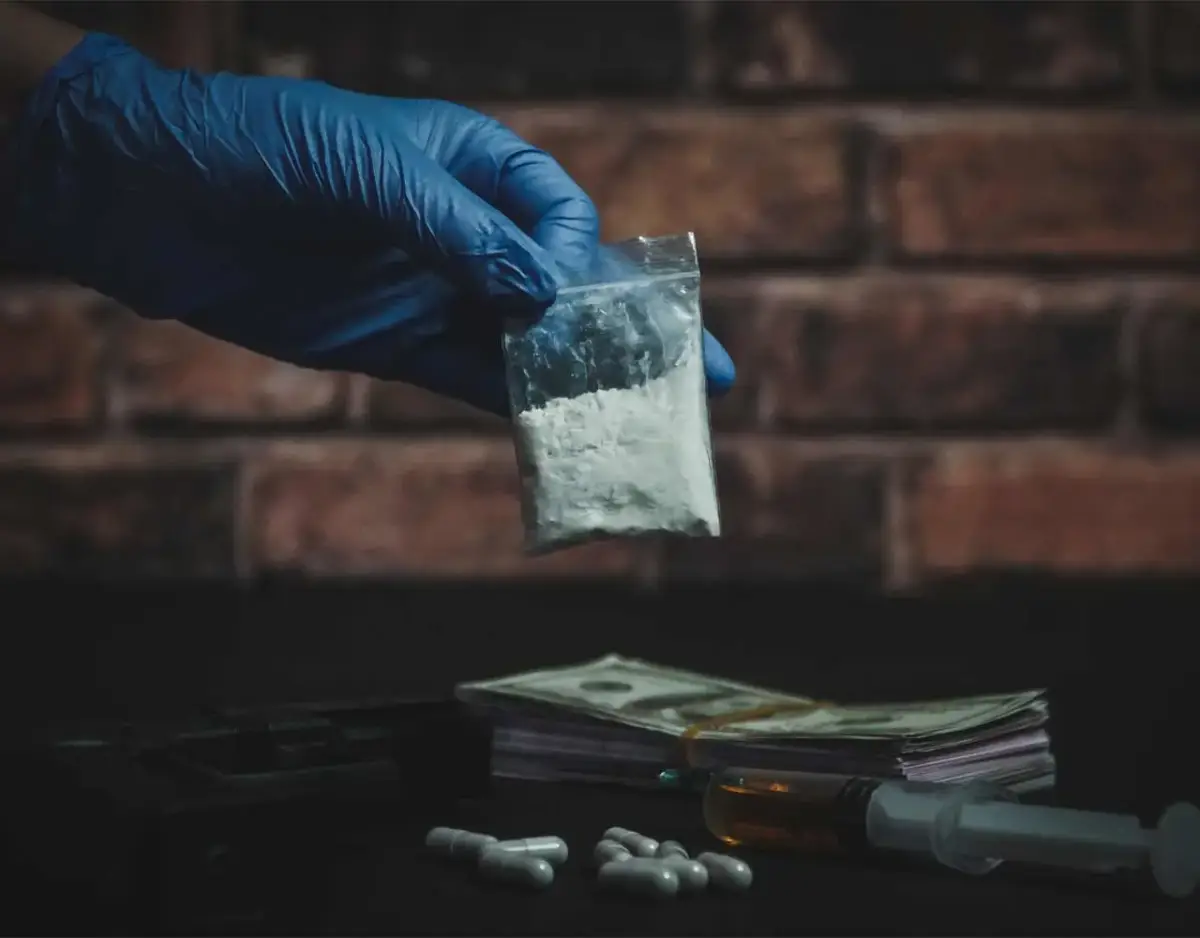
Facing a drug charge in Greenville, South Carolina, can be an overwhelming experience, with serious implications for your future. When you need a Greenville drug lawyer, it helps to understand the charges against you and the legal process. A criminal defense attorney can explain both. This page is general information, not legal advice.
If you or a loved one are dealing with a drug offense, don’t face it alone. Contact us today for a confidential consultation.
Drug charges in South Carolina, from simple drug possession to more complex drug trafficking allegations, carry serious penalties. A conviction could lead to fines, jail time, and a lasting criminal record.
Whether you’re accused of possessing controlled substances or dealing with charges related to prescription drugs, the stakes are high. A defense strategy built on the facts can help protect your rights.

Understanding Drug Charges in Greenville
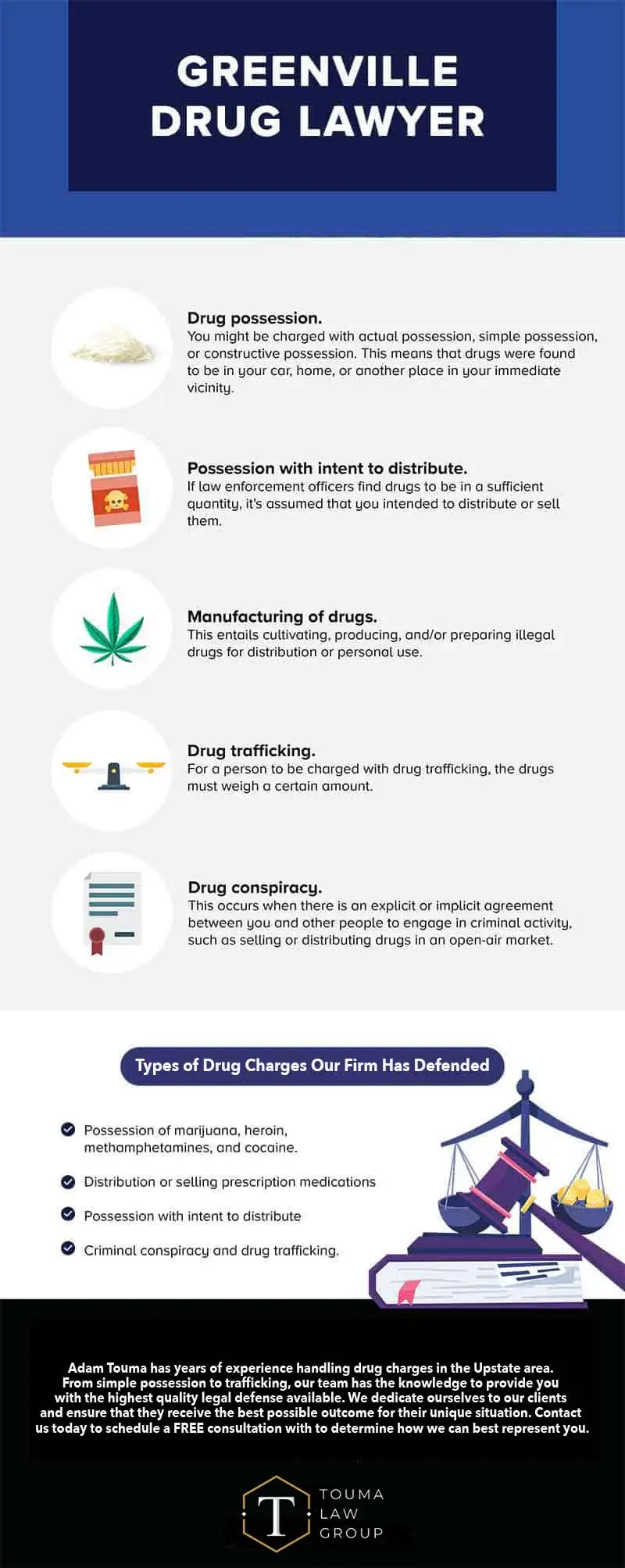
South Carolina law categorizes drug offenses based on the type and quantity of the controlled substance involved, as well as the alleged intent. These can range from misdemeanors to serious felony drug charges like:
- Drug Possession: This refers to having illegal controlled substances, like marijuana, cocaine, or opioids, on your person or property. Possession of drug paraphernalia can also lead to charges, and state law provides for a civil fine of up to $500 (S.C. Code Ann. § 44-53-391).
- Possession with Intent to Distribute (PWID): This charge suggests you not only possessed drugs but intended to sell or distribute them. Possessing more than certain amounts is prima facie evidence of a distribution charge, and prosecutors may point to other facts, such as packaging or scales (S.C. Code Ann. § 44-53-370(d)(5)).
- Drug Trafficking: This is the most severe drug charge, typically involving large quantities of controlled substances. Penalties for drug trafficking are significantly higher, and the trafficking statute sets mandatory prison terms that cannot be suspended (S.C. Code Ann. § 44-53-370(e)).
- Prescription Medication Offenses: Illegally possessing or distributing prescription drugs, or fraudulently obtaining them, can also lead to serious criminal charges.
- Drug Manufacture: Producing controlled substances, such as methamphetamine, is a grave offense with harsh penalties.
Learn more: Common types of drugs in SC
Each of these charges has its own elements and penalties.
The Legal Process: What to Expect
Navigating the legal process after a drug charge can be complex. From the initial arrest to potential plea deals or courtroom representation, a Greenville drug lawyer can explain each step.
- Arrest and Booking: After an arrest, you’ll be booked, fingerprinted, and photographed. It’s vital to remain silent and request a lawyer immediately.
- Bond Hearing: A judge will determine if you can be released on bail and set the bond amount.
- Preliminary Hearing: This hearing determines if there’s enough evidence for the case to proceed.
- Grand Jury (for felonies): For serious felonies, a grand jury will decide if there’s probable cause to issue an indictment.
- Arraignment: You’ll formally enter a plea of guilty or not guilty.
- Discovery: Both sides exchange information and evidence. Your criminal defense attorney will meticulously review the drug analysis report, forensic evidence, and any details related to the chain of custody.
- Motions: Your legal counsel may file motions to suppress evidence if there was an illegal search and seizure, or to dismiss charges. This is where your Fourth Amendment rights come into play.
- Plea Bargaining: Your defense attorney may negotiate with the prosecution for plea deals, which could result in reduced charges or penalties.
- Trial: If no plea agreement is reached, the case proceeds to trial. An attorney can prepare the defense for trial.
- Sentencing: If convicted, the judge will determine your penalty.
Related: Do you need a lawyer for drug charges in South Carolina?
Penalties for Drug Crimes in South Carolina
The penalties for drug crimes in South Carolina can be serious and vary depending on the specific charge, the type and quantity of the controlled substance, and your prior criminal record. These can include:
- Fines: Substantial monetary penalties.
- Incarceration: Jail or prison sentences, ranging from months to decades, with the possibility of incarceration.
- Probation: Supervised release with specific conditions.
- Mandatory Minimums: Some charges, especially for drug trafficking, carry mandatory minimum prison sentences.
- Driver’s License: The drug penalty statutes list prison terms and fines, and they do not provide for a driver’s license suspension. A commercial driver’s license holder is disqualified for life for using a commercial motor vehicle in a felony drug manufacture, distribution, or dispensing offense (S.C. Code Ann. § 56-1-2110(E)). Ask an attorney or SCDMV whether any other license consequence applies to your case.
- Criminal Record: A drug crime conviction can have long-lasting consequences, impacting employment, housing, and educational opportunities.
- Federal Crimes: In some cases, drug offenses can escalate to federal crimes, leading to even harsher penalties.
A Greenville drug lawyer can explain options such as conditional discharge for eligible first-time possession charges (S.C. Code Ann. § 44-53-450), which can be used only once and requires a fee.

Crafting Your Defense Strategy
When facing drug charges, a criminal defense lawyer can look at the facts and the evidence. Defense approaches that may apply, depending on the case, include:
- Challenging the Search and Seizure: If law enforcement conducted an illegal search and seizure, any evidence obtained may be inadmissible in court due to violations of your Fourth Amendment rights.
- Challenging the Chain of Custody: Ensuring that the evidence (drugs) was handled properly from the point of seizure to the lab analysis is critical. Any breaks in the chain of custody can weaken the prosecution’s case.
- Disputing Possession: Arguing that the State cannot prove you had the right and power to control the drugs, or that you knew about them and intended to control them (State v. Stewart, Opinion No. 28029 (S.C. 2021)).
- Lack of Intent: For charges like possession with intent or trafficking, proving that you did not intend to distribute or traffic the controlled substances.
- Entrapment: If law enforcement induced you to commit a crime you otherwise wouldn’t have.
- Mistake of Fact: Arguing you genuinely believed a substance was something else.
- Challenging Forensic Evidence: Scrutinizing the drug analysis report and the methods used by forensic labs.
- Violation of Due Process: Ensuring all your constitutional rights were upheld throughout the legal process.
Your defense may involve investigation, interviewing witnesses, and reviewing all evidence presented by the prosecution.
Why Choose a Greenville Drug Lawyer?
Drug-related charges call for a criminal defense lawyer who is familiar with South Carolina drug law. A local Greenville drug lawyer can explain how the process works in Greenville County and the Upstate of South Carolina.
A lawyer can explain legal terms and guide you through each step of the case. That is true whether the case involves a charge of driving under the influence of drugs or a more serious distribution charge.
Whether you’re dealing with charges related to Schedule I-V controlled substances, possession of heroin, or allegations of drug manufacture, an attorney can review the evidence and explain the options that may be open to you. No lawyer can promise a particular outcome.
Speaking with an attorney early can help you understand your situation. Contact Touma Law Group to discuss your case.
If you are facing drug charges in Greenville, South Carolina, contact a Greenville drug lawyer today at (864) 618-2323 for a confidential case evaluation.