If you were in a serious car accident and now face an accusation of reckless homicide or vehicular homicide in South Carolina, it is natural to feel scared and unsure about what comes next. These charges are serious and can affect your freedom, your driver’s license and your future.
At Touma Law Group, our homicide defense attorneys can review the facts of your case, explain the statute the State is relying on and talk through your options.
If you or a loved one is dealing with these charges, contact Touma Law Group for a confidential consultation. A licensed South Carolina attorney at the firm must review the facts of a case before anyone relies on the general information on this page.
What is reckless vehicular homicide in South Carolina?
The offense is called reckless vehicular homicide. Under S.C. Code Ann. § 56-5-2910, when a person dies within three years as a proximate result of injury received by the driving of a vehicle in reckless disregard of the safety of others, the person operating the vehicle is guilty of reckless vehicular homicide.
Put simply, the State must show that reckless driving, not necessarily intentional but in reckless disregard of the safety of others, caused a death within three years.
How reckless vehicular homicide differs from related charges
People often use several terms for a fatal crash, but South Carolina has separate statutes with separate elements and penalties:
- Reckless vehicular homicide (§ 56-5-2910) applies to a death caused by driving a vehicle in reckless disregard of the safety of others.
- Felony driving under the influence (§ 56-5-2945) applies when a driver under the influence of alcohol, drugs or both does an act forbidden by law, or neglects a duty imposed by law, and that act or neglect proximately causes great bodily injury or death.
- Involuntary manslaughter (§ 16-3-60) applies when criminal negligence, defined as reckless disregard of the safety of others, causes a death. The penalty is up to five years.
South Carolina’s statute is titled reckless vehicular homicide. It does not use the term vehicular manslaughter. Which charge the State chooses depends on the facts, and a defense lawyer reads the exact statute named in the warrant or indictment.
What actions could lead to a reckless vehicular homicide charge?
Every crash is different. Prosecutors may point to behaviors such as the following when they argue that a driver acted recklessly.
Common allegations in these cases
- Driving under the influence (DUI): Alcohol or drugs can affect judgment and reaction time. Officers may request a blood alcohol content (BAC) test or a blood sample after a fatal crash.
- Excessive speeding: Traveling far above posted limits, especially in residential or school zones.
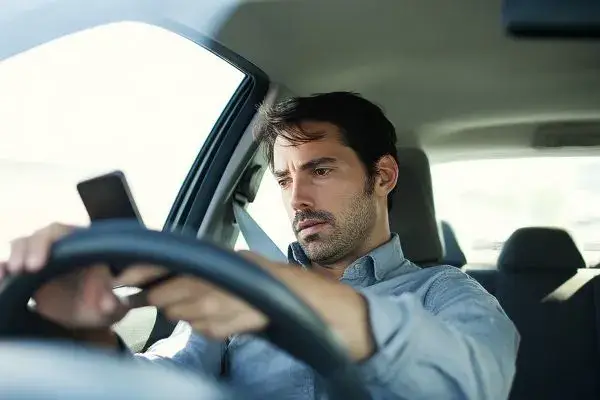
- Distracted driving: Texting, talking on the phone or adjusting a GPS.
- Running red lights or stop signs.
- Racing or unsafe passing.
Accident reconstruction, dashcam footage, traffic camera recordings and police reports often play a role in deciding whether a driver acted in reckless disregard of the safety of others.
A prosecutor can bring a charge even when the driver never meant to hurt anyone, because the statute turns on reckless disregard and on whether the driving caused the death.
What are the penalties for reckless vehicular homicide in South Carolina?
Reckless vehicular homicide is a felony. A person who is convicted of, pleads guilty to or pleads nolo contendere to the offense must be fined not less than $1,000 nor more than $5,000, or imprisoned not more than ten years, or both. The Department of Motor Vehicles must revoke the person’s driver’s license for five years (S.C. Code Ann. § 56-5-2910).
License reinstatement
After one year from the date of revocation, the person may petition the circuit court in the county of residence for reinstatement of the license. The statute lets the court reinstate the license, or grant a route restricted license for the rest of the five-year period, only if certain conditions are met. They include that alcohol, drugs or narcotics were not involved in the crash, that the sentence has been served or the fine, assessment and restitution paid, and that the person’s driving record, attitude, habits, character and driving ability make it safe to restore driving privileges. The solicitor is served with the petition and may demand a hearing.
If the license is reinstated, a later moving violation requires automatic cancellation of the license and imposition of the full revocation period (§ 56-5-2910(C)).
Additional consequences
- A criminal record that can affect jobs and housing.
- Possible difficulty with auto insurance.
- A civil lawsuit for wrongful death, which is separate from the criminal case.
South Carolina’s statute for this offense provides for a fine and imprisonment. The death penalty is not a punishment for reckless vehicular homicide.
If alcohol or drugs are alleged, a different and more severe statute may apply. Felony DUI resulting in death carries a mandatory fine of $10,100 to $25,100 and mandatory imprisonment of one to twenty-five years, and the offense is followed by an ignition interlock requirement of five years after release (S.C. Code Ann. § 56-5-2945).
Should you refuse a breathalyzer test in South Carolina?
South Carolina’s implied consent law says a person who drives a motor vehicle in the state is considered to have consented to chemical tests of breath, blood or urine if arrested for driving under the influence of alcohol, drugs or both (S.C. Code Ann. § 56-5-2950).
If you refuse a test
Before a test, the officer must tell you in writing and out loud that you do not have to take it, but that your privilege to drive must be suspended or denied for at least six months, with the option of ending the suspension by enrolling in the Ignition Interlock Device Program, and that your refusal may be used against you in court (§ 56-5-2950(B)).
You also have the right to request a contested case hearing within thirty days of the notice of suspension (§ 56-5-2951). A missed deadline can mean losing that hearing, so talk to a lawyer quickly.
After a fatal crash, different rules apply. Under S.C. Code Ann. § 56-5-2946, a person must submit to chemical tests of the breath, blood or urine if there is probable cause to believe the person violated, or is under arrest for violating, the felony DUI statute, and resistance to testing is evidence the State may offer at trial. Under § 56-5-2948, a driver whom the investigating officer suspects of causing a crash that killed another person must submit to field sobriety tests if physically able to do so.
In an ordinary DUI arrest, refusing a test may mean there is no breath or blood result in the case, but it carries the consequences above. It is worth speaking with a criminal defense attorney as soon as possible, ideally before that decision, and if not, right afterward.
Learn More: Should I take a breathalyzer in South Carolina?
What to do if you are charged with reckless vehicular homicide
If you were arrested or questioned after a fatal crash, consider these steps right away.
Steps to protect yourself
- Stay calm and remain silent. Do not make statements to the police or insurance companies without talking to your lawyer first.
- Contact a defense attorney who handles homicide and reckless driving cases.
- Preserve evidence such as witness names, police reports, dashcam footage and medical records.
- Avoid discussing the case online or with others. Prosecutors can use your statements.
How a criminal defense attorney can help
- Review whether the evidence shows reckless disregard of the safety of others, or whether the death resulted from other circumstances.
- Examine the prosecution’s evidence, including accident reconstruction reports, blood samples and dashcam recordings.
- Question law enforcement witnesses and other witnesses about their accounts.
- Discuss with you whether a plea or a reduced charge is an option in your case.
- Address license consequences and the license reinstatement process.

Every case turns on its own facts. A lawyer may consult an accident reconstruction professional or medical professional when the evidence calls for it, but no attorney can promise a result.
Can the victim’s family sue after a fatal crash in South Carolina?
Yes. South Carolina law lets a civil action for wrongful death go forward even when the death was caused under circumstances that make the killing a felony in law. The action is brought by or in the name of the executor or administrator of the person who died, for the benefit of the spouse and children or, if there are none, the parents or heirs (S.C. Code Ann. §§ 15-51-10 and 15-51-20).
In such an action the jury may award damages proportioned to the injury resulting from the death, including exemplary damages when the wrongful act was the result of recklessness, wilfulness or malice (S.C. Code Ann. § 15-51-40).
A person can face both criminal and civil proceedings for the same crash. They are separate cases with different procedures, so ask your attorney how the two may affect each other.
Talk to a lawyer about your future
A reckless vehicular homicide or related charge in South Carolina is among the most serious legal situations a person can face. The penalties are significant, the process is complex and the emotional toll can be heavy. You do not have to go through it alone.
Our attorneys carefully review police reports, medical records, dashcam footage and the other evidence available in your case. If you or a loved one has been accused of reckless driving, DUI or reckless vehicular homicide, call Touma Law Group at (864) 618-2323 to discuss your situation.