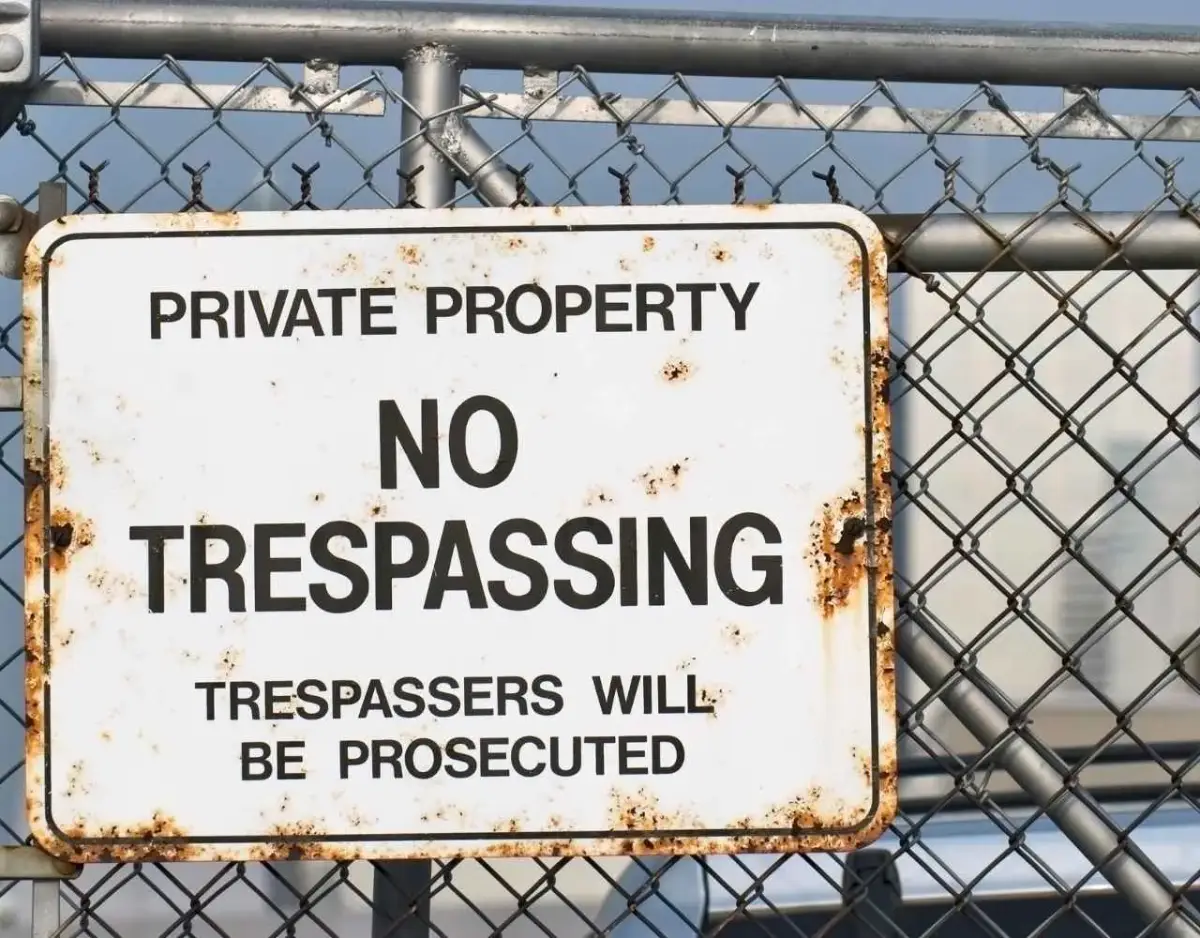
South Carolina does not have one single trespass statute. Instead, the Code of Laws has several sections, mostly in Title 16, Chapter 11, that make it a crime to enter or stay on another person’s land or premises in particular situations. Most of them depend on notice: a posted sign, a warning, or a request to leave.
This article describes the main sections and their penalties. A licensed South Carolina attorney at the firm must review the facts of a case before anyone relies on the general information on this page.

If you have been charged with trespassing, you can speak with a Greenville property crimes lawyer at Touma Law Group about your case.
Trespassing Crimes and Penalties
The main criminal trespass sections are these.
Entry on land after notice is posted or given. Under S.C. Code Ann. § 16-11-600, every entry upon the lands of another, after notice from the owner or tenant has been posted or given prohibiting the entry, is a misdemeanor. The punishment is a fine of not more than $100 or imprisonment of not more than 30 days.
Entering premises after a warning, or refusing to leave. Under S.C. Code Ann. § 16-11-620, a person who, without legal cause or good excuse, enters a dwelling house, place of business, or premises of another person after being warned not to do so is guilty of an offense. So is a person who enters without being warned and then fails and refuses, without good cause or good excuse, to leave immediately after being ordered or requested to do so by the person in possession or that person’s agent. On conviction, the punishment is a fine of not more than $200 or imprisonment of not more than 30 days. Municipal courts and magistrates may try these cases. A common example is a guest in a home who is told to leave and does not.
Entry on land for hunting, fishing, and similar purposes. Under S.C. Code Ann. § 16-11-610, entering another person’s land without the consent of the owner or manager to hunt, fish, trap, or net, to gather fruit, flowers, shrubbery, straw, turf, vegetables, or herbs, or to cut timber is a misdemeanor. A first offense carries a fine of not more than $200 or imprisonment of not more than 30 days. The penalties increase for a second and a third or later offense.
Refusing to leave closed public premises. Under S.C. Code Ann. § 16-11-630, a person who refuses or fails, without justifiable cause, to leave premises owned or occupied by a state, county, or municipal agency during hours when the premises are regularly closed to the public, after being asked by a law enforcement officer or a guard, watchman, or custodian, is guilty of a misdemeanor. The punishment is a fine of not more than $100 or imprisonment of not more than 30 days.
Entering enclosed private property at night. Under S.C. Code Ann. § 16-11-640, it is unlawful for a person who is not an occupant, owner, or invitee to enter private property enclosed by walls or fences with closed gates between six P.M. and six A.M. The section does not apply to a justifiable emergency entry or to premises that are not posted with clearly visible signs prohibiting trespass. A violation is a misdemeanor with a fine of not less than $25 and not more than $200, or imprisonment of not more than 30 days.
How Notice Is Given
Section 16-11-600(B) describes two ways that an owner or tenant may post notice. One is posting a notice in four conspicuous places on the borders of the land prohibiting entry. The other is marking the boundaries with clearly visible purple paint. The paint mark must be one vertical line at least eight inches long and two inches wide, with the bottom of the mark not less than three nor more than six feet from the ground or normal water surface. The marks go on immovable, permanent objects that are not more than one hundred yards apart and readily visible to a person approaching the property. Under subsection (C), proof of the posting is taken as conclusive notice against a person who enters.
Trespass and Property Damage
If a person willfully and maliciously injures a tree, house, outside fence, or fixture of another, or commits any other trespass upon real property of another, S.C. Code Ann. § 16-11-520 sets the penalty by the value of the injury or loss. It is a misdemeanor, with a fine of not more than $1,000 or imprisonment of not more than 30 days, or both, if the injury or loss is worth $2,000 or less. It is a felony with up to five years if it is worth more than $2,000 but less than $10,000, and a felony with up to ten years if it is worth $10,000 or more. The statute also provides for fines in the court’s discretion at the felony tiers. See also malicious injury to personal property under § 16-11-510.
Trespass Is Not the Same as Burglary
Entering a building without consent with intent to commit a crime inside is a different offense. It is charged as burglary under S.C. Code Ann. §§ 16-11-311 through 16-11-313, and burglary is a felony.
Related Content: When can a cop search your car in South Carolina?
Penalties in a particular case depend on the statute charged, the facts, and the person’s record. This page does not predict what will happen in an individual case.
Defending a Trespassing Charge
A defense attorney reviews the facts against what the statute requires. Some of the questions that can matter are these:
- Consent. If the owner or the person in possession consented to the entry, that can matter. Consent may be given in words, in writing, or by conduct.
- Notice. Several of the statutes depend on notice. Was the land posted as § 16-11-600 describes? Was the person warned or asked to leave? Who gave the warning, and was that person the owner, tenant, or someone with authority?
- Cause or excuse. Section 16-11-620 uses the words “without legal cause or good excuse” and “without good cause or good excuse.” An attorney can look at whether facts such as an emergency fit that wording.
- Identity and evidence. Whether the person charged is the person who was on the property, and what the witnesses and any video show.
- The charge itself. Whether the statute charged actually fits the location and the facts, for example whether the premises were enclosed, posted, or closed to the public.
Any of these can matter in some cases, and none of them guarantees a result. Some charges, such as those under § 16-11-620, are heard in magistrates court or municipal court.
If you have been charged, you may want to speak with defense attorneys in Greenville. If you are in the Columbia area, call (803) 879-4499, and in the Upstate, Greenville callers can call (864) 618-2323. A licensed South Carolina attorney at Touma Law Group must review the facts of your case before you rely on any general information in this article.