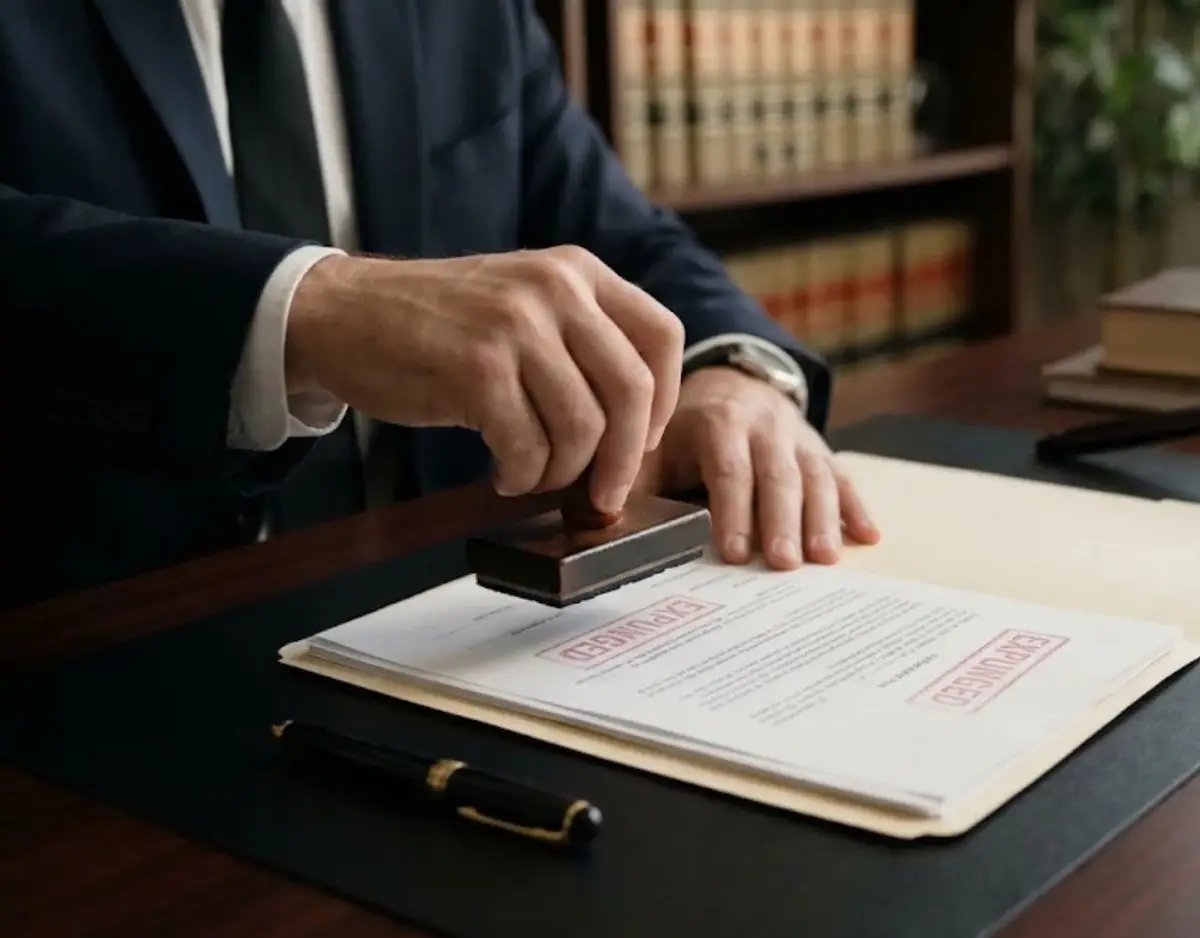
An arrest is one of the most stressful moments a person can face. What you say and do in the next few hours can shape your entire criminal case. The good news is that the Constitution gives you real protection, and those rights apply in Greenville just like everywhere else.
This guide covers your legal rights during traffic stops, police questioning, and the first hours in police custody. You will learn what law enforcement officers can and cannot do, and what to say to protect yourself.
Just arrested in Greenville? Our team includes a former prosecutor and a former Greenville County public defender. Call our Greenville criminal defense team at (864) 618-2323 for a free consultation today.
The Rights That Protect You From the Moment Police Approach

You have three core constitutional rights during any arrest in South Carolina: the right to remain silent, the right to an attorney, and the right to be free from unreasonable searches and seizures. These come from the Fourth, Fifth, and Sixth Amendments, and the Fourteenth Amendment makes them binding on state and local police, including the Greenville Police Department and the Greenville County Sheriff’s Office.
Knowing these rights is only half the battle. You also have to use them, clearly and calmly.
| Your Right | Where It Comes From | What It Means for You |
|---|---|---|
| Right to remain silent | Fifth Amendment | You do not have to answer police questions or explain yourself. |
| Right to an attorney | Sixth Amendment (and Fifth Amendment during custodial questioning) | You can demand a lawyer before and during questioning. If you cannot pay for one, the court can appoint a public defender. |
| Protection from unlawful searches | Fourth Amendment | Police generally need a warrant, your consent, or a recognized exception to search you, your car, or your home. |
| Due process | Fourteenth Amendment | Police cannot use threats, force, or coercion to pull a confession out of you. |
| Prompt bond hearing | S.C. Code § 22-5-510 | If your charge is bailable, you must get a bond hearing within 24 hours of your arrest. |
Stopped, Detained, or Arrested: Why the Difference Matters
Not every police encounter is an arrest. The type of encounter controls what officers can legally do and what you are required to do.
| Type of Encounter | What Police Need | What It Looks Like |
|---|---|---|
| Consensual conversation | Nothing | An officer walks up and asks a few questions. You can usually leave. |
| Investigative stop (detention) | Reasonable suspicion of criminal activity | You are briefly held while the officer investigates. You are not free to leave. |
| Arrest | Probable cause or an arrest warrant | You are taken into police custody, often in handcuffs, and transported. |
If you are not sure which situation you are in, ask the officer a simple question: “Am I free to leave?” If the answer is yes, you can calmly walk away. If the answer is no, you are being detained, and your rights kick in.
What Stop and Frisk Actually Allows
In Terry v. Ohio (1968), the Supreme Court allowed officers to briefly stop someone based on reasonable suspicion. If the officer also reasonably believes the person is armed and dangerous, the officer can pat down the outside of their clothing for weapons.
A frisk is not a full search. An officer who digs through your pockets without a valid reason may have crossed a constitutional line, and that issue could matter later in your case.
Traffic Stops in Greenville: What You Must Hand Over and What You Can Keep to Yourself
Most police stops in Greenville County start on the road, whether on I-85, Woodruff Road, or a quiet neighborhood street. A traffic stop is a detention, so the officer needs reasonable suspicion of a violation or a crime to pull you over.
Some things you must provide. Many things you do not.
| You Must | You Do Not Have To |
|---|---|
| Pull over safely and stop | Answer “Where are you headed?” or “Have you been drinking?” |
| Show your driver’s license when asked (S.C. Code § 56-1-190) | Consent to a search of your car |
| Provide vehicle registration and proof of insurance | Perform roadside field sobriety tests |
| Follow lawful orders, such as stepping out of the car | Explain your trip, your plans, or your night |
| Keep your hands visible and stay calm | Argue your case on the side of the road |
Stay polite. Arguing or resisting never helps on the roadside, even if the stop feels unfair. The place to challenge a bad stop is in court, with a skilled Greenville DUI lawyer or criminal defense attorney at your side.
Breath Tests and South Carolina’s Implied Consent Law
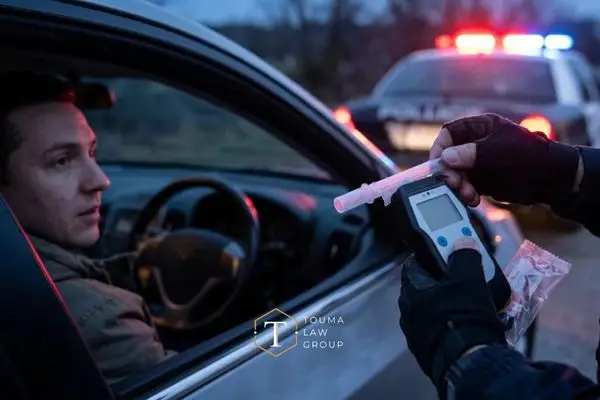
DUI stops come with special rules. Under South Carolina’s implied consent law, anyone who drives in the state is considered to have agreed to a breath test or other chemical test after a lawful DUI arrest (S.C. Code § 56-5-2950).
You can refuse a breathalyzer test after arrest, but refusal carries its own consequences:
- Automatic license suspension. A first refusal with no prior offense in the past ten years triggers a six-month suspension (S.C. Code § 56-5-2951).
- A tight deadline. You have 30 days from the notice of suspension to request a contested case hearing. Miss that window and you lose the hearing.
- Ignition interlock option. The statute allows some drivers to enroll in the Ignition Interlock Device Program instead of serving the rest of the suspension.
- Evidence at trial. Prosecutors may try to use a refusal as evidence in your DUI case.
The decision to take or refuse a DUI test is personal and depends on your situation. If you already went through this, talk to an attorney quickly so you do not miss that 30-day deadline.
Miranda Rights Explained in Plain English
Most people know the phrase “You have the right to remain silent” from TV. The real Miranda rule is narrower than many people think, and that gap catches people off guard.
The Supreme Court created Miranda warnings in Miranda v. Arizona (1966). Before custodial interrogation, police must tell you:
- You have the right to remain silent.
- Anything you say can be used against you in court.
- You have the right to an attorney during questioning.
- If you cannot pay for an attorney, one will be appointed for you.
When Police Have to Read You Your Miranda Warnings
Miranda applies only when two things happen at the same time: you are in police custody and police are questioning you. That combination is called custodial questioning.
This means:
- Police do not have to read you your rights the moment they put on the handcuffs.
- Statements you blurt out on your own, without any questions, usually do not fall under Miranda.
- Routine roadside questioning during a traffic stop usually does not count as custody, according to the Supreme Court in Berkemer v. McCarty (1984).
Many people assume their case falls apart if officers “never read them their rights.” That is rarely how it works. A Miranda violation usually affects only the statements police got through questioning, not the whole criminal prosecution.
How to Invoke Your Right to Remain Silent
Here is the part that surprises people. Staying quiet is not always enough.
In Berghuis v. Thompkins (2010), the Supreme Court held that a suspect must clearly and unambiguously invoke the right to silence. Sitting silently for hours and then answering one question can count as giving up the right.
Say it out loud, in plain words:
“I am going to remain silent. I want to speak to an attorney.”
Then stop talking. Do not try to explain, apologize, or “clear things up.” Officers are trained to keep the conversation going.
Asking for a Lawyer Shuts Down the Questioning
Once you clearly ask for a lawyer during police questioning, officers must stop the interrogation until your attorney is present. The Supreme Court set this rule in Edwards v. Arizona (1981). The exception is if you start talking to them again on your own, so do not reopen the conversation.
Vague statements like “Maybe I should talk to a lawyer?” may not be enough. Be direct: “I want a lawyer.”
Interrogation Room Tactics Every Detained Suspect Should Know
Police questioning at the police station looks nothing like a casual chat. Officers use proven techniques to get detained suspects talking, and the law allows many of them.
Common tactics include:
- Claiming they already have the evidence. Police can legally lie about what they know.
- Offering “help.” An officer may say things will go easier if you explain your side. Only a prosecutor and judge control the outcome of a criminal case, not the officer in the room.
- Long waits. Hours alone in an interrogation room can wear anyone down.
- Friendly small talk. Casual conversation builds trust and lowers your guard.
Where Police Coercion Crosses the Line
Under the voluntariness standard, courts look at whether a confession came from your own free will. Threats of violence, physical abuse, denying basic needs, or promises of leniency can make a statement involuntary under the Fourteenth Amendment’s due process clause.
Courts weigh the full picture, including your age, education, mental state, and how long the questioning lasted.
Undercover Agents and Jailhouse Informants
Your right to silence protects you from police questioning. It does not stop a cellmate from listening.
- Undercover agents. In a case out of Illinois, Illinois v. Perkins (1990), the Supreme Court held that an undercover officer posing as an inmate does not have to give Miranda warnings.
- Deliberate elicitation. Once you are formally charged, your Sixth Amendment right to counsel kicks in. Under Massiah v. United States (1964), the government cannot use an agent to deliberately draw statements out of you about the charged crime without your lawyer present.
- The jailhouse informant exception. In Kuhlmann v. Wilson (1986), the Court ruled that an informant who only listens, without prompting you, does not violate that right. This is often called the “listening post” situation.
The takeaway is simple. Do not discuss your case with anyone in jail.
Searches After an Arrest: Warrants, Consent, and “Mind If I Look?”

The Fourth Amendment protects you from unreasonable search and seizure. In most situations, police need search warrants signed by a judge, based on probable cause. Arrest warrants work the same way for taking someone into custody.
There are exceptions. Police may search without a warrant when:
- You give consent
- They make a lawful arrest and search you and the area within your reach
- Evidence is in plain view
- They have probable cause to believe your car holds evidence of a crime
- An emergency makes waiting for a warrant impractical
Why “Can I Take a Look?” Is a Request, Not an Order
Officers often phrase a search request casually. “Mind if I look in the car?” sounds harmless. But once you grant police permission, you may give up a strong challenge to that search.
You can say, calmly and clearly: “I do not consent to any searches.” Do not physically resist. If police search anyway, your attorney can challenge it later. We cover this in more detail in our guide on when a cop can search your car in South Carolina.
If police arrest you while driving, your car may be towed and impounded. Impoundment fees can stack up daily, so ask a family member to check with the towing company as soon as possible.
Inside the Greenville County Detention Center: Bond and Phone Calls
After an arrest in Greenville County, you will likely go through booking at the Greenville County Detention Center. Booking usually includes fingerprints, photographs, and an inventory of your belongings.
Your Bond Hearing
South Carolina law requires a bond hearing within 24 hours of arrest for anyone charged with a bailable offense (S.C. Code § 22-5-510). A judge decides whether to release you and under what conditions.
Keep your words short at this hearing too. A bond hearing is not the place to argue the facts of your criminal case.
Phone Calls Are Not Private
Jails record most inmate phone calls, and prosecutors can use those recordings as evidence. Use your phone calls to:
- Contact a family member
- Arrange bond
- Reach a criminal defense attorney
Do not talk about what happened, who was involved, or what evidence police might have. Calls with your attorney should go through approved legal channels.
If You Are Not a U.S. Citizen
Your right to remain silent applies to everyone in the United States, regardless of citizenship. You do not have to answer questions about your immigration status or where you were born. Never lie to officers or hand over false travel documents. A criminal charge can carry serious consequences for noncitizens, so speak with a defense lawyer before you say anything. Our team includes Spanish-speaking staff who can help you and your family understand the process.
What Happens When Police Violate Your Rights
Police misconduct and constitutional mistakes happen. When they do, the law gives your defense lawyer tools to fight back.
The main tool is the exclusionary rule. The Supreme Court applied it to state prosecutions in Mapp v. Ohio (1961). Under this rule, courts can block evidence the government gained through unlawful searches or other constitutional violations.
| Possible Violation | Possible Legal Challenge |
|---|---|
| Unlawful traffic stop with no reasonable suspicion | Motion to suppress evidence from the stop |
| Search without a warrant, consent, or valid exception | Motion to suppress the evidence found |
| Miranda violation during custodial interrogation | Motion to suppress the statements |
| Coerced or involuntary confession | Motion to suppress under the voluntariness standard |
| Questioning after you asked for a lawyer | Motion to suppress statements made after the request |
These legal challenges usually come through pretrial motions, especially suppression motions. A judge reviews body camera footage, dashcam video, police reports, and testimony to decide whether police followed the rules of criminal procedure.
Exceptions Prosecutors Rely On
The rules have limits. Under the public safety exception from New York v. Quarles (1984), police can ask urgent questions, such as where a gun is, before reading Miranda warnings. Prosecutors may also argue that evidence would have been found anyway.
Every case turns on its own facts. A successful suppression motion can change the strength of a prosecution’s case or affect plea agreement talks, but no attorney can promise a specific result.
Your First 48 Hours After an Arrest: A Step-by-Step Checklist
Stress makes it hard to think clearly. Keep this list in mind, or share it with someone you love.
- Stay calm and do not resist. Even an unlawful arrest should be fought in court, not on the street.
- Say the words out loud. “I am going to remain silent. I want to speak to an attorney.”
- Refuse consent to searches. Say it clearly, then do not interfere.
- Remember details. Officer names, badge numbers, patrol car numbers, and any witnesses can matter later.
- Skip the small talk. Do not discuss your case with officers, cellmates, or on recorded jail calls.
- Sign nothing you do not understand without a lawyer reviewing it.
- Call a criminal defense attorney as soon as possible, ideally before your bond hearing.
- Watch the deadlines. If you face a DUI license suspension, you have only 30 days to request a hearing.
- Write it all down once you are released, while your memory is fresh.
Protecting Your Rights Is Our Fight, Not Yours Alone

Knowing your rights is the first step. Enforcing them takes someone who knows how police and prosecutors build a criminal case.
- Jarrett Roman served as an Assistant Solicitor in South Carolina’s 10th Circuit and in the Marine Corps and Army.
- Adam Touma, our founder, worked as an Assistant Public Defender in Greenville County and served in the Army JAG Corps.
We review every step of your arrest, from the stop to the questioning, and build a defense around your facts and goals. Contact Touma Law Group at (864) 618-2323 to schedule your free case review with a Greenville criminal defense attorney.
Frequently Asked Questions
Not always. Police must read Miranda warnings only before custodial interrogation, meaning you are in custody and being questioned.
Not automatically. A Miranda violation may lead a court to suppress your statements, but other evidence can still be used.
You must show your driver’s license, vehicle registration, and proof of insurance. You do not have to answer questions about where you are going or whether you have been drinking.
Yes, but a first refusal can bring a six-month license suspension under S.C. Code § 56-5-2951. You have 30 days to request a hearing to challenge it.