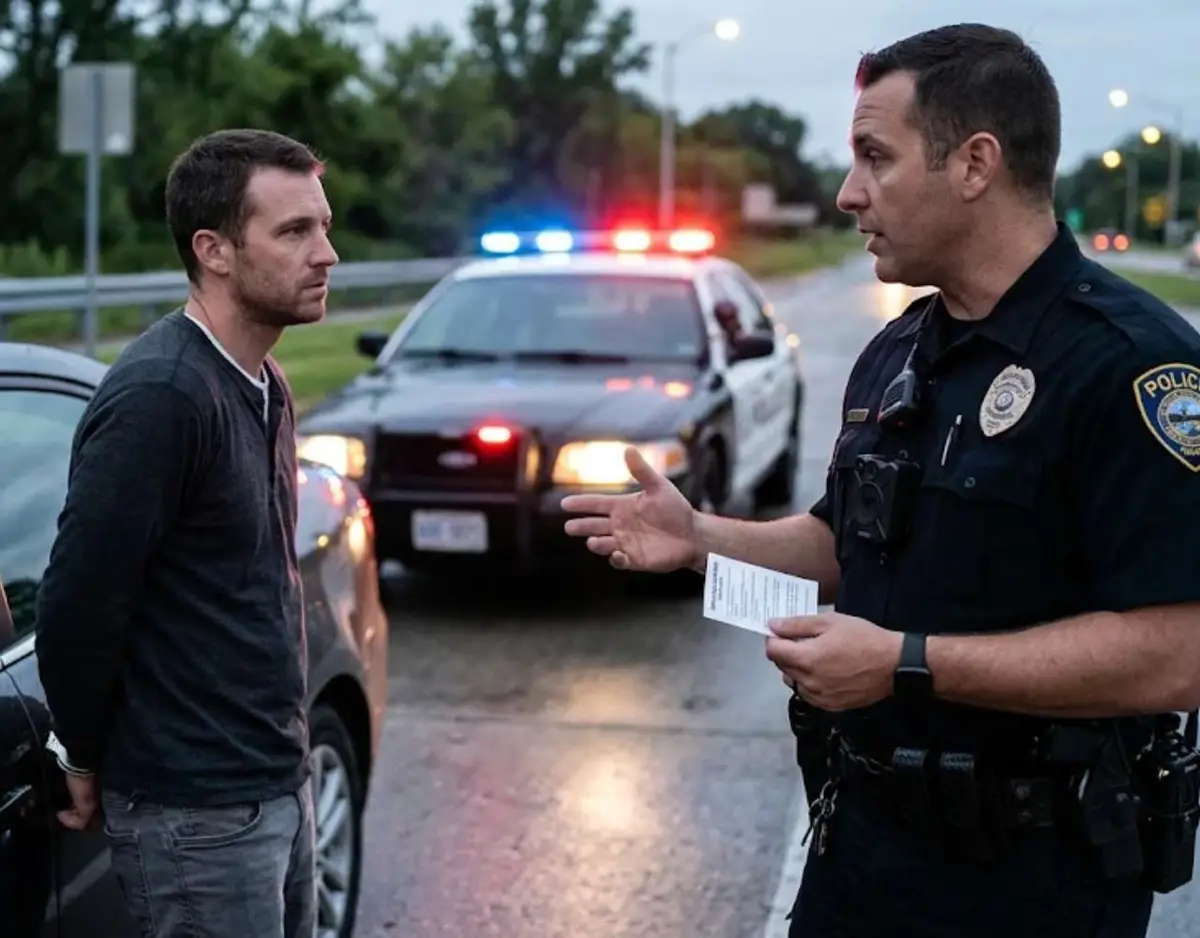
Violent crimes involve causing, or attempting or threatening to cause, physical harm to another person. In South Carolina, the General Assembly lists the offenses that count as “violent crimes” in a single statute, S.C. Code Ann. § 16-1-60. That statute states that only the offenses specifically enumerated in it are considered violent offenses.
The list includes murder, attempted murder, voluntary manslaughter, assault and battery of a high and aggravated nature, criminal sexual conduct in the first and second degree, kidnapping, armed robbery, carjacking, burglary in the first and second degree and arson, among others. Since May 15, 2026, the list also includes discharging a firearm at or into a dwelling, building, vehicle or other occupied structure or conveyance (2026 Act No. 138, H.3650). Many other offenses that involve force or injury, such as assault and battery in the second or third degree, are not on that list but can still bring serious penalties.
Whether an offense is classified as a violent crime can matter in other ways. For example, South Carolina’s pretrial intervention statute lists a crime of violence as defined in § 16-1-60 among the charges for which a person generally must not be considered for intervention (S.C. Code Ann. § 17-22-50). Your attorney can explain what the classification means in your case.
If you have been charged with an offense like these, our Greenville violent crimes defense lawyers can review your case with you. Call Touma Law Group at 864-618-2323 to schedule a free consultation.
Types of Violent Crimes in South Carolina
Each offense below has its own statute, its own elements and its own penalty. The penalties listed are the maximums or ranges written in the statutes. A judge decides the sentence in an actual case.

Murder
South Carolina defines murder as the killing of any person with malice aforethought, express or implied (S.C. Code Ann. § 16-3-10). The statute does not divide murder into degrees. A person convicted of or pleading guilty to murder must be punished by death or by a mandatory minimum term of 30 years to life in prison (S.C. Code Ann. § 16-3-20). Life imprisonment under the statute means until death, without parole. The death penalty is possible only if the State seeks it and a statutory aggravating circumstance is found.
Attempted Murder and Manslaughter
A person who, with intent to kill, attempts to kill another with malice aforethought commits attempted murder. It is a felony punishable by up to thirty years, and the sentence may not be suspended and probation may not be granted (S.C. Code Ann. § 16-3-29).
Manslaughter is the unlawful killing of another without malice. A person convicted must be imprisoned for not less than two years and not more than thirty years (S.C. Code Ann. § 16-3-50). Voluntary manslaughter is the unlawful killing of a human being in the sudden heat of passion upon sufficient legal provocation. The South Carolina Supreme Court has said that both the heat of passion and the legal provocation must be present at the time of the killing, and that the provocation must be such as to render the mind of an ordinary person incapable of cool reflection and produce an uncontrollable impulse to do violence (State v. Cooley, 342 S.C. 63 (2000)). Involuntary manslaughter, which requires criminal negligence defined as reckless disregard of the safety of others, carries up to five years (S.C. Code Ann. § 16-3-60). Our article on the difference between homicide and murder explains these charges.
Assault and Battery
South Carolina treats assault and battery as one offense with four levels, set out in S.C. Code Ann. § 16-3-600:
- Assault and battery of a high and aggravated nature applies when great bodily injury results or the act is accomplished by means likely to produce death or great bodily injury. It is a felony punishable by up to 20 years.
- First degree includes certain acts during a robbery, burglary, kidnapping or theft, or by means likely to produce death or great bodily injury. It is a felony punishable by up to 10 years.
- Second degree involves moderate bodily injury, or the possibility of it, or nonconsensual touching of private parts. It is a misdemeanor punishable by a fine of up to $2,500, up to 3 years in prison, or both.
- Third degree is the lowest level. It is a misdemeanor punishable by a fine of up to $500, up to 30 days in jail, or both.
South Carolina has no offense called “assault with a deadly weapon.” A case involving a weapon is charged under these levels, as explained in our article on assault with a weapon in South Carolina. Assault and battery by a mob is a separate offense with penalties that depend on the result: not less than thirty years if death results, three to twenty-five years for serious bodily injury, and up to one year for bodily injury (S.C. Code Ann. § 16-3-210).
Domestic Violence Offenses
Domestic violence offenses in South Carolina involve a victim who is the defendant’s household member. Domestic violence in the first degree is a felony punishable by up to ten years. It applies when, for example, great bodily injury results, a firearm is used, or the person has two or more prior domestic violence convictions within ten years. Domestic violence of a high and aggravated nature is a felony punishable by up to twenty years (S.C. Code Ann. §§ 16-25-20 and 16-25-65). Lower degrees of domestic violence are misdemeanors with their own penalties.

Armed Robbery and Carjacking
Robbery while armed with a deadly weapon, or while alleging by action or words that the person was armed, is a felony. It carries a mandatory minimum term of not less than ten years and not more than thirty years, with no part suspended and no probation, and parole eligibility only after at least seven years (S.C. Code Ann. § 16-11-330). Attempted armed robbery is punishable by up to twenty years.
Kidnapping
A person who unlawfully seizes, confines, inveigles, decoys, kidnaps, abducts or carries away another person by any means without authority of law, other than a minor taken by a parent, is guilty of a felony and must be imprisoned for a period not to exceed thirty years (S.C. Code Ann. § 16-3-910).
Criminal Sexual Conduct
South Carolina charges sexual offenses as criminal sexual conduct in three degrees. First degree carries up to 30 years, second degree up to 20 years and third degree up to 10 years (S.C. Code Ann. §§ 16-3-652 to 16-3-654). Separate statutes cover offenses involving minors and spouses. Criminal sexual conduct in the first and second degree appear on the violent crimes list in § 16-1-60. Read more in our article on sexual assault penalties in South Carolina, or contact our sex crimes defense attorneys.
Penalties for Violent Crimes in South Carolina
Penalties depend on the offense. They range from a few hundred dollars and a short jail term for third-degree assault and battery, to a mandatory minimum of 30 years to life, or death, for murder.

| Offense | Statute | Penalty written in the statute |
|---|---|---|
| Murder | 16-3-20 | Death, or mandatory minimum 30 years to life |
| Attempted murder | 16-3-29 | Up to 30 years, no suspension or probation |
| Manslaughter | 16-3-50 | 2 to 30 years |
| Assault and battery of a high and aggravated nature | 16-3-600(B) | Up to 20 years |
| Assault and battery, first degree | 16-3-600(C) | Up to 10 years |
| Armed robbery | 16-11-330(A) | 10 to 30 years, no suspension or probation |
| Kidnapping | 16-3-910 | Up to 30 years |
| Criminal sexual conduct, first degree | 16-3-652 | Up to 30 years |
A conviction for some offenses also has consequences beyond a sentence. A conviction for criminal sexual conduct generally requires sex offender registration, as discussed in our article on sexual assault penalties.
Call Touma Law Group for a Free Case Evaluation
If you or a loved one has been charged with a violent crime in South Carolina, speak with a criminal defense attorney as soon as possible. A licensed South Carolina attorney at Touma Law Group must review the facts of a case before anyone relies on the general information on this page.
Being accused of a violent crime can be frightening. We can explain the charge, the statute the State is using and your options. Contact us to schedule a free consultation.