Getting pulled over on reasonable suspicion of drunk driving in South Carolina puts you in front of a decision in a matter of seconds: take the breathalyzer test, or refuse it. Neither choice makes the situation disappear. What changes is which consequence you are choosing and how soon it starts.
Touma Law Group defends DUI cases from offices in Greenville, Columbia, and Anderson, and our attorneys include former prosecutors who handled these same stops from the other side of the courtroom.
Here is what South Carolina law actually says about the breath test decision, including a 2024 change that most drivers are unaware of. To schedule a free initial consultation, contact our defense law firm in Greenville today.
Refusing and Taking the Test Both Come with Consequences, Just Not the Same Ones
There is no version of this traffic stop that avoids a consequence to your driver’s license. If you refuse the breath test, South Carolina suspends your license right away, and the length of that suspension grows with each prior refusal. If you take the test and the result comes back at 0.15 percent or higher, you also face a suspension, though the starting point is shorter than a refusal.
The tradeoff works in the opposite direction for your criminal case. Refuse, and prosecutors have no blood alcohol number to use against you, though your refusal itself can be brought up at trial. Take the test and fail, and that number becomes evidence the prosecution can use directly. Since 2024, both paths can also require an ignition interlock device before you drive again, which is a change that earlier guides on this topic do not reflect.
Related: Touma Law Group has a skilled and experienced Columbia DUI Lawyer ready to help with your case.
What South Carolina’s Implied Consent Law Actually Requires
Under South Carolina’s implied consent law, S.C. Code § 56-5-2950, driving on the state’s roads means you have already agreed to a breath, blood, or urine test if a police officer arrests you on suspicion of DUI. The officer still has to follow specific steps before that consent means anything in practice.
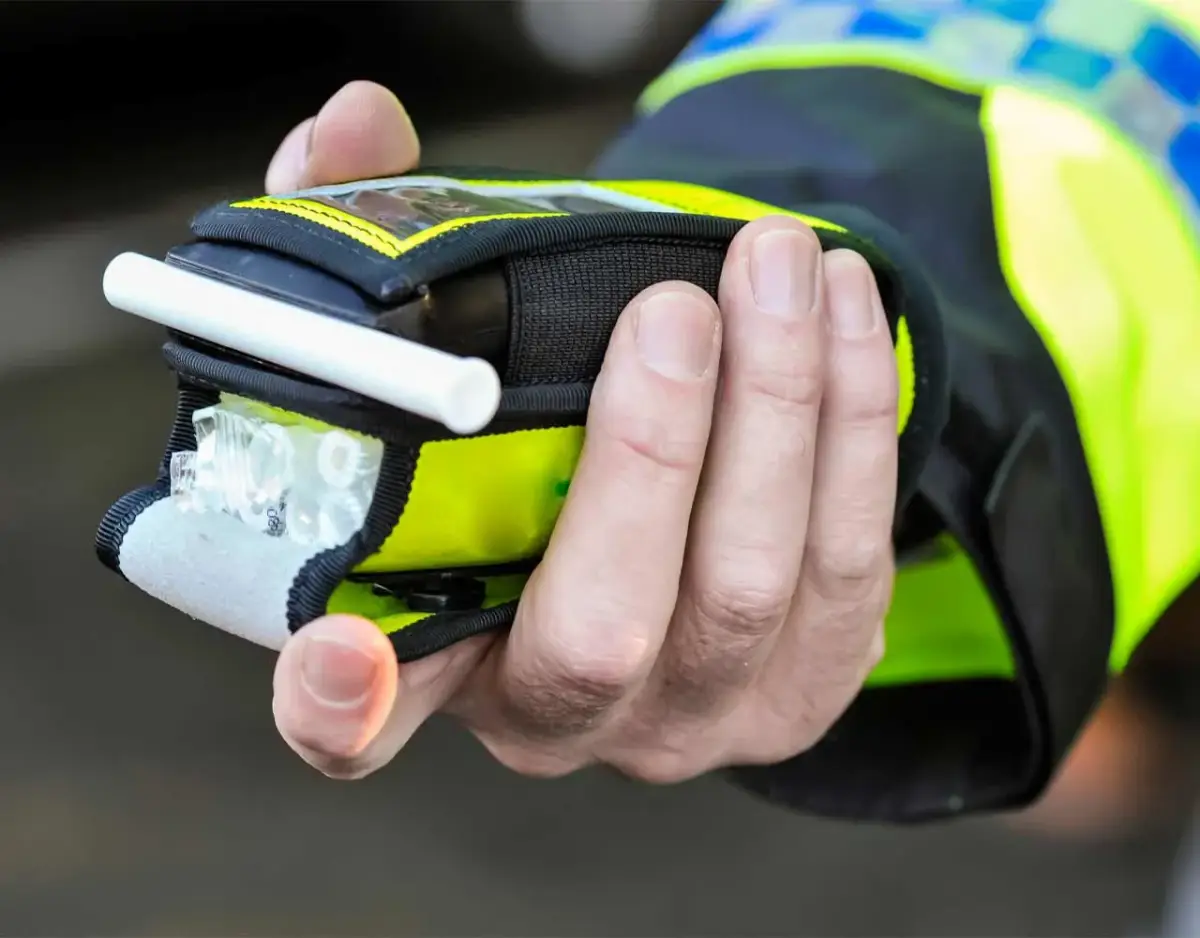
- The officer must offer a breath test and must be certified by the South Carolina Criminal Justice Academy to run it on a Datamaster DMT device, following South Carolina Law Enforcement Division (SLED) protocol.
- A breath sample generally has to be collected within two hours of the arrest.
- If a breath sample is not possible, an officer may request blood or urine instead, collected by qualified medical personnel within a set window after the arrest (confirm the current time limit with an attorney, since this detail can change and deserves a citation check before publishing).
- Before testing, the officer has to read your legal rights and explain the consequences of refusal, both out loud and in writing, and that advisement is usually recorded on video.
Be Prepared: What to do After a DUI in Greenville
What Happens to Your License If You Refuse
A refusal triggers an automatic license suspension that starts before your criminal case is ever heard in court:
- First refusal: driver’s license suspended for at least six months
- Second refusal within ten years: at least nine months
- Third refusal within ten years: at least twelve months
Each of these suspensions can end earlier than the full term if you enroll in South Carolina’s Ignition Interlock Device Program. Your refusal itself is also admissible, meaning the prosecution can point to it at trial as part of the case against you.
What Happens to Your License if You Take the Test and the Result is 0.15 or Higher
Taking the test does not guarantee a shorter path if the result is high. A breath test, blood test, or urine sample result of 0.15 percent (the legal limit) or more triggers its own administrative suspension of at least one month, separate from whatever happens with the criminal DUI charge itself.
That is a different threshold than the 0.08 percent used to prove a standard Driving Under the Influence, and South Carolina also allows a related charge, Driving with an Unlawful Alcohol Concentration (DUAC), built entirely around the BAC (Blood Alcohol Concentration) number rather than visible impairment. If you want to understand how a DUI and a DUAC charge differ, see our DUI vs. DUAC breakdown.
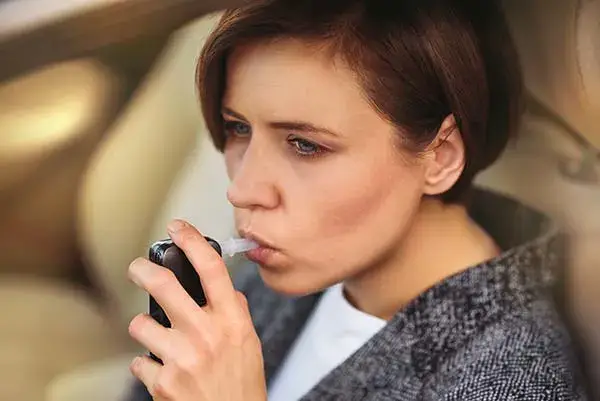
The 2024 Ignition Interlock Law Changed the Outcome for Almost Everyone
For a decade, South Carolina only required an ignition interlock device (IID) for repeat DUI offenders or a first-time offender who blew 0.15 percent or higher. Everyone else could typically serve a fixed suspension and move on without one.
That changed on May 19, 2024, when South Carolina’s All Offender law took effect. Under the current law, nearly everyone convicted of DUI, and nearly everyone with an implied consent suspension from a refusal or a 0.15-plus result, has to install an IID before driving again.
The device is a handheld breathalyzer wired into the ignition that you blow into before starting the car and again at intervals while driving, and the driver pays for installation and ongoing monitoring.
Learn More: Reach out to us if this is a first-time DUI.
You Generally Have 30 Days to Request a Hearing
If your license is suspended, whether from a refusal or a 0.15-plus result, South Carolina law generally gives you 30 days from the notice of suspension to request a contested case hearing before the Office of Motor Vehicle Hearings. Missing that window generally means the suspension stands regardless of how the underlying stop holds up.
You also have the right to have an independent test of your own choosing done at your own expense, separate from the state’s result. While a hearing is pending, a Temporary Alcohol License may be available so you are not left without any ability to drive in the meantime. The exact cost and paperwork for a hearing request and a temporary license can change, so confirm current figures before quoting them to a client.
A Breath Test Result is Not the End of the Case
A breath test result is a piece of evidence, not a verdict. An attorney can look at how the sample was taken, whether the device had current maintenance and calibration records, whether the officer held the required certification, whether SLED protocol was followed, and whether the officer had legal grounds for the stop in the first place. Any weakness in those areas can affect how much weight the result carries in your case.
What to Do After a DUI Arrest Anywhere in South Carolina
The choices you make right after an arrest can matter as much as the stop itself, no matter which of our four markets you are in.
- Note the time of the stop and the test, since the two-hour breath window and other deadlines run from that moment.
- Keep every piece of paperwork the officer gives you, including the notice of suspension.
- Avoid discussing the details of the stop with anyone besides your attorney.
- Contact a DUI defense attorney quickly. The 30-day hearing window moves fast, and it is easier to protect if someone starts working on it right away.
A DUI Conviction Stays on Your Record Even After the License Issue is Resolved
South Carolina’s expungement laws do not allow a DUI conviction to be expunged, first offense or otherwise. That stays true even after a license is fully reinstated and an ignition interlock requirement ends.
If the DUI charge itself is dismissed or you are found not guilty, the arrest may be eligible for expungement, but a conviction is not. That permanence is one more reason to take the 30-day window and the criminal case seriously from the start, not just the license side of things.
Talking to a DUI Defense Attorney Before Your 30 Days Run Out
Whether you refused the test or took it and are waiting on next steps, the clock on your hearing request starts the day of the arrest, not the day you decide to look for help. Our attorneys include Jarrett Roman, a combat veteran who now leads our Anderson office, and our founding and lead attorney in the Columbia office, Adam Touma. We know how these stops get built, and where they tend to have gaps.
Touma Law Group is available 24/7 from offices in Greenville, Columbia, and Anderson. Call the office at 864-618-2323 or reach out through our contact page for a free consultation with a South Carolina DUI attorney.
No. You can physically refuse the test. What South Carolina law does is attach an automatic license suspension to that test refusal, separate from whether you are later convicted of DUI.
No. Refusing removes one piece of evidence, the BAC number, but officers can still build a DUI case on other observations, and your refusal can be used against you at trial.
Under the law that took effect May 19, 2024, most people convicted of DUI or facing an implied consent suspension need an interlock device, including many first offenses that would not have required one before that date.
A DUI conviction cannot be expunged in South Carolina. If the charge is dismissed or you are acquitted, the arrest itself may be eligible for expungement, but a conviction stays on your record.