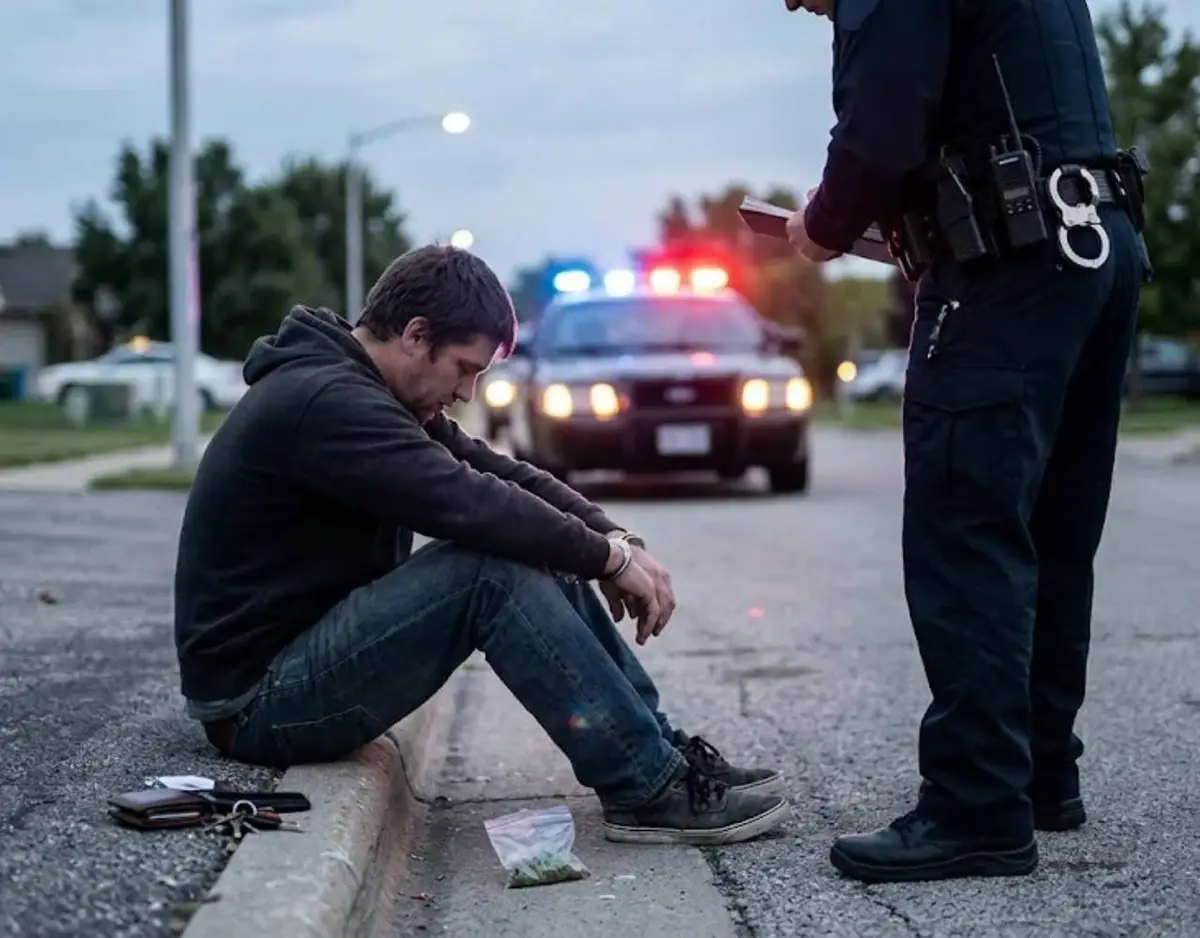
While many states have legalized or decriminalized marijuana, South Carolina has not. Because drug laws differ from state to state, visitors and transplants from other states may be confused about what they are allowed to bring into or have in their possession in South Carolina.
At the time of writing, South Carolina’s controlled substances statute still lists marijuana, psilocybin (“magic mushrooms”), MDMA, and LSD in Schedule I, and cocaine and methamphetamine in Schedule II, under S.C. Code Ann. § 44-53-190 and § 44-53-210. It is also unlawful to knowingly or intentionally possess any controlled substance, including prescription pills, unless it was obtained directly from, or under a valid prescription or order of, a practitioner, under S.C. Code Ann. § 44-53-370(c).

If you have been arrested for possession in South Carolina, you do have options. At Touma Law Group, our Greenville drug defense lawyers understand that mistakes happen, and we’re ready to help you understand the charges you are facing.
What Are Possible Sentences for Drug Possession in South Carolina?
The possible sentence depends on the type of drug, the amount, and whether the charge is a first, second, or third or later offense. Because South Carolina has not decriminalized these drugs, every possession charge carries the possibility of a criminal record, fines, and jail time. The figures below are the maximums or ranges the statute sets, not what a court will necessarily impose. For possession, a judge may suspend the sentence and grant probation.
- Marijuana:
- Simple possession of one ounce (28 grams) or less: for a first offense, a misdemeanor with up to 30 days in jail or a fine of $100 to $200. For a second or later offense, up to one year in jail or a fine of $200 to $1,000. S.C. Code Ann. § 44-53-370(d)(5)
- Possession with intent to distribute: first offense, up to 5 years or $5,000. Second offense, up to 10 years or $10,000. Third or later offense, 5 to 20 years or $20,000. S.C. Code Ann. § 44-53-370(b)(2)
- Trafficking (10 pounds or more): for 10 to less than 100 pounds, a first offense carries 1 to 10 years and a $10,000 fine, with no suspended sentence or probation. Larger amounts carry mandatory sentences of 25 years or more. S.C. Code Ann. § 44-53-370(e)(1)
- Cocaine:
- Simple possession: first offense, a misdemeanor with up to 3 years or $5,000. Second offense, a felony with up to 5 years or $7,500. Third or later offense, up to 10 years or $12,500. S.C. Code Ann. § 44-53-370(d)(3)
- Possession with intent to distribute: first offense, up to 15 years or $25,000. Second offense, 5 to 30 years or $50,000. Third or later offense, 10 to 30 years or $50,000. S.C. Code Ann. § 44-53-370(b)(1)
- Trafficking (10 grams or more): for 10 to less than 28 grams, a first offense carries 3 to 10 years and a $25,000 fine. For 28 to less than 100 grams, a first offense carries 7 to 25 years and a $50,000 fine. Larger amounts carry mandatory sentences of 25 years or more. None of these sentences may be suspended and probation may not be granted. S.C. Code Ann. § 44-53-370(e)(2)
- Crack cocaine and methamphetamine:
- Possession of less than one gram carries the same penalties as simple possession of cocaine. S.C. Code Ann. § 44-53-375(A)
- Possession with intent to distribute carries the same penalties as for cocaine. Possessing one gram or more is prima facie evidence of intent to distribute. S.C. Code Ann. § 44-53-375(B)
- Trafficking (10 grams or more) follows the same weight tiers and penalties as cocaine. S.C. Code Ann. § 44-53-375(C)
- Heroin, other Schedule I or II narcotic drugs, and LSD:
- Simple possession: first offense, a misdemeanor with up to 2 years or $5,000. Second offense, a felony with up to 5 years or $5,000. Third or later offense, up to 5 years or $10,000. S.C. Code Ann. § 44-53-370(d)(1)
- Possession with intent to distribute: the same penalties as for cocaine. S.C. Code Ann. § 44-53-370(b)(1)
- Trafficking: four grams or more of heroin, morphine, or opium, or 100 or more dosage units of LSD. For example, a first offense involving four to less than 14 grams of heroin carries 7 to 25 years and a $50,000 fine. S.C. Code Ann. § 44-53-370(e)(3) and (e)(5)
- MDMA, psilocybin, and other drugs not listed above, including most prescription pills:
- Simple possession: up to 6 months or $1,000 for a first offense, and up to one year or $2,000 for a second or later offense. S.C. Code Ann. § 44-53-370(d)(2)
- Possession with intent to distribute: for a non-narcotic Schedule I, II, or III drug such as MDMA, the same penalties as for marijuana. S.C. Code Ann. § 44-53-370(b)(2)
- Prescription drugs without a valid prescription: the penalty depends on the drug’s schedule. For example, possessing a Schedule II narcotic drug carries up to 2 years or $5,000 for a first offense, while most other prescription drugs carry up to 6 months or $1,000. See S.C. Code Ann. § 44-53-370(d).
These are not all of the drugs found in South Carolina, but they cover the substances behind most drug charges. Larger amounts, packaging, scales, and similar evidence can lead prosecutors to charge possession with intent to distribute instead of simple possession. Possessing more than certain amounts is also prima facie evidence of intent to distribute under S.C. Code Ann. § 44-53-370(d)(5).

How Can Drug Charges Be Dismissed or Reduced?
Whether a drug charge is dismissed, reduced, or resolved some other way depends entirely on the circumstances of your case and the evidence against you, and no lawyer can promise a result. Depending on the facts, these are some of the paths a defense attorney may look at, many of which involve your constitutional rights:
- Entrapment: entrapment is a defense in which a person argues that a government agent pushed them into a crime they were not otherwise inclined to commit. For example, if an undercover officer repeatedly pressured you until you agreed to buy illegal substances, entrapment may be raised.
- Unlawful search or seizure: if police officers conduct an illegal search of your home or vehicle and find illegal substances or paraphernalia, that evidence may be considered “fruit of the poisonous tree” and may be excluded from court. Searches done without a warrant can sometimes be challenged, and if the key evidence is excluded, the prosecution may be unable to move forward with the case.
- Insufficient evidence: the State must prove its case beyond a reasonable doubt. If it does not have enough evidence, it cannot obtain a conviction.
- Pretrial intervention and conditional discharge: some people charged with a first offense may qualify for a diversion program. Under S.C. Code Ann. § 17-22-150, a person who successfully completes a pretrial intervention program receives a noncriminal disposition of the charge and may apply to the court to destroy the arrest records. Under S.C. Code Ann. § 44-53-450, a person who has not previously been convicted of an offense under that article, or of a state or federal marijuana, stimulant, depressant, or hallucinogenic drug offense, and who pleads guilty to or is found guilty of simple possession may, with the person’s consent, have proceedings deferred and be placed on probation. If the person completes the terms, the court dismisses the proceedings without an adjudication of guilt. This can happen only once per person, and a fee applies.
- Plea negotiations: depending on the facts, a prosecutor may agree to a reduced charge or sentence. Whether this is available, and on what terms, varies from case to case.
Related Content: Why You Should Get a Lawyer for Drug Charges
What Should I Do if I Am Arrested for Possession?
If you are being arrested for possession, the best thing you can do is stay calm and observe. Any detail you are able to relay to your criminal defense attorney can help your attorney evaluate the case, and since anything you say can be used against you, you are better off not saying anything.
Details such as the names and badge numbers of arresting officers, nearby security cameras, and witnesses can be important to your attorney’s review of your case. Remember what you can, write it down if possible, and give that information to your attorney as soon as you are able to.
Do not give law enforcement officers permission to search your vehicle, home, or other belongings, do not admit to anything, and do not make any threats or try to resist arrest. These actions can lead to additional charges and heavier consequences. South Carolina takes drug crime very seriously.
There Is No Time to Waste
No matter what led to your situation, if you are facing drug charges in the Greenville area of South Carolina, it is time to call Touma Law Group. Possession of illegal drugs is a serious criminal offense, and the earlier you contact an attorney, the more time there is to review the evidence and your options.
Call our defense lawyers in Greenville today for a free consultation to discuss your situation and learn about your options.