
South Carolina’s constitutional carry law took effect on March 7, 2024 (2024 Act No. 111, H.3594), but it did not erase convictions that were entered under the earlier law. If you were convicted of or charged with unlawful carrying of a handgun before that date, state law now contains specific expungement and dismissal provisions that may apply to your record.
An expungement is a court order that removes the records of an arrest and conviction, which can matter for background checks, employment and housing. Whether a particular conviction qualifies depends on the exact offense, the dates and your other record. If you are looking at an unlawful carrying conviction on your record, the rules can be hard to sort out on your own.
At Touma Law Group, our attorneys handle firearm-related cases and expungement applications. A licensed South Carolina attorney at the firm must review your record and the exact statute of conviction before you rely on the general information on this page. Contact our Columbia weapons charge lawyers today to schedule a free consultation at (803) 879-4499.
Understanding Unlawful Carrying of a Pistol Charges
Since March 7, 2024, South Carolina allows a person who is not otherwise prohibited by law to carry a handgun, openly or concealed, without a concealed weapons permit. The permit itself still exists (S.C. Code Ann. § 23-31-215). State law still makes it unlawful, with or without a permit, to carry a handgun into certain places, including a courthouse while court is in session, a polling place on election days, a law enforcement or detention facility, a daycare, and a place of worship unless permission is given (S.C. Code Ann. § 16-23-20).
A violation of Section 16-23-20 is a misdemeanor carrying up to $1,000 or one year in jail for a first offense, up to three years for a second offense, and a felony carrying up to five years for a third or later offense (S.C. Code Ann. § 16-23-50(A)(2)).
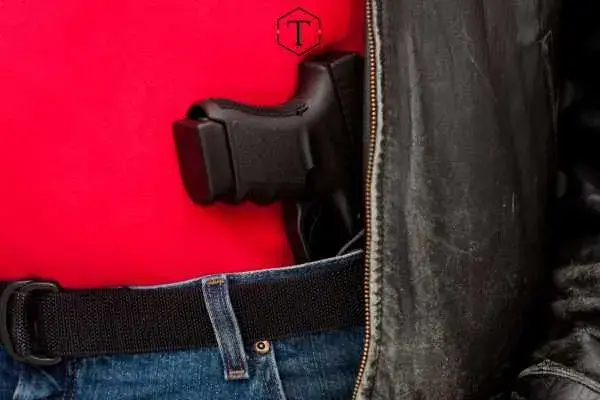
Whether a person may possess a firearm at all is a separate question from where a handgun may be carried. For example, state law makes it a felony for a person who has been convicted of a crime punishable by more than one year in prison to possess a firearm or ammunition, with listed exceptions (S.C. Code Ann. § 16-23-500), and other state and federal laws also prohibit certain people from possessing firearms (18 U.S.C. § 922(g)). A licensed attorney must review the facts of your case to say how any of these rules apply to you.
If you face unlawful carry charges or any other gun charge, the outcome can have a lasting effect on your life. Some gun convictions are outside the expungement provisions described below.
What is Expungement?
In South Carolina, an expungement is a court order expunging the records of an arrest and conviction and any associated bench warrant (S.C. Code Ann. § 22-5-910(A)). The solicitor’s office sends copies of the completed order to the agencies that hold records, including the arresting agency, the detention facility, the courts involved and the State Law Enforcement Division (SLED) (S.C. Code Ann. § 17-22-940(B)). After an expungement under Section 22-5-910, SLED keeps a nonpublic record of the offense and the date of the expungement, so that the right is not used more than once (S.C. Code Ann. § 22-5-910(D)).
Keep in mind that not every conviction can be expunged. Under SC expungement law, eligibility depends on the offense a person pled guilty to or was convicted of, not the offense originally charged (S.C. Code Ann. § 17-22-910(B)). Section 22-5-910(A) does not apply to an offense involving the operation of a motor vehicle, and it covers only the lower-level offenses described in the next section. Felony and violent crime convictions are not within those categories.
Who is Eligible to Expunge an Unlawful Carrying Conviction?
If you want to expunge an unlawful carrying or unlawful possession conviction, there are a few different paths in the statutes. Which one applies depends on the conviction and the dates.
Conviction for Unlawful Possession of a Handgun Before March 7, 2024
Section 17-1-65 allows a person to apply to expunge one conviction for unlawful possession of a handgun under Section 16-23-20, if the conviction occurred before the 2024 constitutional carry act. The application must be made within five years of the enactment of that section (S.C. Code Ann. § 17-1-65(A)). The Governor signed the act on March 7, 2024, and the Code shows March 7, 2024 as its effective date, so counting five years from that date points to March 7, 2029. An attorney should confirm how the period is counted for your case.
First Offense Under the General Expungement Statute
Section 22-5-910(A) covers a first offense for unlawful possession of a firearm or weapon that carries a penalty of not more than one year or a fine of $1,000, or both. The defendant may apply after three years from the date of conviction. A first offense under Section 16-23-20 carries up to one year and a $1,000 fine, which fits that description. A second or later offense carries a different penalty, and it is not described in this provision.
The court may issue the order only if the person has had no other conviction, including an out-of-state conviction, during the three-year period (S.C. Code Ann. § 22-5-910(C)). A person with pending criminal charges of any kind cannot be expunged under this section unless the charges have been pending for more than five years, and a person may have a record expunged under this section only once (S.C. Code Ann. § 22-5-910(F)).
Youthful Offender Sentence
If you were sentenced as a youthful offender, a different rule applies. A youthful offender is a person who was at least seventeen but under twenty-five at the time of conviction for an eligible nonviolent offense (S.C. Code Ann. § 24-19-10(d)). After a first offense conviction with a youthful offender sentence, the person may apply once five years have passed from the completion of the sentence, including probation and parole, with no other conviction during the sentence or those five years. This path does not apply to an offense involving the operation of a motor vehicle, a violent crime listed in Section 16-1-60, or a domestic violence offense in Chapter 25 of Title 16, with limited exceptions (S.C. Code Ann. § 22-5-920).
Dismissal of Pending Charges
A separate provision applies if an unlawful possession of a handgun charge under Section 16-23-20 is still pending and the charge arose before the 2024 act. Under a law that took effect January 14, 2026, the State must dismiss those charges. If the charge was filed together with another offense from the same facts, the dismissal is not immediate and follows the outcome of the other offense (S.C. Code Ann. § 17-1-65(B), as amended by 2026 Act No. 260, S.136).
The Expungement Process in South Carolina
Applications for expungement are administered by the solicitor’s office in each judicial circuit (S.C. Code Ann. § 17-22-910). The steps set out in the statutes are:
- Confirm the offense of conviction and the date of conviction, because eligibility turns on them
- Get the blank expungement order form from the solicitor’s office in the circuit where the charge originated, since use of that form is mandatory (S.C. Code Ann. § 17-22-930)
- Pay the statutory fees: a $250 administrative fee to the solicitor’s office, a $25 SLED verification fee and a $35 clerk of court filing fee (S.C. Code Ann. § 17-22-940)
- Wait while SLED verifies that the charge is appropriate for expungement, the summary court judge attests to eligibility for a Section 22-5-910 charge, and the solicitor and then a circuit court judge sign the order
- The solicitor files the completed order with the clerk of court and sends copies to the agencies that must receive it
The $250 fee is nonrefundable, even if the offense is later found ineligible or the solicitor does not consent (S.C. Code Ann. § 17-22-940(A)). The amounts are set by statute and can change, and they do not include attorney fees. Getting the form, the offense information and the fees right matters for that reason.
An attorney can apply on your behalf (S.C. Code Ann. § 22-5-910(A)). If the solicitor does not consent to an expungement, retained counsel may start an action in circuit court asking for a judicial determination of eligibility (S.C. Code Ann. § 17-22-940(I)).
What Happens Next?
Once the order is signed, the solicitor must give a copy to you or your attorney and to each agency listed in the statute, and each agency holds its own records. Because several agencies receive the order, ask your attorney how to confirm that each record was handled. SLED keeps its nonpublic record as described above.
If the solicitor does not consent or the charge is found ineligible, talk with an attorney about your options before you apply again, since a person may have a record expunged under Section 22-5-910 only once.
Challenges of Expungement and How to Overcome Them
Several things can stand in the way of an expungement application.
A common problem is applying under the wrong provision or for the wrong offense. The statutes treat unlawful possession of a handgun, a first offense under Section 22-5-910, a youthful offender sentence and a pending charge in different ways, and each has its own conditions.

Other conditions can also matter. A new conviction during the waiting period, a pending charge, or a prior expungement under the same section can each block an application under Section 22-5-910 (S.C. Code Ann. § 22-5-910(C) and (F)). A licensed attorney must review your full record before you apply.
Benefits of Expunging an Unlawful Carrying Conviction
An expungement order removes the records of the arrest and conviction from the records held by the agencies that receive the order, apart from the nonpublic record SLED keeps. For that reason, it can change what appears when someone looks up your record, which can matter for employment and housing.
An expungement can also affect how a conviction is counted under the firearm statutes. State law and federal law each say that a conviction that has been expunged or set aside is not counted for purposes of the felon-in-possession rules, unless the order expressly says the person may not possess firearms (S.C. Code Ann. § 16-23-500(F)(3); 18 U.S.C. § 921(a)(20)). Whether an expungement changes any person’s ability to possess a firearm depends on the conviction and the wording of the order, and a licensed attorney must review those facts before anyone relies on this general information.
Why You Should Consider a Lawyer for an Expungement
The statutes allow you to retain counsel to apply to the solicitor’s office on your behalf (S.C. Code Ann. § 17-22-940(I)). A lawyer can review your record and assess whether you meet the conditions for any of the paths above. If you do, the lawyer can prepare the paperwork with you and handle the filings.
When you look for an attorney, ask about the lawyer’s experience with expungement applications and which provision they think applies to your conviction. Ask what the fees are, including the statutory fees, before you pay or start the application process.
If you do not feel comfortable with the first attorney you speak to, you can schedule consultations with others.
Call Us for Help With an Unlawful Carry Expungement
If you have a previous conviction for unlawful carrying or unlawful possession of a handgun, you may fall within one of the expungement provisions described above. A licensed South Carolina attorney at Touma Law Group must review your record before you rely on this general information.
Call us today at (803) 879-4499 to schedule a free consultation with a defense attorney in Columbia to talk about your expungement options.