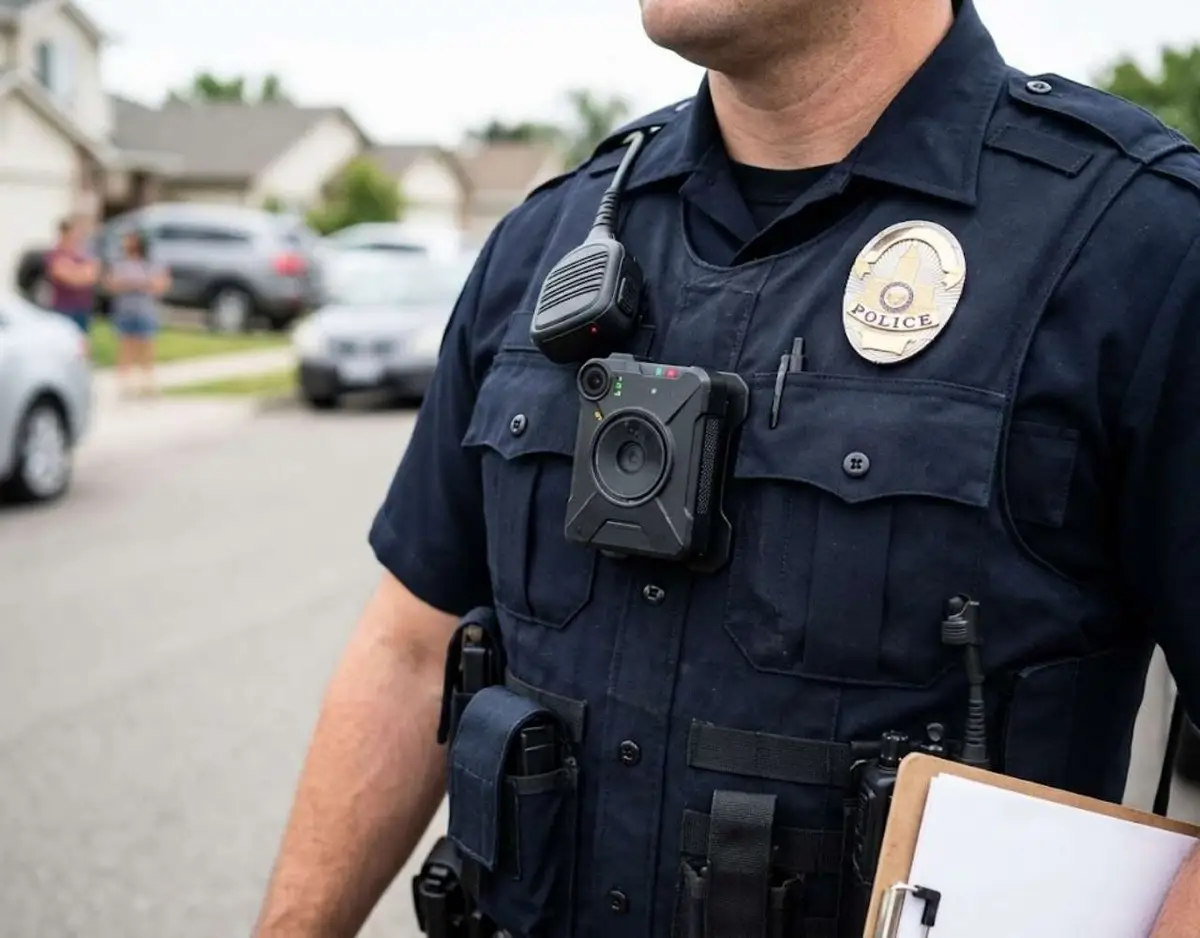
Blue lights flash in your mirror, and an officer walks up with a small camera clipped to his chest. Everything that follows, from the first question to the last field sobriety test, may end up on video. In South Carolina, that police body camera footage can become important evidence for the State. It can also show problems that matter to the DUI case.
At Touma Law Group, we review the video recording in our DUI cases, looking at what the officer did and what the footage shows or leaves out. If you were arrested for DUI, call our Greenville office at (864) 618-2323 or reach out online for a free consultation. A licensed South Carolina attorney at the firm must review the facts of your case before you rely on the general information on this page.
Yes, and South Carolina Law Actually Requires DUI Video
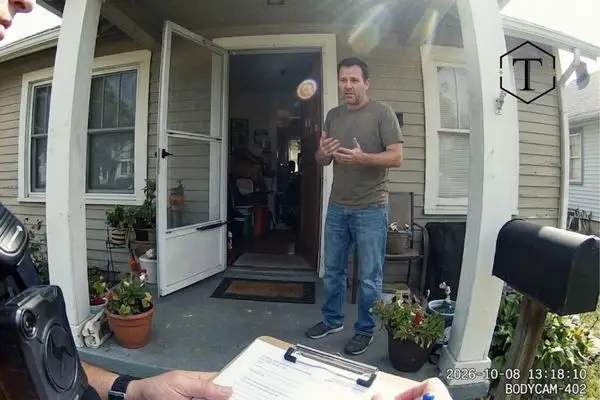
Bodycam footage is usable in a South Carolina DUI case. Prosecutors play it in court, and defense attorneys use it too. What makes South Carolina different is that state law goes a step further and requires video in most DUI arrests.
Under S.C. Code Ann. § 56-5-2953, a person who violates the driving under the influence, unlawful alcohol concentration, or felony DUI statutes must have their conduct video recorded at two places:
- The incident site, meaning the roadside where the officer stopped and investigated you.
- The breath test site, where the officer offers a breath test, usually at a jail or breath testing center.
The statute does not say that the footage must come from a dash camera or from a body-worn camera. What matters is whether the recording captures what the law requires.
What the Video Has to Capture at Each Stage
| Stage of the DUI investigation | What § 56-5-2953 requires the video to show |
|---|---|
| Start of the traffic stop | Recording must begin no later than when the officer activates the blue lights |
| Roadside investigation | Any field sobriety tests the officer gives you |
| Arrest | You being advised of your Miranda rights |
| Breath test site | The entire breath test procedure |
| Breath test site | You being told that you are being recorded and that you have the right to refuse the test |
| Before the breath test | Your conduct during the required 20-minute pre-test waiting period |
When the officer follows these rules, the footage may become a central piece of the State’s DUI case. When the recording does not meet them, the defense may have grounds to raise the issue with the court.
Why the Video Can Cut Both Ways
Officers write a police report after every DUI arrest. That incident report often says things like “slurred speech,” “unsteady on feet,” or “strong odor of alcohol.” Video either backs those claims up or contradicts them.
Body cam footage may help the prosecution show:
- Swaying, stumbling, or trouble standing during the roadside investigation
- Poor performance on field sobriety tests
- Statements you made at the window, such as “I only had two beers”
- Open containers or other items visible in the car
The same footage may help your defense show:
- Clear speech and steady balance that don’t match the police report
- Uneven pavement, poor lighting, traffic, or bad weather during testing
- Confusing or incorrect instructions from the officer
- Medical issues, fatigue, or nerves that explain your performance
- A stop that lacked a lawful reason in the first place
Footage can differ from the paperwork. A report written after an arrest relies on memory, and a recording can be compared with it.
When Officers Skip Steps on Camera
Equipment can fail, recordings can be incomplete, and cameras do not always capture what the statute requires. When the video falls short of the statute, the law gives the defense ways to respond.
The Miranda Advisement Must Be Seen and Heard
In State v. Taylor, Opinion No. 28085 (S.C. Feb. 23, 2022), the South Carolina Supreme Court held that the video must visually depict the defendant being advised of his Miranda rights at the incident site. The defendant and the arresting officer must be visually seen and audibly heard while the officer gives the Miranda rights, so an audio-only recording of the warning is not enough.
The court also addressed the remedy. It held that from that point forward, when the Miranda advisement is not shown as the statute requires, the proper remedy is suppression of the tainted evidence rather than automatic dismissal of the DUI charge. Suppression means the judge may block the State from using evidence tied to the problem with the recording.
What That Looks Like in Practice
Whether a particular bodycam recording meets the statute is a question for the court on the facts of each case, and the remedy for a recording that falls short is a separate question that Taylor and the 2024 decision in Lowery, discussed below, address. Footage that captures only audio of the warning, or that does not show the person or the officer while the warning is given, may not meet the standard Taylor describes. Under the exclusionary rule, evidence gathered in violation of a person’s constitutional rights can be kept out of court. Learn more about what makes evidence inadmissible in South Carolina.
The 2024 Decision in State v. Lowery
In State v. Lowery, Opinion No. 28217 (S.C. July 17, 2024), the South Carolina Supreme Court applied § 56-5-2953 and Taylor again. It held that the absence of field sobriety tests and Miranda warnings from the incident site video did not require dismissal of the DUI charge. It repeated that the remedy for a missing Miranda advisement is suppression of the tainted evidence, not dismissal, and it pointed out that the defendant had never asked to suppress any statements.
The court also read the statute narrowly in two ways. It held that the word “produce” in § 56-5-2953(B) means the recording must be created, not played for the jury, and it held that the statute does not require the State to offer any portion of the incident site video into evidence. A footnote adds a caution for the State: if it presents testimony about field sobriety tests, or about what a person said after Miranda warnings, it risks having that testimony excluded if it does not offer the incident site video showing those events.
Lowery also addressed Miranda. When a defendant challenges a statement, the court held the State has the burden of proving whether the defendant was in custody and whether the statement was a response to interrogation, and it said statements a person volunteers without being questioned are admissible even without warnings. Whether any of this helps in a particular case depends on the facts, and a lawyer must review them.
Legal Exceptions Officers Can Claim
The statute does allow some exceptions. Under § 56-5-2953(B), failure to produce a required recording is not alone a ground for dismissal if the officer submits a sworn affidavit in situations such as:
- Inoperable video equipment, with a statement of the reasonable efforts made to maintain it and a statement that no other operable breath test facility was available in the county
- A person who needed emergency medical treatment, making the recording physically impossible
- Exigent circumstances
The statute also says that at roadblocks, traffic accident investigations, and citizens’ arrests where blue lights did not start the recording, recording must begin as soon as it is practicable. The court may also consider any other valid reason for missing footage based on the totality of the circumstances, and the defense may offer evidence about the officer’s failure to produce the recording. Whether an exception applies depends on the facts.
How We Get the Footage Through Discovery
You cannot request bodycam video the way you request other government documents. S.C. Code Ann. § 23-1-240(G) says data recorded by a body-worn camera is not a public record subject to disclosure under the Freedom of Information Act.
However, that same law gives criminal defendants a path. A criminal defendant may request and receive a recording that is relevant to a pending criminal action, under the South Carolina Rules of Criminal Procedure or a court order. The statute also allows an attorney for the defendant to make the request. Your defense lawyer can make that request on your behalf.
Here is the typical path we follow:
- Send a preservation request early. For the recordings required by § 56-5-2953, subsection (C) says a recording may not be disposed of until the results of any legal proceeding involving it are finally determined. Other footage may be kept on different schedules, so a prompt request helps protect it.
- Request discovery. We ask for the bodycam footage, dash camera video, breath test site video, and the officer’s written reports.
- Look beyond police cameras. Nearby businesses may have video surveillance that captured the stop or your driving.
- Compare every source. We line up each video footage source with the incident report, the Implied Consent Notice, and any laboratory evidence.
- File motions when the video falls short. If the recording does not meet § 56-5-2953 or violates your rights, we may ask the court to suppress the tainted evidence.
What Footage Means for Breath Tests and BAC Evidence
The breath test site video often matters as much as the roadside footage. Before a test, the person must be given a written copy of and verbally informed of the rights and consequences listed in S.C. Code Ann. § 56-5-2950, and § 56-5-2953 requires the breath test site video to show the test procedure and the person’s conduct during the 20-minute pre-test waiting period.
Small problems here can affect the reliability of your blood alcohol concentration results. For example, the video may show you burping, vomiting, or putting something in your mouth during the waiting period.
Your BAC level also shapes the penalties you face. Here is how South Carolina treats a first-offense DUI based on alcohol concentration under S.C. Code Ann. § 56-5-2930(A)(1):
| Alcohol concentration (first offense) | Punishment |
|---|---|
| Under 0.10% | A $400 fine or 48 hours to 30 days in jail |
| 0.10% to under 0.16% | A $500 fine or 72 hours to 30 days in jail |
| 0.16% or higher | A $1,000 fine or 30 to 90 days in jail |
The fines listed are the statutory amounts before court assessments. For violations on or after May 19, 2024, a first-offense conviction also requires ignition interlock participation, regardless of BAC, and the device is required for six months (S.C. Code Ann. § 56-5-2990(A)). Learn more about the ignition interlock device program. Penalties depend on your prior record and the facts of your case, so review the full list of DUI penalties in South Carolina with an attorney.
How Bodycam Video Shapes a Defense Strategy

No two DUI cases rely on the same footage in the same way. Once we review the video, we decide how to use it. A defense strategy might involve one or more of these approaches:
- Challenging the stop. If the video shows no traffic violation or reasonable suspicion, everything that followed may be at risk.
- Attacking the field sobriety tests. We compare the officer’s instructions on horizontal gaze nystagmus and the walk-and-turn test against standard procedures.
- Questioning the officer’s conclusions. Video of officer conduct may contradict claims made in the report or in video testimony at trial.
- Seeking suppression. Missing Miranda footage or an incomplete breath test video may keep some evidence out.
- Plea discussions. The strength of the footage can affect how we discuss a possible resolution with prosecutors.
No approach can promise a specific result. Every case turns on its own facts. Still, footage gives us something concrete to work with, and it can show details that the paperwork leaves out.
Your Next Move After a Greenville DUI Arrest
The video from your arrest already exists, and the prosecution may have it. A defense attorney can request it and review whether it meets what the law requires.
Our attorneys at Touma Law Group represent people charged with DUI in Greenville and across South Carolina. We request the footage, review it closely, and examine whether the State met the requirements the law sets.
Deadlines can apply in DUI cases, including a thirty-day window after a notice of suspension to request a contested case hearing in some cases (S.C. Code Ann. § 56-5-2951(B)). Call (864) 618-2323 today or contact our Greenville DUI lawyer team online to schedule your free case review.
Frequently Asked Questions
Yes, in most cases. S.C. Code Ann. § 56-5-2953 requires video recording of a DUI suspect’s conduct at the incident site and the breath test site. Limited exceptions apply, such as equipment failure or emergency medical treatment.
Not automatically. Section 56-5-2953(B) says a missing recording is not alone a ground for dismissal in certain situations. In State v. Taylor (2022), the Supreme Court held that when the Miranda advisement is not shown as the statute requires, the proper remedy is suppression of tainted evidence, not automatic dismissal. What suppression means for a case depends on the evidence and the facts.
South Carolina does not treat bodycam video as a public record. However, a criminal defendant may request relevant recordings under the Rules of Criminal Procedure or through a court order (S.C. Code Ann. § 23-1-240(G)). Your attorney can request it for you.
Not necessarily. Some officers use both. The statute focuses on whether the recording shows what § 56-5-2953 requires, not which camera captured it.
That footage may hurt, but it does not end the case. Lighting, road conditions, footwear, medical issues, and improper instructions can all affect performance. An attorney can review these details with you.