Spending time on Lake Hartwell is a tradition for many families across South Carolina. From fishing trips and water sports to relaxing afternoons on the lake, it is one of the most popular boating destinations in the area. But with increased boating activity also comes increased attention from law enforcement, especially during busy holidays like Memorial Day weekend.
Many people do not realize that boating under the influence can lead to serious criminal charges. A BUI arrest on Lake Hartwell may result in fines, jail time, a permanent criminal record, and other long-term consequences. At Touma Law Group, we understand how stressful these situations can be, and our Anderson criminal defense lawyers are here to help clients throughout Anderson County protect their rights and move forward.
Contact Touma Law Group today to discuss your boating under the influence case in Anderson County and learn how we may be able to help protect your future.
What Is Boating Under the Influence in South Carolina?

Under South Carolina law, operating a boat while impaired by alcohol or drugs is illegal. This offense is commonly called BUI, or boating under the influence.
A BUI can involve:
- Alcohol
- Illegal drugs
- Prescription medication
- Any substance that affects your ability to safely operate a vessel
The South Carolina BUI law applies to many types of watercraft, including:
- Fishing boats
- Pontoon boats
- Jet skis
- Personal watercraft
- Sailboats with motors
- The operation of moving motorized water device equipment
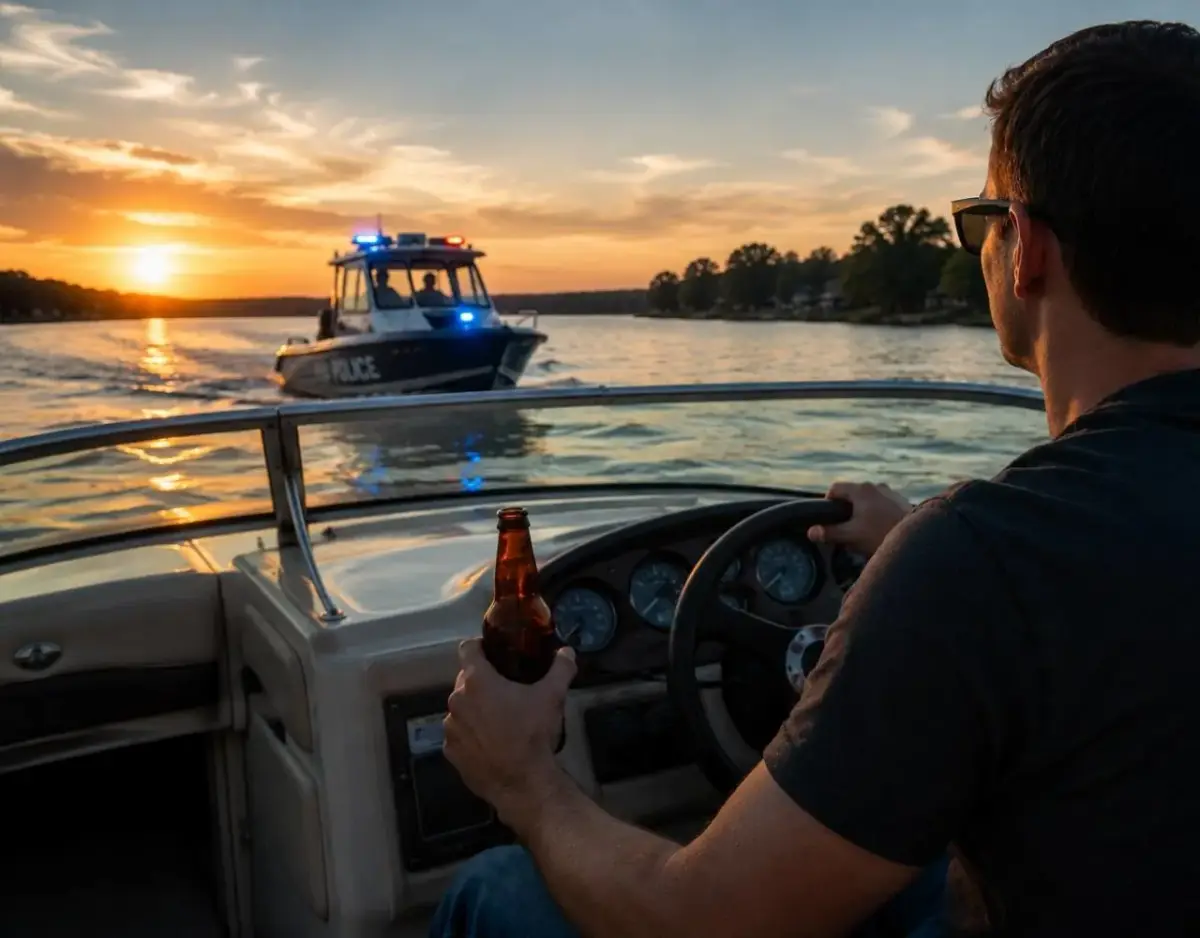
Just because you are on the water instead of the road does not mean the laws are relaxed. In fact, the South Carolina Department of Natural Resources actively patrols lakes and waterways throughout the state.
Like a DUI case, officers may test your blood alcohol concentration if they believe you are impaired. The legal blood alcohol limit for adults operating a boat is generally 0.08%. However, a law enforcement official may still arrest someone even if their blood alcohol level is below that number if signs of impairment exist.
Why Lake Hartwell Sees Heavy BUI Enforcement
Lake Hartwell is one of the busiest lakes in the region. It attracts visitors from across South Carolina and neighboring states for boating, fishing, and summer vacations.
During holidays like Memorial Day weekend and the Fourth of July, law enforcement presence usually increases significantly. Officers monitor:
- Boat ramp activity
- Crowded no-wake zones
- Reckless boating behavior
- Speed violations
- Boating accidents
- Safety equipment compliance
The South Carolina Department of Natural Resources often works alongside other agencies and specialized teams to patrol the water. In some situations, agencies like the United States Coast Guard may also become involved.
Some officers arrive by patrol boat, while others work through region offices, aviation unit operations, or shoreline patrols.
Even experienced boaters can get stopped during a routine safety inspection. Officers may check for:
- Life vests
- Registration
- Fire extinguishers
- Navigation lights
- Signs of impairment
Many people are surprised when a simple stop turns into a criminal investigation.
“I Didn’t Think I Was Drunk”
One of the most common things we hear from clients is, “I honestly didn’t think I was impaired.”
Boating creates unique conditions that can increase alcohol’s effects on the body. Heat, dehydration, and sun exposure can make someone feel intoxicated faster than they would on land.
For example, someone may:
- Drink while floating on a raft for hours
- Spend the day in direct sunlight
- Become dehydrated
- Eat very little food
- Operate a boat while exhausted
These conditions can impact reaction time and judgment.
In some cases, officers may accuse someone of drunk boating after:
- A boating incident
- A collision with an incoming vessel and life-saving measures being needed
- Unsafe driving near swimmers
- Speeding through no-wake zones
- Complaints from other boaters
Even prescription medication can lead to BUI allegations.
How Officers Investigate BUI Cases

When officers suspect impairment, they may begin a more detailed investigation.
This often includes:
- Asking questions about alcohol consumption
- Looking for open containers
- Observing speech and balance
- Conducting field sobriety tests
- Performing shoreline sobriety tests
- Requesting a breath or blood test
Unlike roadside DUI stops, BUI investigations can be more complicated because balance and coordination are naturally affected by being on the water.
That matters because many field sobriety tests were originally designed for dry land, not for people stepping off a rocking boat.
Officers may also request chemical testing to measure blood alcohol concentration. Refusal to be tested can create additional legal problems under South Carolina law.
Penalties for Boating Under the Influence in Anderson County
A BUI conviction can have serious consequences. Many people assume a boating offense is minor, but that is not true.
Depending on the facts of the case, penalties may include:
- Fines
- Jail time
- Probation
- Community service
- Mandatory alcohol education programs
- A permanent criminal record
In some situations, courts may require participation in programs similar to the DUI Alcohol or Drug Use Risk Reduction Program.
Aggravating factors can make penalties even more severe, including:
- High blood alcohol level
- Prior offenses
- Child endangerment
- Boating accidents involving injuries
- Property damage
- Fatal accidents
If a person is seriously injured or killed, charges can quickly escalate into felony-level offenses.
A BUI arrest may also affect:
- Employment opportunities
- Professional licenses
- Hunting and fishing licenses
- Insurance rates
- Future background checks
Some cases can even involve related allegations such as reckless driving, trafficking charges, or other criminal accusations, depending on what officers discover during the investigation.
What Happens After an Arrest?

After a BUI arrest on Lake Hartwell, the process can feel confusing and overwhelming.
Typically, a person may:
- Be detained by officers
- Be transported off the water
- Undergo testing or questioning
- Receive citations or formal charges
- Be required to appear in Magistrate Court
Some cases may involve additional proceedings depending on the severity of the allegations. Serious incidents involving injuries or fatalities may move into higher courts, including Federal Court in rare situations involving federal jurisdiction.
Medical personnel may also become involved after serious boating accidents.
Out-of-state visitors are often shocked to learn they must return to South Carolina to handle their case.
Defenses to BUI Charges
Being charged does not mean you are automatically guilty.
At Touma Law Group, we carefully examine every part of a BUI arrest to identify weaknesses in the prosecution’s case.
Possible defenses may include:
- Improper stop by law enforcement
- Inaccurate blood alcohol testing
- Problems with field sobriety tests
- Medical conditions mistaken for impairment
- Violations of constitutional rights
- Lack of probable cause
- Improper handling of evidence
We also look closely at how the investigation was conducted. Were the shoreline sobriety tests reliable? Was the testing equipment maintained properly? Did officers follow the South Carolina Code of Laws during the arrest?
These details matter.
In many cases, what initially appears to be a strong case may contain significant legal problems once fully reviewed by a criminal defense lawyer.
Boating Safety Still Matters
While defending clients is important, boating safety matters too. Many boating accidents happen because people underestimate how dangerous the water can become.
Before heading out on Lake Hartwell or Lake Murray, boaters should:
- Wear life vests
- Avoid excessive drinking
- Stay hydrated
- Follow no-wake zones
- Keep a proper lookout for other boats
- Carry emergency equipment like a life raft
- Understand boating education guidelines
- Make sure they have any required registration or special permit documentation
- Follow liquor control laws
- Operate cautiously near swimmers and docks
Many boating incidents can be prevented with simple planning and responsible choices.
Why Local Representation Matters

A local attorney familiar with Anderson County courts can make a major difference in a BUI case.
At Touma Law Group, we understand how local prosecutors, judges, and law enforcement agencies handle these charges. We know how South Carolina waterways are patrolled and how these investigations are commonly built.
We also understand that many people arrested for boating under the influence are not criminals. They are parents, students, workers, and visitors who now face a stressful legal situation.
Our goal is to guide clients through the process, explain every step clearly, and aggressively protect their rights.
What You Should Do After a BUI Arrest
If you were arrested for boating under the influence on Lake Hartwell, there are important steps you should take immediately:
- Do not discuss your case on social media
- Save all paperwork and citations
- Write down what happened while it is fresh in your memory
- Attend all court appearances
- Avoid speaking to investigators without legal advice
- Contact an attorney as soon as possible
The sooner a criminal defense lawyer reviews your case, the more opportunities there may be to challenge evidence or build a strong defense.
Conclusion
A boating under the influence arrest in Anderson County can affect far more than just your weekend plans. A conviction may impact your freedom, finances, career, and criminal record for years to come.
But being charged does not mean your case is hopeless.
At Touma Law Group, we help people across South Carolina fight serious criminal charges, including BUI offenses on Lake Hartwell and other South Carolina waterways. Whether your case involves personal watercraft, boating accidents, refusal to be tested, or a complicated criminal investigation, we are ready to stand beside you and protect your rights.
If you or a loved one was arrested for boating under the influence in Anderson County, contact Touma Law Group today for a confidential consultation and learn how we may be able to help protect your future.
Frequently Asked Questions
Can I get arrested for drunk boating on Lake Hartwell even if I was not speeding?
Yes. Law enforcement officers do not need to see speeding or reckless behavior to investigate a possible BUI offense. Officers from the South Carolina Department of Natural Resources may stop boats for safety inspections, equipment checks, or other boating violations.
Does a BUI carry the same penalties as a DUI?
A BUI can carry serious penalties similar to a DUI. Depending on the circumstances, penalties may include fines, jail time, probation, mandatory alcohol education programs, and a permanent criminal record.
Can I be charged with BUI while operating a jet ski?
Yes. South Carolina BUI laws apply to jet skis and other personal watercraft, not just large boats or pontoons.
Will a BUI conviction stay on my criminal record?
A conviction for boating under the influence may appear on your criminal record and could affect employment opportunities, professional licensing, and background checks.