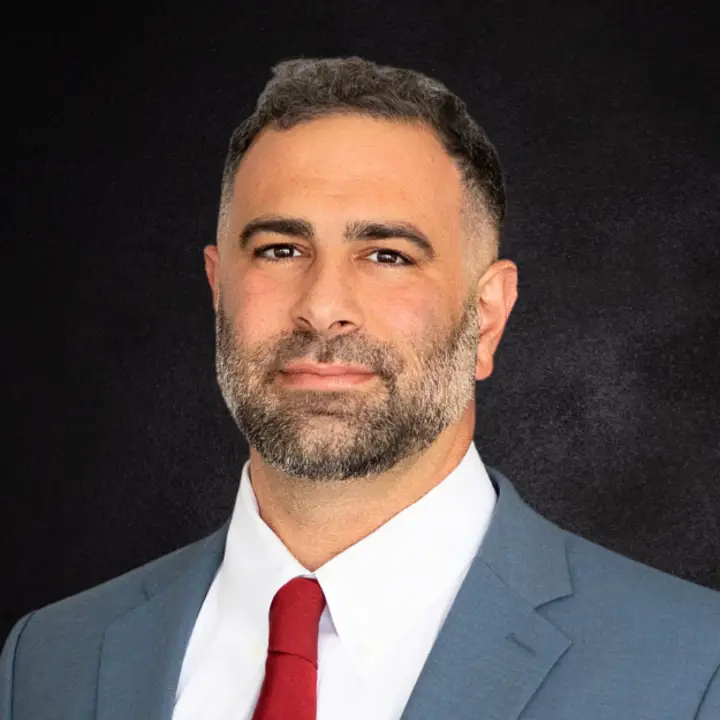
If you are facing charges in Chapin, South Carolina, a criminal defense lawyer can explain the charges, protect your rights and represent you in court. A defense attorney knows the criminal law and the court process, and can guide you through each step of your case, answer your questions and talk with the prosecutor on your behalf.
Touma Law Group serves Chapin from its Columbia office at 1820 Bull Street, Columbia, SC 29201. To talk about your situation, call (803) 879-4499. A licensed South Carolina attorney at our firm must review the facts of your case before you rely on the general information on this page.
Why You Need a Chapin SC Criminal Defense Lawyer
If you are facing criminal charges, you should talk to a lawyer before you make decisions about your case. A lawyer can give you legal advice after you are arrested by law enforcement and help you understand the choices in front of you. The Sixth Amendment gives a person accused of a crime the right to the assistance of counsel.
Types of Charges and Crimes a Criminal Defense Lawyer Can Help With
A Chapin criminal defense lawyer can represent people facing a wide range of charges, from misdemeanors to felonies. The most common types of offenses include:
- Drug crimes: possession, distribution, trafficking and manufacturing of controlled substances.
- Sex crimes: criminal sexual conduct and related offenses.
- Violent crimes: murder, assault and battery, robbery and kidnapping.
- Theft crimes: larceny, burglary and shoplifting.
- White collar crimes: fraud, embezzlement and identity theft.
- DUI: driving under the influence of alcohol or drugs (S.C. Code Ann. § 56-5-2930).
Felony Charges
A felony is a serious crime with serious penalties. South Carolina classifies felonies by their maximum sentence, from Class F (up to five years) to Class A (up to thirty years), and an offense with a term of less than one year is a misdemeanor (S.C. Code Ann. § 16-1-10 and § 16-1-20). Some offenses, such as murder, are exempt from those classes and carry their own penalties.
A conviction can have lasting effects beyond the sentence. For example, a person convicted of a crime punishable by more than one year in prison cannot lawfully possess a firearm or ammunition in South Carolina (S.C. Code Ann. § 16-23-500). If you are charged with a felony, speak with a criminal defense lawyer right away.

A criminal charge is an accusation that a person broke a criminal law. Many charges are brought in South Carolina state court, where the circuit solicitor attends the courts of general sessions and prepares their dockets (S.C. Code Ann. § 1-7-330). Some conduct is charged in federal court instead. The federal district courts have jurisdiction over offenses against the laws of the United States (18 U.S.C. § 3231), and United States attorneys prosecute them (28 U.S.C. § 547). If you are facing a federal charge, read about a federal criminal defense lawyer.
Marijuana Charges
Possession of marijuana is a crime in South Carolina. Possession of 28 grams (one ounce) or less is a misdemeanor, punishable by up to 30 days in jail or a fine of $100 to $200 for a first offense. Possession of more than that amount can be presumed to be possession with intent to distribute (S.C. Code Ann. § 44-53-370(d)(5)). In some first-offense cases a court may defer proceedings and place a person on probation under the conditional discharge provision (S.C. Code Ann. § 44-53-450). Read more about misdemeanor possession, and talk with a lawyer about the facts of your case.
Violent Crimes
Violent crimes involve force or the threat of force. South Carolina law charges many of them by degree. Assault and battery runs from a third-degree misdemeanor (up to 30 days or a $500 fine) to assault and battery of a high and aggravated nature, a felony carrying up to twenty years (S.C. Code Ann. § 16-3-600). Domestic violence is also charged by degree (S.C. Code Ann. § 16-25-20). Other violent offenses include murder, robbery and kidnapping.
White Collar Crimes
White-collar crime is non-violent criminal activity related to finance or business. Examples include fraud, embezzlement, bribery and money laundering. These cases often involve financial records, so the evidence can be technical.
Juvenile Crimes
A child accused of breaking a state or local law is generally handled in Family Court, which has exclusive original jurisdiction over those cases, with exceptions set out by statute (S.C. Code Ann. § 63-3-510). Juvenile cases follow different procedures than adult cases, so a minor accused of a crime should have a juvenile criminal defense lawyer to explain the process and the options.
Drug Offenses
Drug penalties vary with the substance, the amount and your record. Manufacturing, distributing or possessing with intent to distribute a Schedule I or II narcotic drug carries up to fifteen years in prison, a fine of up to $25,000, or both for a first offense. Other Schedule I, II or III substances carry up to five years, a fine of up to $5,000, or both for a first offense (S.C. Code Ann. § 44-53-370(b)). If you have been charged, a lawyer can review the charge and talk with you about how the case may proceed.
Choosing the Right Criminal Defense Lawyer for Your Needs
If you are accused of a crime, choose a lawyer who handles criminal defense cases and who you feel comfortable working with. Consider the lawyer’s experience with charges like yours, how well the lawyer communicates, and how the firm explains its fees.
Qualities to Look for in a Defense Lawyer
When looking for a criminal defense lawyer in Chapin, SC, consider these qualities:
- Knowledge of the criminal charges and court procedures that apply to your case.
- Willingness to review the evidence carefully and explain what it shows.
- Clear, regular communication and respect for your questions.
- A lawyer you are comfortable speaking with, whether your case is resolved before trial or goes to a criminal trial.
Defense Strategies a Chapin Lawyer May Use
Every case is different, and the right approach depends on the evidence and the charge. A defense lawyer may review whether police had a lawful basis for a stop or a search under the Fourth Amendment, whether statements were taken in line with Miranda v. Arizona, and whether the prosecution can prove each part of the charge. A lawyer can also discuss a possible plea or a trial with you. In a criminal prosecution, the accused has the right to a public trial by an impartial jury under the Sixth Amendment.
Working With Touma Law Group From Chapin
Touma Law Group is a South Carolina criminal defense firm. We represent clients facing a range of charges, and we cannot promise any particular result in a case. Contact our Columbia office at (803) 879-4499 to talk about your charges with an attorney.