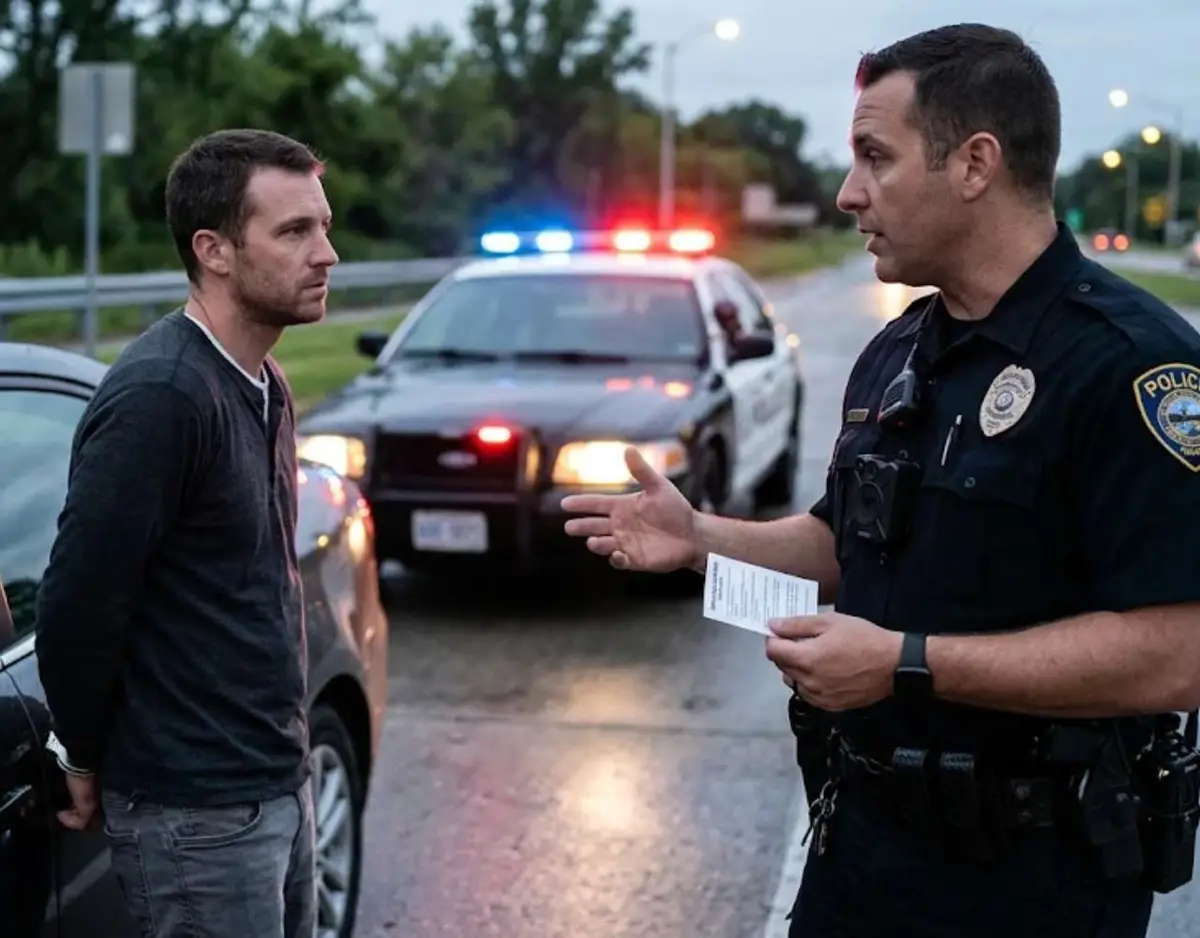
Probation is often viewed as a second chance, an opportunity to avoid jail while completing certain requirements under supervision. In South Carolina, the law describes probation as a form of clemency (S.C. Code Ann. § 24-21-410). Many people do not fully understand the risks until they are facing a problem and asking: what happens if you violate probation? In these situations, speaking with a criminal defense lawyer early can help you understand your options.
Courts take probation violations seriously. Even what seems like a small mistake, such as missing a meeting or failing a drug test, can lead to a violation report. Depending on the situation, you could face added conditions, other sanctions or jail time. Understanding how probation works and what happens after a violation can help you make informed decisions. This article is general information, and a licensed South Carolina attorney at our firm must review the facts of your case before you rely on it.
What Counts as a Probation Violation?
When you are placed on probation, you must follow a set of rules known as the conditions of probation. If you do not follow them, the court or your probation agent may treat that as a violation.
Common Probation Conditions
The court may set and may change the conditions of probation at any time. By statute, a probationer must do things such as (S.C. Code Ann. § 24-21-430):
- Refrain from violating any state or federal criminal law
- Permit the probation agent to visit at home or elsewhere
- Work faithfully at suitable employment as far as possible
- Pay a fine in one or several sums as the court directs
- Perform public service work as the court directs
- Submit to a urinalysis or blood test on request of the probation agent
- Submit to curfew restrictions, and, if ordered, house arrest or intensive surveillance
- Support his or her dependents
The court may add other conditions, such as counseling or treatment programs. Probation conditions also include agreeing to a search without a warrant, based on reasonable suspicion, of the probationer’s person, vehicle and possessions in most cases (S.C. Code Ann. § 24-21-430).
Read the written conditions you were given. Your probation agent must give you a written statement of the conditions and instruct you on them (S.C. Code Ann. § 24-21-280(A)).
Technical Violations and New Criminal Charges
Violations generally fall into two groups. In the first group, a person does not follow a condition of supervision. The Department of Probation, Parole and Pardon Services lists common examples of this kind of violation in its administrative sanctions rules: failure to report, failure to pay fines, fees and restitution, failure to take part in a required program or service, failure to complete community service, and failure to refrain from the use of alcohol or controlled substances (S.C. Code Ann. § 24-21-110(D)). Other examples are missing appointments or breaking a curfew.
In the second group, a person is arrested or charged for a new criminal offense, which is also a violation of the condition to refrain from violating criminal laws. A new charge is a separate criminal case. It can lead to the possible consequences of the violation and the possible penalties of the new charge.
These two groups are a general way of describing violations. The probation statutes do not define them, and a judge considers the facts of each case. We reviewed the probation sections of Title 24, Chapter 21 of the Code, and they do not set a separate, shorter limit for a violation of conditions that is not a new crime. The statute on revocation says the judge may require the person to serve all or a portion of the sentence that was imposed (S.C. Code Ann. § 24-21-460).
Learn More: What if The Police Mishandle My Investigation?
What Happens If You Violate Probation?
If you violate probation, the consequences depend on the nature of the violation, your record, and how the judge views the situation. The judge has discretion, and the outcome can vary widely.
Possible Consequences of a Probation Violation
- Administrative sanctions imposed by the probation agency instead of a court hearing, if you agree to them in writing
- Changed or stricter probation conditions
- Continued probation
- An extension of the probation period, within the five year limit
- Revocation of probation
- Serving all or part of the suspended sentence
Probation or a suspended sentence cannot last more than five years, and the judge determines the period. It may be continued or extended within that limit (S.C. Code Ann. § 24-21-440). If the court revokes probation, it deals with the case as if there had been no probation or suspension of sentence, except that the circuit judge may require the defendant to serve all or only a portion of the sentence that was imposed (S.C. Code Ann. § 24-21-460). If only part of the sentence is put into effect, the rest of the sentence stays in force, and the person may be brought before the court again until the sentence has been served or the period of probation has expired.
The Probation Violation Process (Step-by-Step)
When a violation is suspected, the process can begin quickly. Knowing what to expect can help you respond appropriately.
Step 1: Violation Report, Citation or Arrest
A probation agent has the power to issue an arrest warrant or a citation charging a violation of the conditions of supervision (S.C. Code Ann. § 24-21-280(B)). Instead of a warrant, the agent may issue a written citation that orders you to appear at a specified time, date and court, and the citation must state the charges and your rights (S.C. Code Ann. § 24-21-300). The court may also issue a warrant. If you are arrested on a warrant for a probation violation, you are entitled to be released on bond pending a hearing, and a magistrate sets the bond (S.C. Code Ann. § 24-21-450). A bench warrant for failing to appear can also lead to arrest.
In some cases, the agent may serve a notice of administrative sanctions as an alternative to a warrant or citation. If you agree in writing to the added conditions, they are put into effect. If you do not agree, or you do not comply, the agent may begin revocation proceedings (S.C. Code Ann. § 24-21-110).
Step 2: Hearing Is Scheduled
After a violation is reported, the matter goes before the department’s hearing officer for a preliminary hearing to determine probable cause, or before the court, depending on the case. The Department of Probation, Parole and Pardon Services employs hearing officers who conduct preliminary hearings to determine probable cause on alleged violations (S.C. Code Ann. § 24-21-5(6)). Do not assume a hearing date. Check the citation, the warrant or the notice you receive, because the court and the date are stated there.
Step 3: The Probation Violation Hearing
The U.S. Supreme Court has held that a probationer is entitled to a preliminary hearing and a final revocation hearing. The minimum protections include written notice of the claimed violations, disclosure of the evidence, an opportunity to be heard and to present evidence, a limited right to confront witnesses, a neutral decision maker and a written statement of the evidence and reasons (Gagnon v. Scarpelli, 411 U.S. 778 (1973)). The probation agent or the State presents the claimed violation, and you have a chance to respond. A revocation hearing is not a criminal trial.
Step 4: Judge Makes a Decision
After reviewing the evidence and hearing both sides, the judge decides whether a violation occurred and what should happen next. The statute says the court “may revoke” probation, which means the decision is discretionary (S.C. Code Ann. § 24-21-460). Outcomes can vary significantly depending on the details of your situation.
Possible Outcomes of a Probation Violation Hearing
After a hearing, the judge decides how to handle the situation based on the facts of your case. The outcome can range from continued supervision to serving time in custody.
Less Severe Outcomes
In cases involving a violation that the judge or agency considers less serious, outcomes may include:
- Continued probation under the same terms
- Modified or additional probation conditions
- Additional programs, such as counseling or treatment
- Additional community service or monitoring
More Serious Outcomes
If the judge finds that the violation is more serious, especially if it involves a new offense, outcomes may include:
- An extension of your probation period, within the five year limit
- Revocation of probation
- Serving a portion of the original sentence
- Serving all of the original sentence
If probation is revoked, you may appeal. A notice of appeal after a proceeding that results in revocation of probation must be served within 10 days after the sentence is imposed (SCACR Rule 203(b)(2)).
Your Rights After a Probation Violation
Being accused of a violation does not mean you lose all of your rights. You still have important legal protections.
Learn More: Understanding Your Rights When Arrested
Key Rights You Should Know
- The right to release on bond pending a hearing after an arrest for a probation violation (S.C. Code Ann. § 24-21-450)
- The right to notice of the claimed violations, to disclosure of the evidence against you, and to be heard and present evidence (Gagnon v. Scarpelli)
- The right to a neutral decision maker and to a written statement of the reasons
- Help securing a lawyer. A person charged with violating a probationary sentence is taken before the clerk of court, or another designated officer, so that the right to counsel can be secured and an application for appointed counsel can be taken (SCACR Rule 602(a))
- A possible right to a lawyer. The Supreme Court decided that the need for a lawyer in a revocation hearing is decided case by case, and it said counsel is presumptively warranted in some situations, such as a timely and colorable claim of innocence (Gagnon v. Scarpelli)
These rights help make sure that the process is fair and that your side is heard.
Standard of Proof in Probation Cases
A probation revocation hearing is not a stage of a criminal prosecution, so the full set of rights that applies at a criminal trial does not all apply (Gagnon v. Scarpelli). The South Carolina Supreme Court has explained that, instead of requiring proof beyond a reasonable doubt, probation is properly revoked upon an evidentiary showing of facts tending to establish a violation. In the same decision, the Court held that the Brady disclosure rule and Rule 5 of the Rules of Criminal Procedure do not apply to probation revocation proceedings, and that a probationer is still entitled to notice of the alleged violations and disclosure of the evidence against him or her (State v. Hill, Opinion No. 26145 (S.C. 2006)). Because the standard is lower than at a criminal trial, take any hearing seriously and prepare for it.
Also, a court generally may not revoke probation only because a person cannot pay a fine or restitution without first considering whether the person willfully failed to pay or had no adequate alternative (Bearden v. Georgia, 461 U.S. 660 (1983)).
Can a Probation Violation Be Defended?
Being accused of a violation does not mean the judge will impose the maximum sanction. A violation may be challenged or explained in several ways.
Common Defense Strategies
- The State lacks sufficient evidence of the violation
- Misunderstanding of what the probation conditions required
- Inability to comply because of circumstances beyond your control, such as the inability to pay
- The violation was not intentional or willful
In some situations, your attorney may also be able to question how the evidence was collected or presented.
Possible Legal Outcomes
Depending on the facts, it may be possible to:
- Ask the court to impose a lesser sanction
- Ask the court to continue probation, with changed terms if needed
- Ask the court to require only a portion of the sentence, which the statute allows
- Resolve the case through an agreement, such as a plea bargain in a related new case
No lawyer can promise any of these outcomes. The result depends on the facts, the judge and the law.
What to Do If You’re Accused of Violating Probation
If you believe you may have violated probation or have already been accused, what you do next matters.
Steps to Take Immediately
- Do not discuss your case with anyone except your lawyer
- Do not ignore court notices, citations or deadlines
- Gather any documents or evidence related to your compliance, such as proof of attendance, payment or completed programs
- Contact a criminal defense lawyer as soon as possible
Taking action early gives you and your lawyer more time to understand the allegation and respond to it.
Why Hiring a Probation Violation Attorney Matters
Probation violation cases can move quickly, and judges have discretion in deciding the outcome. A lawyer who handles probation violation cases can explain the process and your options.
How a Lawyer Can Help
- Review the details of your case and the evidence the State has
- Explain the conditions that you were given and what the record shows
- Present mitigating factors to the court
- Discuss options with the prosecution where appropriate
- Explain your rights and the deadlines that apply
Contact Touma Law Group for Help With Probation Violations
If you are asking “what happens if you violate probation,” the most important thing to understand is that the outcome is not automatic, but it can have serious consequences.
At Touma Law Group, we help clients understand probation violation proceedings and their rights. Whether you are facing a technical violation or a more serious allegation, a South Carolina attorney at our firm can review the facts of your situation.
Do not wait until the situation gets worse. Call Touma Law Group today at (864) 618-2323 to schedule an initial consultation.
Frequently Asked Questions
Do you go to jail for a probation violation?
Not always. Whether you go to jail depends on the nature of the violation, your record and how the judge views the situation. A judge who revokes probation may require you to serve all or only a portion of the sentence that was imposed (S.C. Code Ann. § 24-21-460). Other outcomes include continued probation, changed conditions or an extension of the probation period within the five year limit.
Is a probation violation a new criminal charge?
A probation violation is not always a new criminal charge. A violation such as missing a meeting or failing a drug test is a violation of the conditions of probation and does not by itself create a new criminal case. If the violation involves a new offense, you could face both a probation violation proceeding and a separate criminal case.
What happens at a probation violation hearing?
At a probation violation hearing, the court or the hearing officer reviews whether you violated your probation terms. The State presents the claimed violation, and you have the opportunity to respond and present evidence. The judge then decides whether a violation occurred and what should happen next (Gagnon v. Scarpelli).
Is a probation violation hearing the same as a criminal trial?
No. A revocation hearing is not a criminal trial, and the full set of rights that apply in a criminal prosecution does not all apply. The U.S. Supreme Court has set minimum protections for revocation hearings, including notice, disclosure of the evidence and an opportunity to be heard. In South Carolina, probation can be revoked on a showing of facts tending to establish a violation, which is a lower standard than proof beyond a reasonable doubt (State v. Hill, Opinion No. 26145 (S.C. 2006)). A South Carolina attorney can explain how that applies in your case.