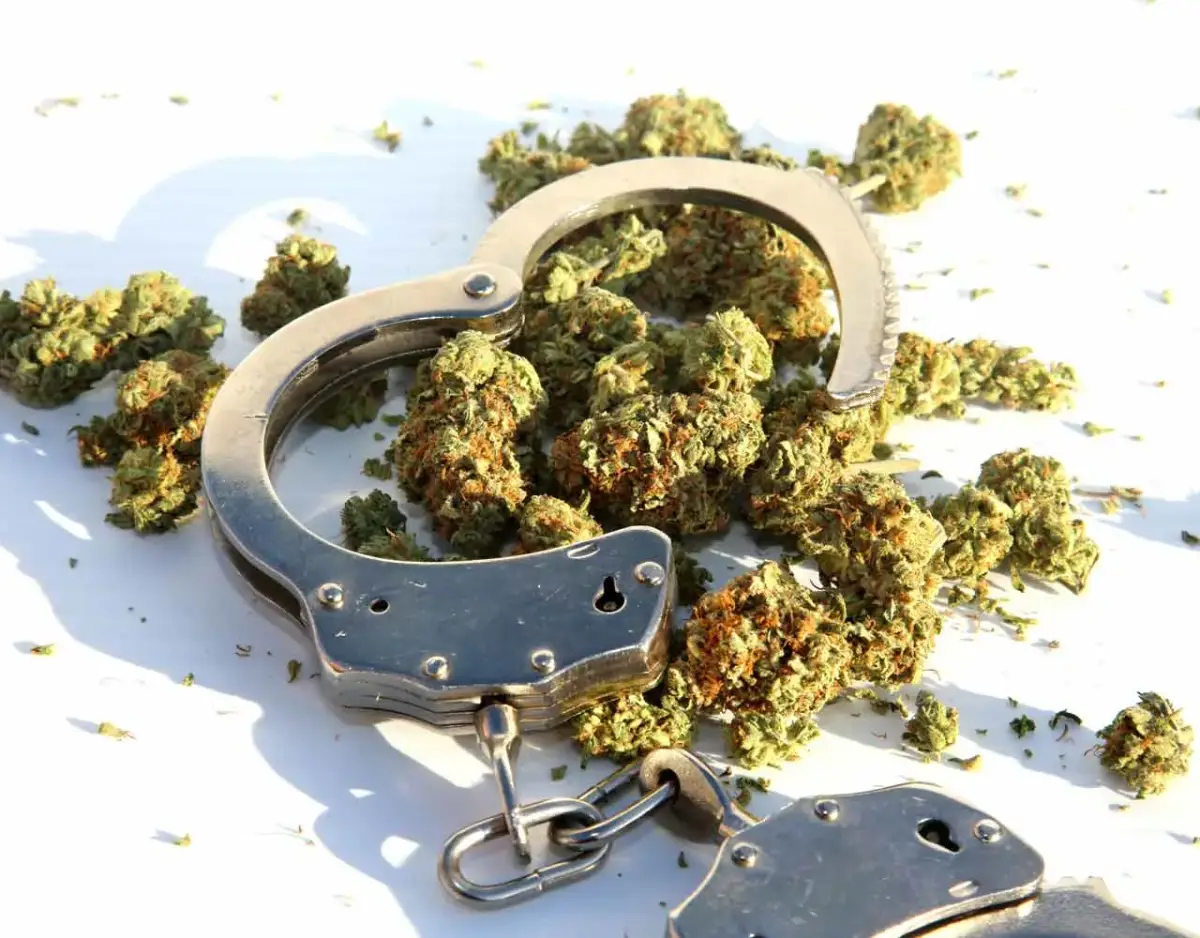
Businesses in South Carolina that sell Delta-8 products can face criminal charges, and the law that applies is unsettled and changing. South Carolina has no statute that names Delta-8 THC, and the State, sellers, and federal lawmakers have taken different positions on whether it is legal hemp or a controlled substance.
Important: this page is general information, not legal advice, and it reflects the law as we could confirm it on November 5, 2026. A licensed South Carolina attorney at the firm must review the facts of a case before anyone relies on it. A product that is sold as legal hemp can still lead to an arrest, a seizure, or a distribution charge.
For more information, contact Touma Law Group at (803) 879-4499 and speak with a Columbia drug defense lawyer.
What Is Delta-8?
Delta-8 is a cannabinoid that has become popular in recent years. According to the U.S. Food and Drug Administration, Delta-8 THC has psychoactive effects similar to those of delta-9 THC, it is typically made by chemically converting CBD, and the products have not been evaluated or approved by the FDA for safe use in any context.

Delta-8 products include tinctures, edibles, vapes, oils, and more. Because Delta-8 can be made from hemp-derived CBD, whether a given product counts as legal hemp or as a controlled substance is the central question in many Delta-8 cases.
Difference Between Delta-8 and Delta-9
Delta-8 and Delta-9 are both THC compounds, and both interact with the body’s endocannabinoid system. Delta-9 THC is the main psychoactive compound in marijuana. The FDA says Delta-8 THC has psychoactive effects similar to delta-9 THC. For legal purposes, the difference that matters is how each is classified. South Carolina and federal hemp law measure delta-9 THC, and the 0.3 percent delta-9 limit has been the line between hemp and marijuana. A product that meets that limit can still contain high levels of Delta-8.
Laws Regarding Delta-8 in South Carolina
South Carolina’s statutes do not mention Delta-8 THC by name. Two parts of state law point in different directions:
- The hemp statute. South Carolina defines “hemp” as the plant Cannabis sativa L. and all of its derivatives, extracts, cannabinoids, and isomers with a delta-9 THC concentration of not more than 0.3 percent on a dry weight basis (S.C. Code Ann. § 46-55-10). The state hemp chapter requires a license from the South Carolina Department of Agriculture to cultivate, handle, or process hemp (S.C. Code Ann. § 46-55-20), but it does not apply to the possession, handling, transport, or sale of hemp products and extracts, including those containing hemp-derived cannabinoids, and nothing in it authorizes anyone to violate federal or state law (S.C. Code Ann. § 46-55-30).
- The controlled substances schedules. Tetrahydrocannabinol (THC) is listed in Schedule I (S.C. Code Ann. § 44-53-190(D)).
In October 2021, the South Carolina Attorney General issued an opinion in response to a request from the chief of the State Law Enforcement Division. The opinion concludes that a court would hold that the Hemp Farming Act does not provide an exception for, and does not legalize, delta-8 THC or any other isomer of THC in itself, because Section 44-53-190(D) lists THC and its isomers in Schedule I unless specifically excepted (South Carolina Attorney General opinion dated October 4, 2021). The same opinion says lawful hemp may contain trace amounts of THC isomers and that whether a law was violated in a particular case is a factual question for law enforcement and prosecutors. An Attorney General opinion is not a court ruling, and it does not change the text of the statute. In December 2025 the Attorney General announced State Grand Jury indictments in Richland and Lexington counties from an investigation of distributors and wholesalers of certain THC products (South Carolina Attorney General news release, December 12, 2025).
In 2026 the General Assembly considered H.3924, a bill to regulate the sale of hemp-derived consumable products. The Senate adopted the conference report on June 25, 2026, but the House rejected it the same day, 28 to 69, and the bill did not become law as of that date.
Chemical Compound and United States Regulations
The chemical compound delta-8 tetrahydrocannabinol (THC) is a cannabinoid that has effects similar to delta-9 THC. Federal law is changing. Federal law has defined hemp by a 0.3 percent delta-9 THC limit since the 2018 Farm Bill. A 2025 federal law, Pub. L. 119-37, changes the federal definition of hemp to measure total THC (including THCA) rather than delta-9 THC alone, and it excludes products that contain cannabinoids synthesized or manufactured outside the plant (7 U.S.C. § 1639o). Under section 781 of that law, the change takes effect 365 days after enactment, which is November 12, 2026 (Pub. L. 119-37, § 781). A later law delays part of it. Section 2019 of Pub. L. 119-103, approved September 2, 2026, provides that until December 11, 2026, the amendments apply only to products containing cannabinoids that are not capable of being naturally produced by the cannabis plant (Pub. L. 119-103, § 2019). As we read the two laws, the rest of the change, including the exclusion for cannabinoids that were synthesized or manufactured outside the plant, is set to take effect on December 11, 2026. We did not find a later law that changes these dates. Whether a particular delta-8 product falls within an exclusion is a legal question for a lawyer.

Because of these changes, a business should not assume that a product that is lawful to sell today will remain so. Some local governments may also have their own rules, so check with local authorities.
Food and Drug Administration (FDA) Regulations
The FDA says Delta-8 THC products have not been evaluated or approved for safe use, and it has raised concerns about labeling and marketing, including products marketed with therapeutic claims (FDA consumer update on Delta-8 THC). The FDA page does not say that a company can resolve its state-law risk by registering with the FDA, and we could not find any such rule. A seller should not treat FDA labeling or registration as a substitute for checking state criminal law.
Classification as an Illegal Drug
Whether Delta-8 distribution is a crime under South Carolina’s Controlled Substances Act is the point in dispute. If the State treats a Delta-8 product as a Schedule I controlled substance, the distribution statute applies (S.C. Code Ann. § 44-53-370(a)(1)). A seller who relies on the hemp statute would argue that the product is hemp and outside the Controlled Substances Act. Which view a court accepts will depend on the facts, the lab results, and the law as it exists when the case is decided.
Learn More: What happens when you’re caught with a small amount of marijuana?
Selling Delta-8 and CBD Products in Your Vape Shop
Vape shops and other retailers sell Delta-8 and CBD products, and some owners are weighing whether to add them. CBD and other hemp products that meet the hemp definition are treated differently under state law than products the State considers controlled substances, so owners should confirm what they carry.

Before selling, a store owner should research the current state and federal rules, ask for lab test reports for each product, and speak with an attorney. Relying on a supplier’s statement that a product is legal does not by itself prevent a charge.
Can the Police Arrest You for Selling Delta-8?
Yes, an arrest is possible. Because South Carolina law is unsettled on Delta-8, some law enforcement agencies and prosecutors treat Delta-8 products as controlled substances, and an officer who believes there is probable cause can make an arrest. This applies to all forms of distribution, including online sales. Being arrested does not mean you will be convicted, and the State must prove each element of the charge.
What to Do if the Police Raid Your Shop and Your Products Are Legal?
If police come to your shop to seize Delta-8 products, it is important to understand your rights. You might worry that officers will not accept that your products are legal hemp and will seize them anyway.
Related Content: Marijuana Trafficking Charges in South Carolina
You have the right to remain silent under the Fifth Amendment, and you do not have to answer questions from the police. The Fourth Amendment protects against unreasonable searches and seizures, so officers generally need a warrant or a recognized exception to search. If officers arrive with a warrant, you can ask to see it. Stay calm, follow police instructions, and do not physically interfere. Then contact an attorney.
Possible Penalties for Distributing Delta-8 in South Carolina
If the State charges Delta-8 distribution as the distribution of a Schedule I controlled substance other than certain narcotics and LSD, the penalties come from S.C. Code Ann. § 44-53-370(b)(2). It is a felony. A first offense is punishable by up to 5 years in prison, a fine of up to $5,000, or both. A second offense is punishable by up to 10 years and $10,000. A third or subsequent offense is punishable by 5 to 20 years and a fine of up to $20,000.

Other Charges Related to the Distribution of Delta-8 Products
A distribution charge can bring other charges with it. Distributing, selling, or possessing with intent to distribute within a one-half mile radius of a school, public playground or park, or college is a separate felony punishable by a fine of up to $10,000, up to 10 years in prison, or both (S.C. Code Ann. § 44-53-445). Paraphernalia offenses are subject to a civil fine of up to $500 (S.C. Code Ann. § 44-53-391). A person who cultivates, handles, or processes hemp without a license from the Department of Agriculture also violates the state hemp chapter (S.C. Code Ann. § 46-55-20).
Contact Touma Law Group Today
If you are a business in South Carolina that sells Delta-8 products and you have been charged with a drug offense, contact Touma Law Group. We are a criminal defense firm. We can review the charge, explain how the statutes above may apply, and talk with you about your options. Questions about business licensing or taxes may also need advice from other professionals. No lawyer can promise a particular outcome. Contact us today for a free consultation.