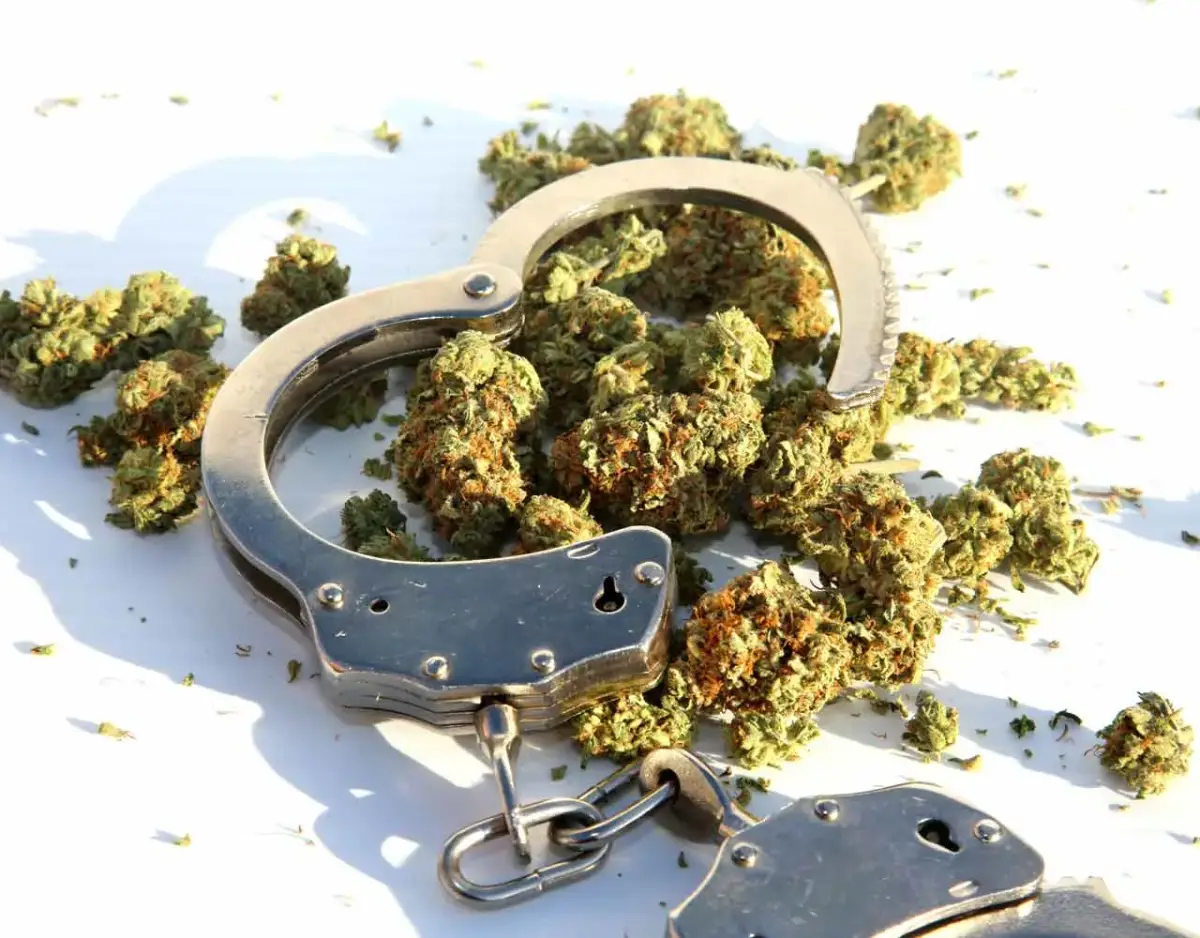
The rules on Delta-8 in South Carolina are unsettled and are changing. South Carolina has no statute that names Delta-8 THC, and the State has not passed a law specifically regulating the sale of Delta-8 products. At the same time, the federal definition of hemp is scheduled to change in November and December 2026.
Important: this page is general information, not legal advice, and it reflects the law as we could confirm it on November 5, 2026. A licensed South Carolina attorney at the firm must review the facts of a case before anyone relies on it. Check for newer laws before you act.
Contact our drug attorneys at Touma Law Group at (864) 618-2323 for more information and a free consultation regarding your case.
What Is Delta-8 THC?
Delta-8 THC is a cannabinoid. According to the U.S. Food and Drug Administration, it has psychoactive effects similar to those of delta-9 THC, it is typically made by chemically converting CBD, and Delta-8 THC products have not been evaluated or approved by the FDA for safe use in any context. The FDA has also raised concerns about product labeling, products that look like foods marketed to children, and products marketed with therapeutic claims.
Why Is Delta-8 in the News in South Carolina?
Selling Delta-8 THC has been the subject of debate in South Carolina because the product is sold in many retail settings while its legal status is disputed. Products are sold in forms such as vape pens, cartridges, edibles, gummies, and tinctures.

We do not make health claims about Delta-8. The FDA says it has not evaluated Delta-8 products for safe use.
Summary of Delta-8 Regulations in South Carolina
South Carolina’s hemp statute and its controlled substance schedules do not mention Delta-8 by name, and they point in different directions. Here is what we could confirm:
- South Carolina defines “hemp” as the plant Cannabis sativa L. and all its derivatives, extracts, cannabinoids, and isomers with a delta-9 THC concentration of not more than 0.3 percent on a dry weight basis (S.C. Code Ann. § 46-55-10).
- The state hemp chapter does not apply to the possession, handling, transport, or sale of hemp products and extracts, including those containing hemp-derived cannabinoids, and nothing in it authorizes anyone to violate federal or state law (S.C. Code Ann. § 46-55-30).
- Tetrahydrocannabinol (THC) is listed in Schedule I of the controlled substances schedules (S.C. Code Ann. § 44-53-190(D)), and the state hemp chapter says “marijuana” does not include THC in hemp or hemp products as the chapter defines them (S.C. Code Ann. § 46-55-10).
- In October 2021, the South Carolina Attorney General issued an opinion in response to a request from the chief of the State Law Enforcement Division. The opinion concludes that a court would hold that the Hemp Farming Act does not provide an exception for, and does not legalize, delta-8 THC or any other isomer of THC in itself, because Section 44-53-190(D) lists THC and its isomers in Schedule I unless specifically excepted (South Carolina Attorney General opinion dated October 4, 2021). The same opinion says lawful hemp may contain trace amounts of THC isomers and that whether a law was violated in a particular case is a factual question for law enforcement and prosecutors. An Attorney General opinion is not a court ruling, and it does not change the text of the statute. In December 2025 the Attorney General announced State Grand Jury indictments in Richland and Lexington counties from an investigation of distributors and wholesalers of certain THC products (South Carolina Attorney General news release, December 12, 2025).
- In 2026 the General Assembly considered H.3924, a bill to regulate the sale of hemp-derived consumable products. The Senate adopted the conference report on June 25, 2026, but the House rejected it the same day, 28 to 69, and the bill did not become law as of that date.
Local governments may have their own ordinances, so check with local authorities before you rely on any rule.
Cannabis Plants and Hemp Derivatives
In South Carolina, the cultivation, handling, and processing of hemp is regulated by the Department of Agriculture. The state hemp chapter makes it unlawful to cultivate, handle, or process hemp without a license from the department (S.C. Code Ann. § 46-55-20), and the South Carolina Department of Agriculture administers the hemp program. The department’s hemp page addresses growers, handlers, processors, and similar permit holders. It does not address finished products such as Delta-8 vapes, edibles, or retail sales.
FAQ: What are the penalties for trafficking marijuana in South Carolina?
Plant Source of Delta-8 THC
The FDA says Delta-8 THC products are typically made by chemically converting CBD. Whether such a product counts as “hemp” under the definitions above depends in part on the law’s treatment of derivatives, isomers, and the delta-9 THC limit. South Carolina has allowed hemp-derived CBD and other hemp-derived cannabinoids to be sold under the hemp chapter, as long as the product is hemp as defined by the statute.

That does not settle whether a Delta-8 product is legal to possess or sell, and the State has taken a different position, as described above. Because the position of law enforcement may differ from the text of the hemp statute, it is worth speaking with a lawyer before you rely on a product being legal.
Legal Status of Hemp Derivatives in South Carolina
South Carolina’s hemp law has been amended several times. The state hemp chapter was first enacted in 2014 (2014 Act No. 216) and reworked in 2017 (2017 Act No. 37) to create the South Carolina Industrial Hemp Program. In 2019, the General Assembly rewrote it and required the Department of Agriculture to submit a state plan to the U.S. Department of Agriculture (2019 Act No. 14, effective March 28, 2019). That version is the one in the South Carolina Code today. Under that chapter, hemp and hemp products are defined by the delta-9 THC limit described above.
Federal Level vs. State Level Legality of Hemp Derivatives
Federal law currently defines hemp as the plant and its derivatives, extracts, cannabinoids, and isomers with a delta-9 THC concentration of not more than 0.3 percent on a dry weight basis (7 U.S.C. § 1639o). A 2025 federal law, Pub. L. 119-37, changes the federal definition of hemp to measure total THC (including THCA) rather than delta-9 THC alone, and it excludes products that contain cannabinoids synthesized or manufactured outside the plant (7 U.S.C. § 1639o). Under section 781 of that law, the change takes effect 365 days after enactment, which is November 12, 2026 (Pub. L. 119-37, § 781). A later law delays part of it. Section 2019 of Pub. L. 119-103, approved September 2, 2026, provides that until December 11, 2026, the amendments apply only to products containing cannabinoids that are not capable of being naturally produced by the cannabis plant (Pub. L. 119-103, § 2019). As we read the two laws, the rest of the change, including the exclusion for cannabinoids that were synthesized or manufactured outside the plant, is set to take effect on December 11, 2026. We did not find a later law that changes these dates. Whether a particular delta-8 product falls within an exclusion is a legal question for a lawyer.
South Carolina’s hemp definition refers to the federal THC level for hemp, so the federal change may affect how the state statute is read.
Levels for Hemp-Derived Cannabinoids
The state hemp definition uses a delta-9 THC limit of not more than 0.3 percent on a dry weight basis, or the level for hemp in federal law, whichever is greater (S.C. Code Ann. § 46-55-10). That limit applies to delta-9 THC. The statute does not set a separate limit for Delta-8 THC.
Understanding the THC Level Requirements for Hemp
A product that exceeds the hemp limit does not meet the hemp definition. A person found with a product that law enforcement treats as a controlled substance can be charged with simple possession or possession with intent to distribute under the controlled substances statute (S.C. Code Ann. § 44-53-370).

We could not find a South Carolina statute that sets labeling, testing, or retail location rules for finished hemp products such as Delta-8. The state hemp chapter’s testing provisions apply to hemp producers and license holders.
Maximum Amounts of THC Allowed With Hemp Products
The hemp limit comes from the state hemp chapter and the federal definition described above. Delta-8 THC is not specifically mentioned in that legislation, so it is unclear what limits the State will apply to the sale and use of Delta-8 products. That is the central uncertainty, and it is why this area of law is likely to change.
For More Information Call Touma Law Group Today
If you need information about Delta-8 regulations in South Carolina, contact Touma Law Group. We defend people charged with drug offenses. Because this area of law is changing, an attorney must review the current statutes and the facts of your situation before you rely on any general information.
Contact us for more information.