A DUI charge changes things fast. One night turns into court dates, a license suspension, and a long list of questions you never expected to ask. One of the biggest ones: how long is this going to follow me?
In South Carolina, the honest answer is longer than most people hope. A DUI conviction becomes part of your permanent criminal record, and it shows up on a background check well after your case is closed. It also affects your driving record and your insurance rates, though those two clocks run differently than your criminal record does.
Below, we break down what actually stays on your record, for how long, and what options exist to limit the damage. If you are facing a DUI charge right now, do not wait to get help. Contact Touma Law Group for a free consultation at (864) 618-2323 and talk through your case with our criminal defense team before your next court date.
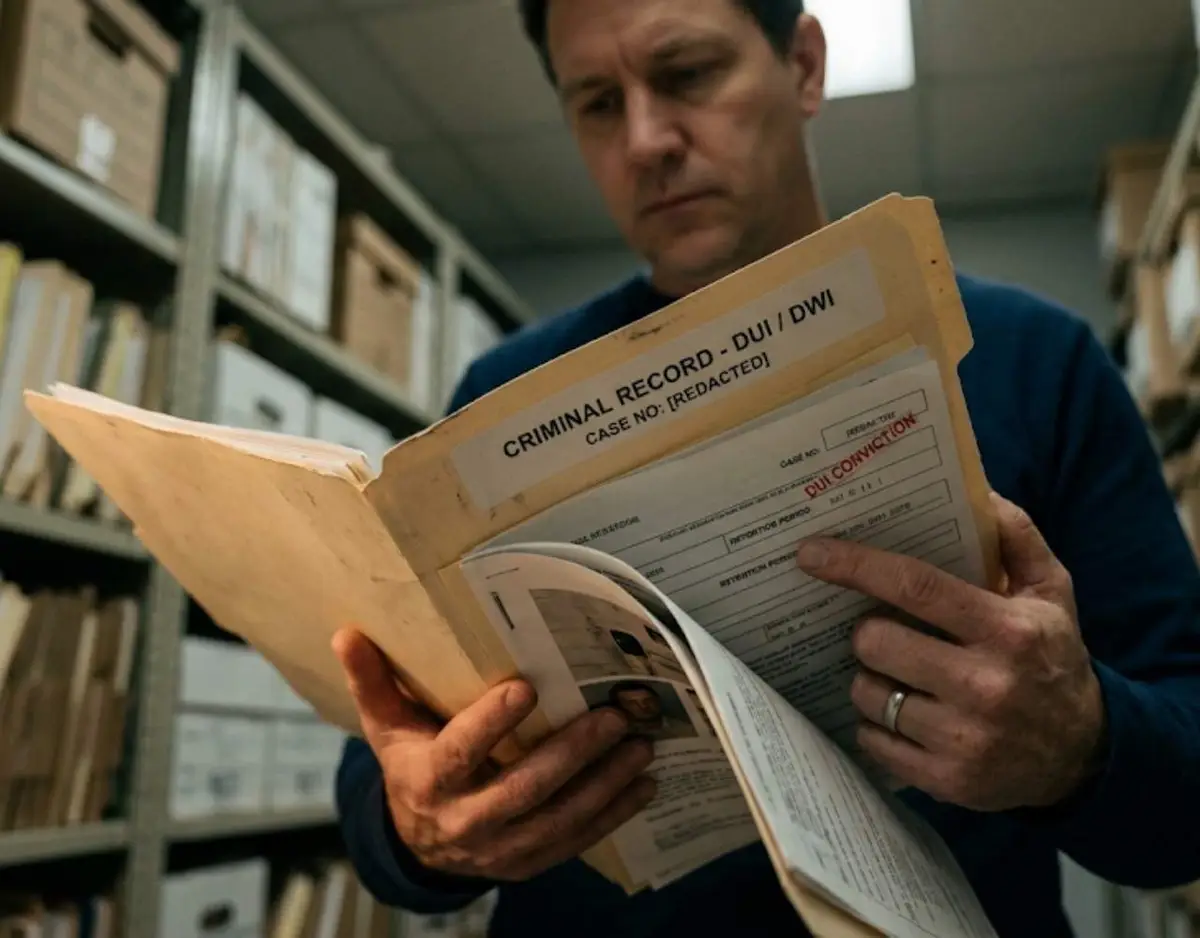
A DUI Conviction Stays On Your Criminal Record For Life

A DUI conviction in South Carolina cannot be expunged. Here is what that means for the two records that track it.
Your Criminal Record: Permanent
South Carolina Code Section 22-5-910 allows most first-offense misdemeanors to be expunged over time. Driving offenses are the exception. The law specifically excludes offenses involving the operation of a motor vehicle, and DUI falls squarely in that excluded category.
In practice, that means:
- Once you are convicted of a DUI, it stays on your criminal record for life.
- It will show up on any background check, including one run by an employer, a landlord, or a licensing board.
- There is no petition for expungement that removes it later, no matter how much time passes.
Your Driving Record: A 10 Year Lookback
Your driving record works differently. South Carolina generally applies a 10-year lookback period, and insurance companies and courts use it to decide whether a new DUI charge counts as a repeat offense.
After 10 years without another alcohol related charge, the earlier conviction typically stops counting against you for those specific purposes. It does not vanish. It simply stops being treated as a recent violation.
A charge is not a conviction, and the road between an arrest and a permanent record has more turns than people expect. This is exactly why speaking with a DUI defense attorney early in your case matters so much.
What Counts As Driving Under The Influence Of Alcohol In South Carolina
South Carolina law defines DUI under Section 56-5-2930 of the state code. Prosecutors can bring the charge two ways:
- Impairment-based: your ability to drive was materially and appreciably affected by alcohol, drugs, or a combination of both.
- Per se: your blood alcohol concentration met or exceeded the legal limit, regardless of how impaired you appeared.
The standard BAC limits in South Carolina are:
- 0.08% or higher for drivers 21 and older
- 0.04% or higher for commercial drivers
- 0.02% or higher for drivers under 21, under the state’s zero tolerance law for juvenile offenses involving alcohol
Law enforcement typically builds a DUI case in three steps: a traffic stop, a field sobriety test, and a breath or blood test to measure blood alcohol concentration.
During the stop, officers look for the usual signs:
- Weaving or erratic braking
- Slow reaction to traffic signals
- The smell of alcohol
None of that automatically means a conviction is coming. It means the state has a starting point, and your case still has to hold up in court.
What A DUI Conviction Can Cost You Beyond The Courtroom
Penalties in South Carolina scale up fast with each additional offense, and they reach further than a fine and a court date. Here is a general look at what a conviction can carry, based on South Carolina’s DUI statute:
| Offense | License Suspension | Fines | Jail Exposure |
|---|---|---|---|
| First offense | 6 months (license suspension can often be addressed through an ignition interlock option) | Several hundred dollars plus court fees | Up to 30 days |
| Second offense | 1 to 2 years | Higher fines plus court fees | Up to 1 year |
| Third offense | Up to 4 years | Substantial fines plus court fees | Up to 3 years |
This table is a general reference only. Actual penalties depend on your BAC level at the time of the stop, whether anyone was injured, your prior record, and the judge or court handling your case. An attorney can review the facts of your specific charge and explain what you may be facing.
Beyond the criminal penalties, a DUI conviction in South Carolina almost always requires:
- Completion of the Alcohol and Drug Safety Action Program (ADSAP) through the South Carolina Department of Alcohol and Other Drug Abuse Services before your license can be reinstated
- Installation of an Ignition Interlock Device in any vehicle you drive. As of May 2024, South Carolina requires an ignition interlock device for every DUI conviction, not only repeat offenses
- A period without full driving privileges, with a restricted or interlock-restricted license available in many cases
Your Criminal Record Versus Your Driving Record: Why The Timeline Is Different
People often assume “my record” means one single thing. In South Carolina, it actually means at least two separate systems that behave differently over time.
| Record type | What it tracks | How long the DUI stays |
|---|---|---|
| Criminal record | Shows up on background checks, run by employers, landlords, and licensing boards | Permanently. No petition for expungement is available for a DUI conviction |
| Driving record (DMV) | Used by the Department of Motor Vehicles and by insurers to evaluate risk | Conviction is entered on your driving record, and most insurers use a 10 year lookback period before treating it as fully aged off for rate purposes |
If you move to another state, the story gets more complicated. South Carolina participates in the Interstate Driver’s License Compact, so a DUI conviction here generally follows you if you apply for a license somewhere else. Some states keep DUI history on record for a set number of years, while others treat it as a lifelong mark. Moving does not erase a South Carolina conviction.
What Happens To Your Insurance Rates After A DUI

Insurance companies treat a DUI conviction as one of the most serious marks a driver can have. Expect your insurance premiums to increase substantially, often by well over a thousand dollars a year, immediately after a conviction.
Many drivers convicted of DUI in South Carolina are also required to carry an SR-22 insurance certificate. An SR-22 is not a type of insurance policy. It is a form your insurer files with the Department of Motor Vehicles confirming you carry the state’s minimum required coverage. South Carolina typically requires an SR-22 for a set period after a DUI conviction, and letting that coverage lapse can trigger an additional license suspension.
As the years pass without another offense, most insurers gradually reduce the impact of an older DUI, especially once you reach that 10-year mark. It rarely disappears from the insurer’s file entirely, but the effect on your premium does typically shrink over time.
Can You Ever Reduce What Shows Up On Your Record?
Because a DUI itself cannot be expunged, most strategies for limiting long-term damage focus on what happens before a conviction is entered, not after. Two paths come up most often.
Getting The Charge Reduced To Reckless Driving
A defense strategy built around weaknesses in the stop, the field sobriety test, or the breath test evidence can sometimes lead a prosecutor to reduce a DUI charge to reckless driving instead.
Reckless driving is not automatically eligible for expungement either. But a reduced first offense can sometimes become eligible for a petition for expungement after a waiting period, if it otherwise qualifies under the law and the solicitor agrees to the reduction.
Whether that path is available depends on:
- The facts of your traffic stop
- Your prior record
- The solicitor’s office handling your case
Why Pretrial Intervention Rarely Covers DUI Charges
Pretrial Intervention is another route worth understanding. PTI is a diversion program available for certain first-time offenses, and completing it can eventually make a charge eligible for expungement.
Straight DUI charges are generally not accepted into PTI in South Carolina because of how the offense is classified. That said, every solicitor’s circuit handles borderline cases differently, so it is worth asking about in your specific case.
An attorney familiar with your local court can tell you honestly whether PTI is realistically on the table for you.
None of this is guaranteed. No attorney can promise a charge will be reduced or a case dismissed. What a defense attorney can do is look at the evidence, the stop, and the testing procedures, and build the strongest argument available for your specific situation.
Steps To Take Right After A DUI Arrest In South Carolina
What you do in the days right after an arrest can matter as much as what happens in court months later.
- Request your administrative hearing quickly. You typically have a short window, often around 30 days, to request a hearing on your license suspension through the Department of Motor Vehicles. Miss it, and the suspension takes effect automatically.
- Avoid discussing your case with anyone except your attorney. Statements made to friends, family, or on social media can end up in front of a prosecutor.
- Gather what you remember while it is fresh. Where you were stopped, what the officer said, how the field sobriety test was conducted, and anything that seemed off about the process.
- Talk to a DUI lawyer before your first court date. The earlier an attorney can review the stop and the testing, the more options are usually available.
- Follow every court and DMV deadline exactly. Missing a deadline can add consequences on top of the original charge.
Why South Carolina’s Court Process Makes Early Legal Help Worth It
Most first-offense DUI cases in South Carolina start in magistrate or municipal court. Felony DUI charges, including cases involving injury or a high number of prior offenses, move to general sessions court instead.
Each court has its own rhythm. Prosecutors across South Carolina’s judicial circuits do not all handle DUI cases the same way.
That local variation is part of why a generic answer rarely fits a real case. A few things shape what happens next:
- The strength of the traffic stop
- The calibration records for the breath test machine
- The officer’s own report
Those details look different in Greenville than they do in Columbia or Anderson.
Fighting A DUI Charge Before It Becomes A Permanent Record

Once a DUI conviction is entered in South Carolina, it is not coming off your criminal record. That makes the period between your arrest and your court date the most important window you have.
Our team at Touma Law Group is built around attorneys who understand both sides of the courtroom, including former prosecutors who know how these cases get built and how they can fall apart.
We look at the traffic stop, the testing, and the paperwork behind your charge. Then we talk you through what your options actually are, without pretending every case ends the same way.
If you were arrested for DUI anywhere in South Carolina, from Greenville to Columbia to Anderson, talk to us before you talk to anyone else about your case. Call (864) 618-2323 or reach out online to set up a free consultation.
Frequently Asked Questions
No. A DUI conviction stays on your criminal record permanently under South Carolina law. It does not automatically clear after a set number of years the way some other offenses do.
Most insurers in South Carolina use a 10 year lookback period before a DUI stops counting as a recent violation for rate purposes. The conviction still exists on your official record, but its practical effect on insurance pricing usually fades after that point.
It is possible in some cases, depending on the evidence and the solicitor handling the case, but it is never guaranteed. A defense attorney can review your stop and your BAC results to see whether that kind of negotiation is realistic for your situation.
Under current South Carolina law, an ignition interlock device is required for every DUI conviction, including a first offense, not only for repeat offenders or high BAC cases.
Most drivers convicted of DUI in South Carolina are required to carry an SR-22 insurance certificate for a set period as proof of coverage. Your insurance agent or attorney can confirm the exact requirement for your case.
South Carolina applies a lower BAC limit for drivers under 21, and cases involving juvenile offenses may be handled differently depending on the driver’s age and the court involved. An attorney can walk you through how your specific case is likely to proceed.