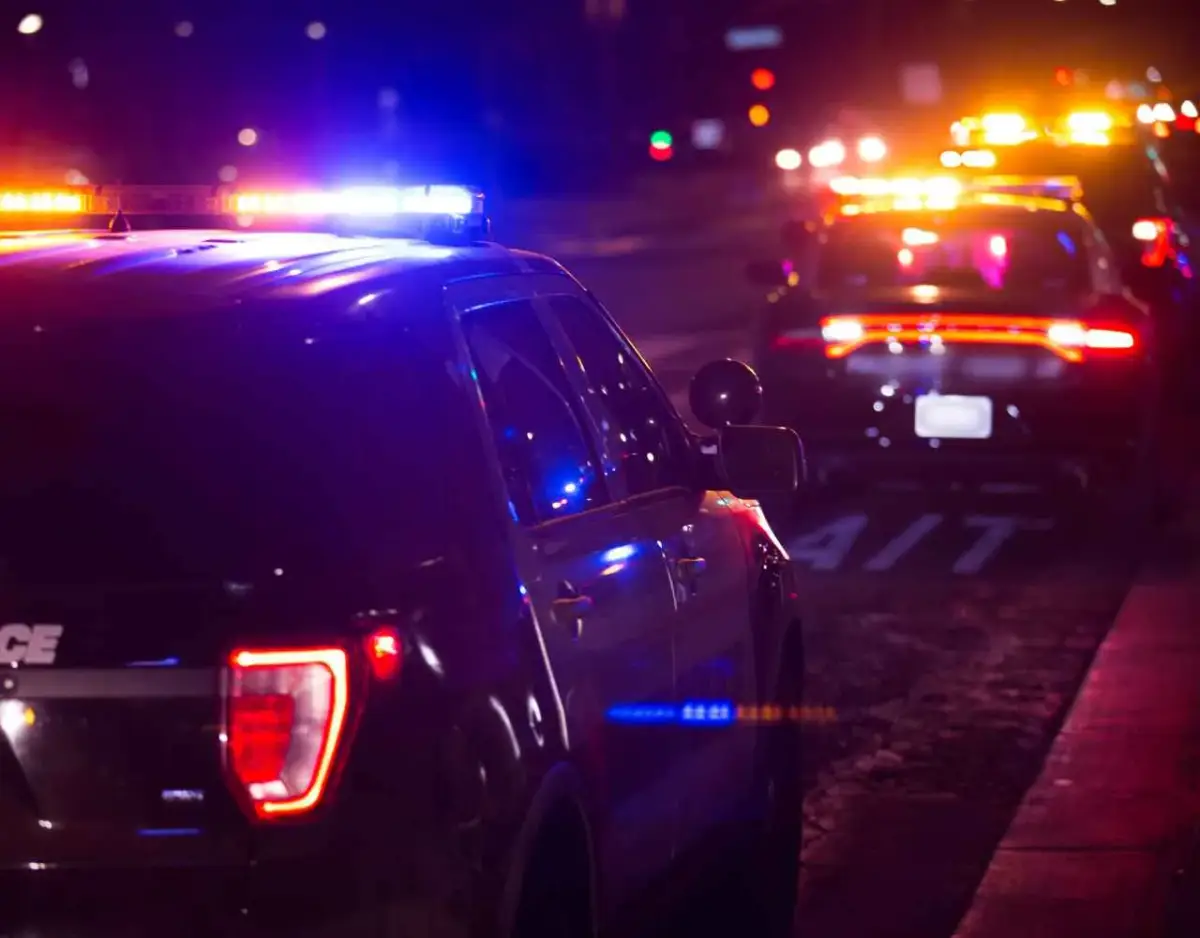
A routine traffic stop in Columbia can turn into a felony fleeing and eluding charge in a matter of seconds. If you kept driving after a law enforcement officer signaled you to stop, South Carolina law treats that decision as a separate criminal offense, distinct from whatever the officer pulled you over for in the first place.
This charge carries real consequences, including jail time, a driver’s license suspension, and a permanent mark on your criminal record. It is not automatically a conviction, and the outcome depends heavily on the facts, the evidence, and how the stop was handled.
If you or someone you love is facing a fleeing and eluding charge in Columbia, call Touma Law Group today at (803) 879-4499 for a free case review. Our team can walk through what happened, what the state has to prove, and what your options look like from here.
What It Means to Flee or Elude a Law Enforcement Officer in South Carolina

Under South Carolina law, it is unlawful for a driver to fail to stop a motor vehicle when signaled to do so by a law enforcement officer in a marked vehicle. The signal can be a siren, flashing lights, or a combination of both. This is often called “failure to stop” or “eluding an officer,” and it is codified at S.C. Code Ann. § 56-5-750.
The law does not require a high-speed chase to apply. Speeding away, turning down a side street to avoid an officer, or slow-rolling past a stop sign while ignoring a marked patrol car’s lights can all support a charge. Prosecutors treat any attempt to increase speed or take evasive action after a signal as strong evidence of intent to elude.
A few things to understand right away:
- The charge applies to the driver, not just someone accused of a separate underlying offense like DUI or a stolen vehicle report.
- It is a standalone criminal offense. You can be charged with fleeing and eluding even if the original reason for the stop turns out to be minor or is later dismissed.
- The classification, misdemeanor or felony, depends on prior convictions and whether anyone was hurt.
Penalty Tiers Under South Carolina’s Failure to Stop Law
Penalties scale sharply based on your record and the circumstances of the pursuit. South Carolina updated these tiers with amendments effective May 12, 2026, and the ranges below reflect the law currently in force.
| Circumstance | Classification | Jail or Prison Exposure | Fine | License Consequence |
|---|---|---|---|---|
| First offense, no injury | Misdemeanor | Up to 3 years | $500 minimum | Minimum 30-day suspension |
| Second or subsequent offense | Felony | Up to 10 years | Set by the court | 1-year suspension |
| High-speed pursuit or evasive maneuvers | Felony | Up to 10 years | Set by the court | 1-year suspension |
| Great bodily injury results | Felony | Up to 15 years | Set by the court | Revoked for sentence plus 3 years |
| Death results | Felony | Up to 30 years | Set by the court | Revoked for sentence plus 3 years |
“Great bodily injury” has a specific legal meaning under this statute. It refers to an injury that creates a substantial risk of death, or that causes serious, permanent disfigurement or a long-term loss of function to a body part. This distinction matters because it can push a charge from a straightforward felony into one of the most serious tiers on this chart.
A first offense with no injuries is still a misdemeanor with a mandatory fine and a possible multi-year prison exposure, not a slap on the wrist. Penalties can vary based on prior history, the facts of the case, and how the evidence holds up, so nothing here should be read as what will happen in a specific case.
What the Fifth Circuit Solicitor’s Office Must Prove to Convict You
A fleeing and eluding charge does not prove itself. The Fifth Circuit Solicitor’s Office, which prosecutes cases out of Richland County, has to establish specific facts beyond a reasonable doubt before a conviction can stand.
Generally, the state must show:
- A law enforcement officer in a marked law enforcement vehicle gave a visual or audible signal to stop, such as flashing lights or a siren.
- The driver knew, or reasonably should have known, that the signal was directed at them.
- The driver failed to stop and instead continued driving, sped up, or took evasive action to avoid the officer.
Prosecutors typically build these cases around dashcam footage, body-worn camera video, officer testimony, and dispatch or GPS records that show the path of the pursuit. Civilian video from bystanders or a car chase caught on a doorbell camera can also become part of the evidence. Every piece of that evidence is something a defense attorney can review and challenge.
Charges That Often Follow a Failure to Stop Arrest

Fleeing and eluding rarely arrives alone. A single incident can generate two or three separate criminal charges depending on how the stop unfolded.
Resisting arrest. If the driver argues with, pulls away from, or physically resists an officer during the stop or after being taken into custody, South Carolina Code § 16-9-320 allows for a separate charge. A misdemeanor resisting arrest conviction carries a fine between $500 and $1,000, up to one year in jail, or both. If the resistance escalates to assault or battery on the officer, the charge becomes a felony with a fine up to $10,000 and up to 10 years in prison.
Reckless driving. Weaving through traffic, running red lights, or otherwise driving with a willful or wanton disregard for public safety during the pursuit can bring a reckless driving charge under S.C. Code § 56-5-2920, which carries its own fine and jail exposure, along with a mandatory license suspension on a second offense within five years.
DUI or other underlying charges. If impairment played a role in the original stop, the case can include a DUI charge, a request for a breath or blood test, and separate penalties tied to that offense.
Stolen vehicle charges. If the vehicle involved was reported stolen, that adds an entirely separate set of charges on top of the fleeing and eluding case.
Each of these charges has its own elements and its own possible defenses, but they usually get investigated and prosecuted together in the same case.
How a Defense Attorney Examines a Fleeing and Eluding Case
There is no single move that guarantees a particular result in a fleeing and eluding case. What a defense attorney can do is take the case apart piece by piece and look for the weak points the prosecution has to prove.
Some of the questions worth asking early:
- Did the officer’s vehicle have working, visible lights and sirens, and was the signal clear enough that a reasonable driver would have recognized it?
- Was the initial traffic stop itself lawful, or was there a problem with the reason the officer tried to pull the driver over in the first place?
- Does the dashcam, body cam, or civilian video match the officer’s written report, or are there gaps and inconsistencies?
- Is there a reasonable explanation for the delay in stopping, such as looking for a safe place to pull over?
- Were there mitigating factors, like poor visibility, confusion about an unmarked vehicle, or a medical emergency?
An attorney can review the police reports, request the video evidence, and compare it against the statute’s actual requirements. Speak with a lawyer before making any statements to investigators, since anything said in the moments after an arrest can end up in the police report used against you later.
What to Do in the Hours and Days After a Fleeing Charge
The steps you take right after an arrest can shape how the rest of the case unfolds.
- Stay quiet beyond basic identifying information. You have the right to remain silent and the right to an attorney. Use both.
- Write down what you remember while it is fresh. Note the weather, lighting, traffic conditions, and anything unusual about the officer’s vehicle or signal.
- Do not discuss the case on social media or with anyone other than your attorney. Posts and messages can be pulled into the case as evidence.
- Find out your court date and bond conditions. Missing a court appearance adds an entirely separate legal problem on top of the original charge.
- Contact a criminal defense attorney before your first court date. The earlier an attorney can start reviewing evidence and talking to witnesses, the more options usually remain open.
- Ask about your driver’s license status. A pending license suspension or revocation has its own deadlines and appeal process through the SC Department of Motor Vehicles.
Learn More: What should you do after you´ve been arrested?
How Richland County Courts Handle a Fleeing and Eluding Charge
Fleeing and eluding cases out of Columbia move through the Richland County court system, which sits in South Carolina’s Fifth Judicial Circuit alongside Kershaw County. A first appearance and bond hearing typically happen in magistrate court soon after arrest, where a judge sets conditions for release.
From there, misdemeanor-level cases may resolve at a lower court level, while felony fleeing and eluding charges, including any second offense, high-speed pursuit, or injury case, move to Richland County General Sessions Court. The Fifth Circuit Solicitor’s Office handles prosecution for these felony matters.
Local court supervision programs and pretrial diversion options exist in some Richland County cases, though eligibility depends heavily on the charge, the defendant’s record, and the facts involved. An attorney familiar with how the Fifth Circuit Solicitor’s Office typically handles these cases can give you a realistic sense of what to expect at each stage, without promising a specific outcome.
Why Columbia Drivers Turn to Adam Touma’s Team After a Fleeing Charge
Adam Touma founded this firm after serving as a public defender, a judicial clerk, and an Army JAG officer. That background means our attorneys have sat on both sides of a courtroom and understand exactly how the Fifth Circuit Solicitor’s Office approaches a case like this one.
A fleeing and eluding charge can feel like it is moving fast, with deadlines, bond conditions, and a license suspension clock all running at once. Our team’s job is to slow that down, get the video and police reports under review immediately, and make sure every procedural requirement the state has to meet actually gets met.
If you are facing a fleeing and eluding charge, a resisting arrest charge, or a related traffic offense in Columbia, contact Touma Law Group at (803) 879-4499 to schedule a free consultation. We serve clients throughout Richland County and the surrounding Midlands area, and we can start reviewing your case as soon as you call.
Frequently Asked Questions
Yes. If an officer’s signal was clear and you continued driving, sped up, or took evasive action for any length of time before stopping, that delay can still support a charge. The statute focuses on the failure to stop promptly when signaled, not just whether a chase reached a certain speed or distance.
It depends on the circumstances. A first offense with no injury is typically a misdemeanor. A second or subsequent offense, a high-speed pursuit, or a case involving injury or death is charged as a felony under South Carolina law.
Whether the vehicle was marked and whether the signal was reasonably identifiable as a law enforcement command are both facts that can affect the case. This is exactly the kind of detail a defense attorney reviews closely, since the law generally centers on whether a reasonable driver would have recognized the signal.
A license suspension or revocation can be tied to a conviction, with the length depending on the offense tier. Some drivers may have options to contest a suspension through the SC Department of Motor Vehicles, depending on the specific facts of the case.
Yes. If impairment is suspected during the same stop, you may face a DUI charge alongside the fleeing and eluding charge, including a request for a breath or blood test. Each charge carries its own separate penalties.