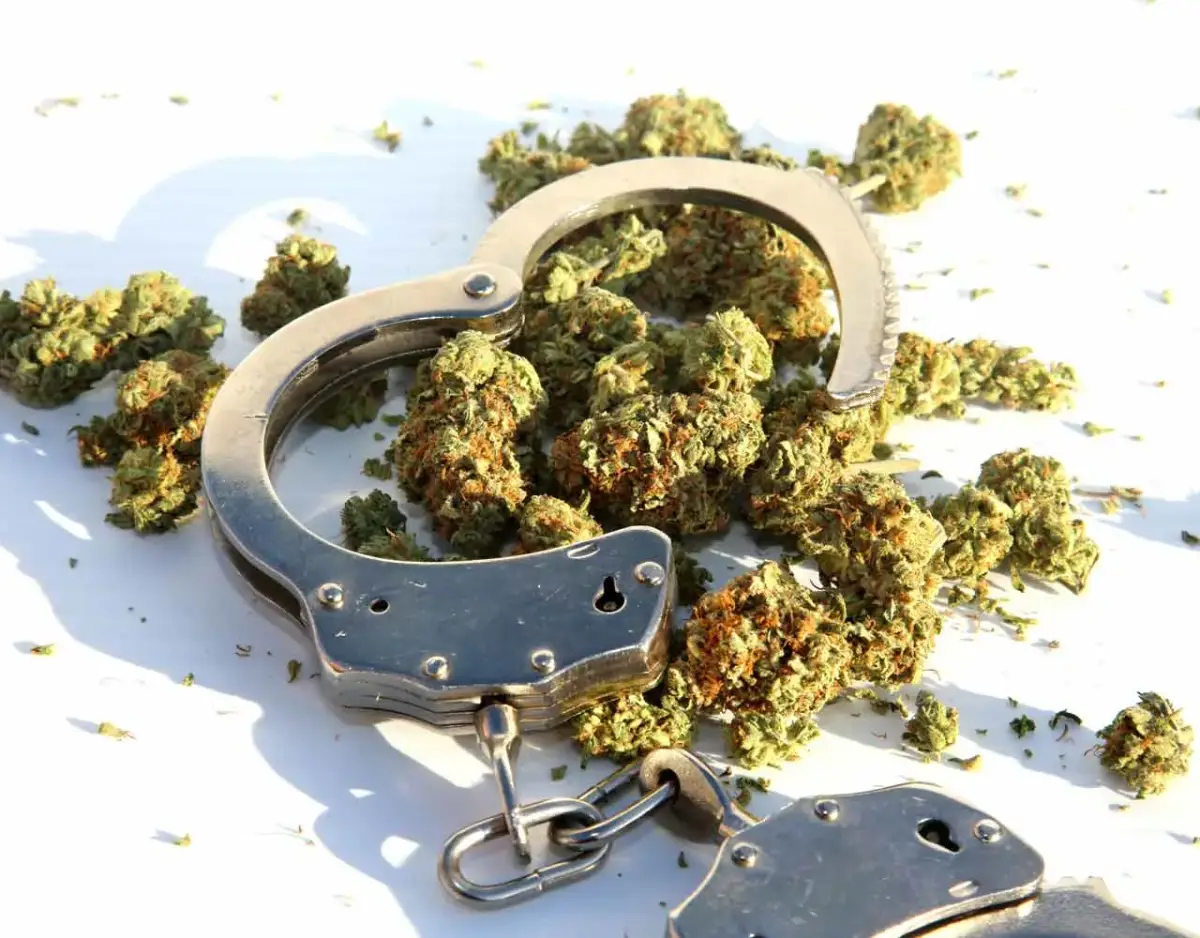
As the popularity of Delta-8 THC products continues to rise, so do questions about their legality. Many people in South Carolina wonder: can you be arrested for having Delta-8? The answer is not straightforward. The law on Delta-8 THC is unsettled in South Carolina and is changing at the federal level, so what is true today may not be true next month.
Important: this page is general information, not legal advice, and it reflects the law as we could confirm it on November 5, 2026. A licensed South Carolina attorney at the firm must review the facts of your case before you rely on it. If you have been arrested for possessing or selling Delta-8 THC products, seek legal advice as soon as possible. Our Greenville drug charge attorneys can explain how state and federal laws may apply to your situation.
Contact the Touma Law Group today to schedule a free consultation and learn more about your rights and options regarding Delta-8 in South Carolina. Call us at (864) 618-2323 to get started.
Overview of South Carolina Laws on Cannabis Products
South Carolina’s controlled substances statutes and its hemp statutes do not mention Delta-8 THC by name. Two parts of state law point in different directions, which is why the question is contested:
- The hemp statute. South Carolina defines “hemp” as the plant Cannabis sativa L. and all of its derivatives, extracts, cannabinoids, and isomers with a delta-9 THC concentration of not more than 0.3 percent on a dry weight basis (S.C. Code Ann. § 46-55-10). The same chapter says it does not apply to the possession, handling, transport, or sale of hemp products and extracts, including those containing hemp-derived cannabinoids, and that nothing in the chapter authorizes anyone to violate federal or state law (S.C. Code Ann. § 46-55-30).
- The controlled substances schedules. Tetrahydrocannabinol (THC) is listed in Schedule I (S.C. Code Ann. § 44-53-190(D)).
In October 2021, the South Carolina Attorney General issued an opinion in response to a request from the chief of the State Law Enforcement Division. The opinion concludes that a court would hold that the Hemp Farming Act does not provide an exception for, and does not legalize, delta-8 THC or any other isomer of THC in itself, because Section 44-53-190(D) lists THC and its isomers in Schedule I unless specifically excepted (South Carolina Attorney General opinion dated October 4, 2021). The same opinion says lawful hemp may contain trace amounts of THC isomers and that whether a law was violated in a particular case is a factual question for law enforcement and prosecutors. An Attorney General opinion is not a court ruling, and it does not change the text of the statute. In December 2025 the Attorney General announced State Grand Jury indictments in Richland and Lexington counties from an investigation of distributors and wholesalers of certain THC products (South Carolina Attorney General news release, December 12, 2025). In 2026, the General Assembly considered a bill to regulate the sale of hemp-derived consumable products, H.3924, but the House rejected the conference report on June 25, 2026, and the bill did not become law as of that date.
The practical result is that a person can be arrested and charged even where a seller or buyer believed a product was legal hemp. Whether a product is “hemp” can turn on test results, how the product was made, and how a prosecutor reads the statutes. For more detail, see our page on regulations for Delta-8 products.
Legal Distinction Between Delta-8 THC and CBD
Delta-8 THC and CBD are both cannabinoids. CBD (cannabidiol) is non-intoxicating. Delta-8 THC (delta-8-tetrahydrocannabinol) has psychoactive effects similar to those of delta-9 THC, according to the U.S. Food and Drug Administration, which also says Delta-8 THC is typically made by chemically converting CBD and that the products have not been evaluated or approved by the FDA for safe use.

Federal law legalized hemp, defined by a delta-9 THC limit of 0.3 percent on a dry weight basis, in the 2018 Farm Bill. That definition currently includes the plant’s derivatives, extracts, cannabinoids, and isomers. A 2025 federal law, Pub. L. 119-37, changes the definition to measure total THC (including THCA) rather than delta-9 THC alone, and it excludes products that contain cannabinoids synthesized or manufactured outside the plant. Under section 781 of that law, the change takes effect 365 days after enactment, which is November 12, 2026 (Pub. L. 119-37, § 781). A later law delays part of it. Section 2019 of Pub. L. 119-103, approved September 2, 2026, provides that until December 11, 2026, the amendments apply only to products containing cannabinoids that are not capable of being naturally produced by the cannabis plant (Pub. L. 119-103, § 2019). As we read the two laws, the rest of the change, including the exclusion for cannabinoids that were synthesized or manufactured outside the plant, is set to take effect on December 11, 2026. We did not find a later law that changes these dates. Whether a particular delta-8 product falls within an exclusion is a legal question for a lawyer.
Because Delta-8 THC is typically made by converting CBD, it is possible that some Delta-8 products will no longer qualify as hemp under the new federal definition. Confirm the current status with an attorney before you rely on any of this.
Potential Consequences of Possessing Delta-8 THC in South Carolina
Because the law is unsettled, a Delta-8 case depends on how the State classifies the product and what the lab results show. If a prosecutor charges Delta-8 THC as a Schedule I controlled substance, the penalties come from the general drug statute, S.C. Code Ann. § 44-53-370. Charges involving marijuana have their own penalty provisions, which we describe on our page about small amounts of marijuana.
Possession
It is unlawful to knowingly or intentionally possess a controlled substance unless it was obtained directly from, or under a valid prescription or order of, a practitioner (S.C. Code Ann. § 44-53-370(c)). For a Schedule I substance other than certain narcotics and LSD, simple possession is a misdemeanor punishable by up to 6 months in prison, a fine of up to $1,000, or both. A second or subsequent offense is a misdemeanor punishable by up to 1 year, a fine of up to $2,000, or both (S.C. Code Ann. § 44-53-370(d)(2)). Whether that provision applies to a particular Delta-8 product is exactly what an attorney will examine.
Distribution
Recently, business owners have faced distribution charges for having certain products in their inventory. Distribution of Delta 8 in South Carolina can lead to felony charges if the State treats the product as a controlled substance. A violation of the distribution statute involving a Schedule I substance other than certain narcotics and LSD is punishable by up to 5 years in prison and a fine of up to $5,000 for a first offense, up to 10 years and $10,000 for a second offense, and 5 to 20 years and up to $20,000 for a third or later offense (S.C. Code Ann. § 44-53-370(a)(1) and (b)(2)). Distribution, sale, or possession with intent to distribute within a one-half mile radius of a school, public playground or park, or college is a separate felony punishable by a fine of up to $10,000, up to 10 years in prison, or both (S.C. Code Ann. § 44-53-445).

Given the legal uncertainty, people in South Carolina who possess or sell Delta-8 THC products should understand the potential legal consequences. If you are facing charges related to Delta-8 THC, speak with a lawyer to understand your rights and options.
What to Do if You Have Been Arrested for Having Delta-8 Products
If you have been arrested for possessing Delta-8 THC in South Carolina, take steps to protect your rights. Stay calm and cooperate with law enforcement officers. You have the right to remain silent under the Fifth Amendment, so avoid making statements until you have spoken with an attorney. Contact a criminal defense lawyer as soon as possible to discuss your case and legal options.
You can also decline to consent to a search. The Fourth Amendment protects against unreasonable searches and seizures, and an attorney can review the circumstances of your arrest, look at the evidence, and decide whether a search or a lab result can be challenged.
Being arrested does not mean you will be convicted. The State must prove each element of the charge, and whether a product is hemp or a controlled substance can be a disputed question. No lawyer can promise a particular result, but a lawyer can explain your options.
Schedule a Free Consultation With a Delta-8 Attorney
Facing any drug charge in South Carolina can be stressful, but you have legal rights and options. Whether you have been arrested for possession, distribution, or a related offense, seeking legal guidance quickly is important.
At Touma Law Group, our Greenville defense attorneys can review the details of your case, including how the search and seizure were handled, and explain the charges you face.
If you are facing Delta-8 THC charges in the upstate or greater Columbia area, you do not have to face the legal system alone. Contact us to schedule a consultation and learn how we can help you understand your options.