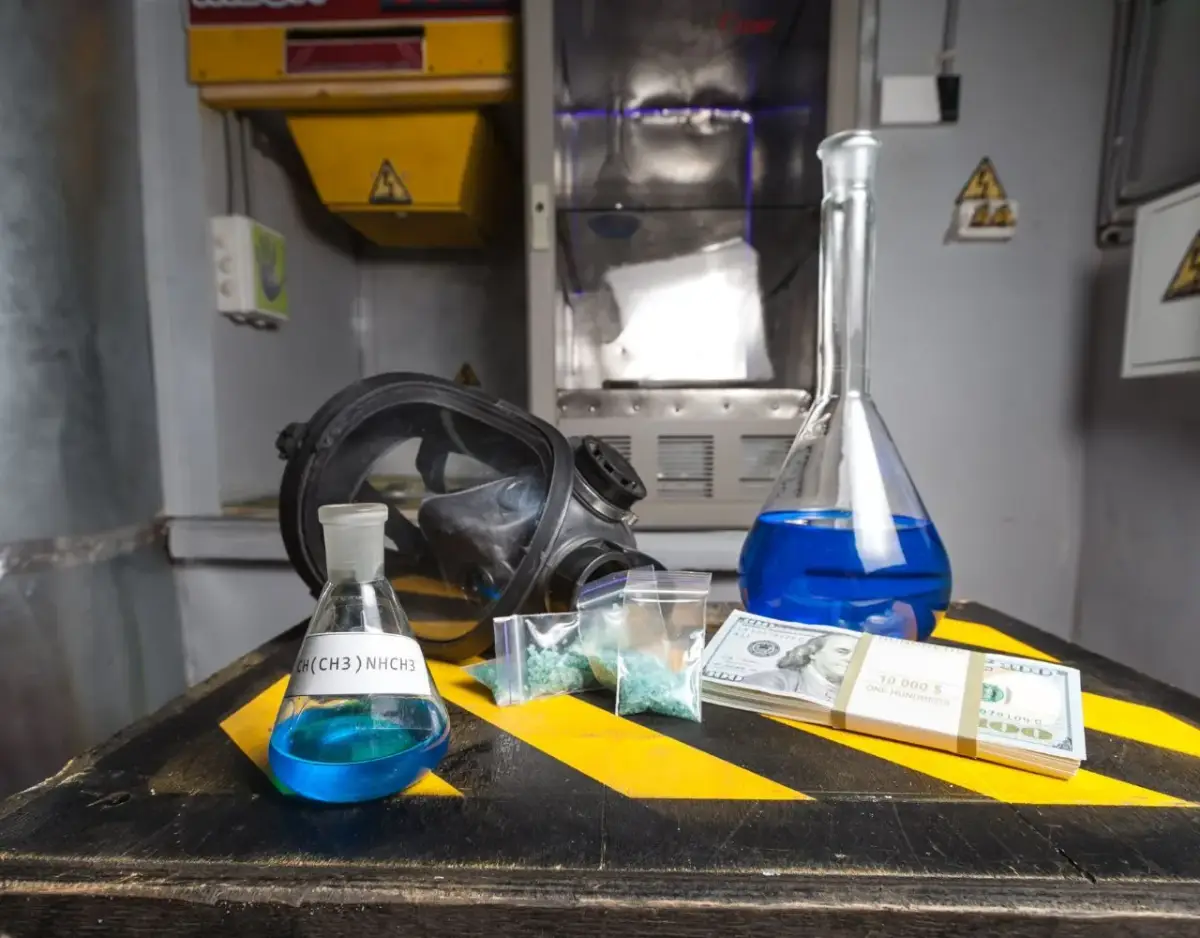
Manufacturing methamphetamine in South Carolina is a felony with serious penalties. The penalties are set by statute and depend on whether the person has prior offenses and on the amount of methamphetamine involved. State law also creates separate offenses for related conduct, such as disposing of methamphetamine production waste or manufacturing methamphetamine in the presence of a child.
A drug attorney at Touma Law Group can review the charge and explain your options. Call now at (803) 879-4499. A licensed South Carolina attorney at the firm must review the facts of your case before you rely on the general information on this page.
Meth Manufacturing Charges or Possession with Intent to Distribute
Under South Carolina law, “manufacture” means the production, preparation, propagation, compounding, conversion, or processing of a controlled substance, directly or indirectly, by extraction or by chemical synthesis. It includes packaging, repackaging, and labeling, but it does not include a person preparing a controlled substance for his or her own use (S.C. Code Ann. § 44-53-110).
Manufacturing methamphetamine and possessing meth with intent to distribute are both felonies under S.C. Code Ann. § 44-53-375(B). The statute provides these penalties:
- First offense: up to 15 years in prison or a fine of up to $25,000, or both.
- Second offense: 5 to 30 years in prison or a fine of up to $50,000, or both.
- Third or subsequent offense: 10 to 30 years in prison or a fine of up to $50,000, or both.
A second or subsequent offense is defined in S.C. Code Ann. § 44-53-470.
Possession of equipment or paraphernalia used in the manufacture of methamphetamine is prima facie evidence of intent to manufacture (S.C. Code Ann. § 44-53-375(D)). The Fourth Amendment protects against unreasonable searches and seizures, so a lawyer can review whether the search that led to the charge was lawful (U.S. Const. amend. IV).
Manufacturing meth is a serious offense, and it is important for anyone charged to seek legal advice from a criminal defense attorney about the specific facts of the case.
Trafficking Methamphetamine
Trafficking methamphetamine is a separate felony. A person can be charged with trafficking for knowingly selling, manufacturing, delivering, purchasing, or bringing into South Carolina, or for being in actual or constructive possession of, ten grams or more of methamphetamine (S.C. Code Ann. § 44-53-375(C)). The penalties depend on the weight and on prior offenses. No part of a trafficking sentence may be suspended, and probation may not be granted. A person sentenced to a 25-year mandatory term is not eligible for parole (S.C. Code Ann. § 44-53-375(F)).
Property connected to a drug offense may also be subject to forfeiture (S.C. Code Ann. § 44-53-520).
10-28 Grams
For ten grams or more but less than 28 grams, the statute provides:
- First offense: 3 to 10 years in prison and a $25,000 fine.
- Second offense: 5 to 30 years in prison and a $50,000 fine.
- Third or subsequent offense: a mandatory minimum of 25 years, up to 30 years, and a $50,000 fine.
28-100 Grams
For 28 grams or more but less than 100 grams, the statute provides:
- First offense: 7 to 25 years in prison and a $50,000 fine.
- Second offense: 7 to 30 years in prison and a $50,000 fine.
- Third or subsequent offense: a mandatory minimum of 25 years, up to 30 years, and a $50,000 fine.
100-200 Grams
For 100 grams or more but less than 200 grams, the statute provides a mandatory term of 25 years in prison and a $50,000 fine.
200-400 Grams
For 200 grams or more but less than 400 grams, the statute provides a mandatory term of 25 years in prison and a $100,000 fine.
400 or More Grams
For 400 grams or more, the statute provides 25 to 30 years in prison, with a mandatory minimum of 25 years, and a $200,000 fine.

Those charged with manufacturing or trafficking methamphetamine should seek legal advice from a criminal defense attorney as soon as possible.
Disposal of Meth Production Waste
South Carolina makes it a felony to knowingly cause waste from the production of methamphetamine to be disposed of, or to knowingly assist, solicit, or conspire with another person to dispose of it. A first offense is punishable by up to five years in prison or a fine of up to $5,000, or both. A second or subsequent offense is punishable by up to ten years or a fine of up to $10,000, or both (S.C. Code Ann. § 44-53-376).
If the violation requires an emergency or environmental response, the person convicted must also pay restitution to the public entities involved for the reasonable cost of their response. The statute exempts people and agencies who are lawfully tasked with the proper disposal of methamphetamine production waste (S.C. Code Ann. § 44-53-376).
Manufacturing Meth Charges in SC
Several other provisions can apply when methamphetamine is manufactured:
- A person who is 18 or older and manufactures methamphetamine in the presence of a minor child, or knowingly permits a child to be in an environment where methamphetamine is being made or where the materials for making it are stored, can be charged under a separate statute. A first offense is punishable by up to five years in prison or a fine of up to $5,000, or both (S.C. Code Ann. § 44-53-378). A person 18 or older may also be charged with unlawful conduct toward a child if a child was present at any time during the unlawful manufacture of methamphetamine (S.C. Code Ann. § 44-53-375(G)).
- Manufacturing a controlled substance within one-half mile of the grounds of a school, a public playground or park, a vocational or trade school, or a college or university is a separate felony punishable by a fine of up to $10,000, imprisonment of up to ten years, or both. The person must know that he or she is within that distance (S.C. Code Ann. § 44-53-445).
- Pretrial intervention: A person must not be considered for pretrial intervention if charged with a crime of violence as defined in South Carolina law, and that definition includes manufacturing or trafficking methamphetamine under § 44-53-375, unless the solicitor determines the elements of the crime do not fit the charge (S.C. Code Ann. § 17-22-50 and § 16-1-60).

It is important for those charged with manufacturing methamphetamine to seek legal advice as soon as possible. A possession of methamphetamine charge involves different penalties from a manufacturing charge.
Call Touma Law Group About Your Drug Charge
Being charged with meth manufacturing in South Carolina is serious. A lawyer can explain the charges, review the evidence, and discuss your options. The penalties described on this page are general statutory ranges, and a licensed South Carolina attorney at Touma Law Group must review the facts of your case before you rely on them.
Contact the Touma Law Group today for a free consultation to discuss your meth manufacturing charges.