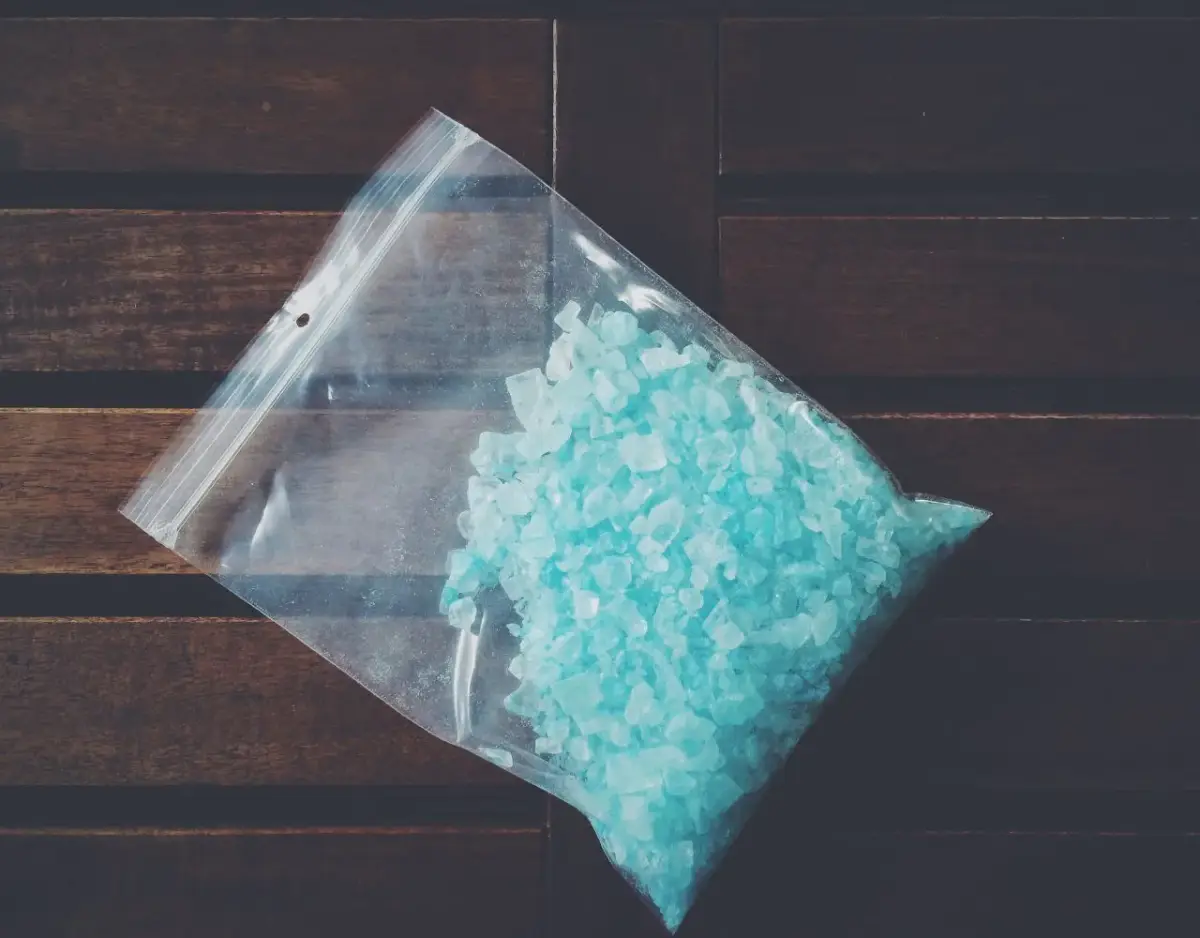
Possession of meth in South Carolina is a serious drug offense. A conviction can bring jail or prison time, fines, and a criminal record, and the amount involved, the facts, and any prior convictions all affect the charge. This page is general information, not legal advice, and a licensed South Carolina attorney at the firm must review the facts of a case before anyone relies on it.
If you are facing possession of meth charges in South Carolina, speak with a criminal defense attorney to understand your rights and your options. Contact Touma Law Group today for a consultation.
Our team of drug possession attorneys can review the evidence in your meth charge and explain how the law applies to your case.
What is Possession of Meth?
Meth-related crimes are serious criminal offenses in South Carolina. Under S.C. Code Ann. § 44-53-375(A), possessing less than one gram of methamphetamine is the offense of simple possession. Possessing one gram or more is treated differently, because it is prima facie evidence of a violation of S.C. Code Ann. § 44-53-375(B), the section that covers manufacturing, distributing, delivering, or possessing with the intent to do so.
Possession can be actual possession or constructive possession. Actual possession means the drug was on the person. Constructive possession means the State argues the person had the right and power to control the drug, and the State must also prove that the person knew about the drug and intended to control it. Control of the place where the drug was found does not by itself establish constructive possession (State v. Stewart, Opinion No. 28029 (S.C. 2021)).
Law enforcement may use search warrants, traffic stops, or surveillance to try to establish possession of meth. If you are facing these charges, speak with an attorney early so your rights are protected and the evidence and how it was obtained can be reviewed.
What Happens If I Face Simple Meth Possession Charges?
Under S.C. Code Ann. § 44-53-375(A), a first offense of possessing less than 1 gram of meth is a misdemeanor punishable by up to 3 years in prison, a fine of up to $5,000, or both. For a first offense, the court, with the approval of the solicitor, may require the person to complete a drug treatment and rehabilitation program. A second offense is a felony punishable by up to 5 years in prison, a fine of up to $7,500, or both. A third or later offense is a felony punishable by up to 10 years in prison, a fine of up to $12,500, or both. The court may suspend the sentence and grant probation for these simple possession offenses. If the State alleges possession with intent to distribute or trafficking, the charges and penalties are higher.
A person who has not previously been convicted of an offense under the state’s controlled substances article or of certain related state or federal drug offenses may be eligible for a conditional discharge for simple possession of meth under S.C. Code Ann. § 44-53-450. The court defers proceedings and, if the person completes the terms, dismisses the charge. This can happen only once for any person.
Why You Should Fight a Simple Possession Charge
It is important to take simple possession charges seriously because a conviction can have long-lasting consequences for your personal and professional life. Beyond the penalties set by law, a conviction can affect your family life and your work life.
A drug conviction appearing on your criminal record can make a job search harder, because many employers run background checks. A conviction can also affect other parts of your life, including housing and some licenses and programs, and the rules differ by agency, so ask the agency or an attorney about your situation.

Any conviction also counts toward whether a later offense is treated as a second or subsequent offense (S.C. Code Ann. § 44-53-470), and repeat offenses carry heavier penalties. Therefore, it is wise to consult with an attorney regarding strategies for fighting such charges.
Manufacturing Meth or Possession with Intent to Distribute
Possession with intent to distribute (PWID) methamphetamine is a felony in South Carolina. Possession of one gram or more of methamphetamine is prima facie evidence of a violation of the distribution and manufacturing section, which means the State may rely on the quantity as evidence of intent. It is not a conviction, and the person may challenge it at trial (S.C. Code Ann. § 44-53-375(B)).
S.C. Code Ann. § 44-53-375(B) covers manufacturing, distributing, dispensing, delivering, and purchasing methamphetamine, and possessing it with the intent to do so. It is a felony. A first offense is punishable by up to 15 years in prison and a fine of up to $25,000, or both. A second offense is punishable by 5 to 30 years in prison or a fine of up to $50,000, or both. A third or later offense is punishable by 10 to 30 years in prison or a fine of up to $50,000, or both. For a first or second offense the sentence may be suspended and probation may be granted. For a third or later offense, that is allowed only if all prior offenses were simple possession under subsection (A). Possession of equipment or paraphernalia used in the manufacture of methamphetamine is prima facie evidence of intent to manufacture (S.C. Code Ann. § 44-53-375(D)).
What Are Some Meth Paraphernalia?
Drug paraphernalia is a separate offense from a drug charge. Under S.C. Code Ann. § 44-53-391, a person found guilty of violating the paraphernalia statute is subject to a civil fine of not more than $500, and the statute says the fine does not give rise to any disability or legal disadvantage based on conviction for a criminal offense. The statute defines paraphernalia as items used, designed for use, or intended for use with controlled substances, and a court considers factors such as statements by the owner, how close the object was to controlled substances, and any residue on it.
The distinction between items for distribution and items for use can matter to a person facing a paraphernalia charge, because everyday items like scales or spoons can be used in either way. Whether an item is paraphernalia depends on the statutory factors and the facts of the case.
South Carolina also has separate laws on products used to make methamphetamine. It is unlawful for most people to knowingly possess a product containing 9 grams or more of ephedrine, pseudoephedrine, or phenylpropanolamine, with exceptions for certain consumers and products (S.C. Code Ann. § 44-53-375(E)). Disposing of waste from methamphetamine production is a separate felony (S.C. Code Ann. § 44-53-376). If authorities allege that you possess materials or waste connected to manufacturing, you could face additional charges.
What is Considered a Drug Trafficking Charge?
Trafficking in methamphetamine is a separate offense from simple possession and from possession with intent to distribute. It begins at 10 grams or more of methamphetamine, or of a mixture containing it (S.C. Code Ann. § 44-53-375(C)). The statute does not require proof that the person intended to sell the drug, because knowing actual or constructive possession of the quantity is enough. See our page on penalties for meth trafficking for the full list of tiers. The tiers are set by weight and prior offenses:
10 grams or more but less than 28 grams
- 1st offense: 3 to 10 years in prison and a fine of $25,000.
- 2nd offense: 5 to 30 years in prison and a fine of $50,000.
- 3rd and subsequent offenses: a mandatory minimum of 25 years and up to 30 years, and a fine of $50,000.
28 grams or more but less than 100 grams
- 1st offense: 7 to 25 years in prison and a fine of $50,000.
- 2nd offense: 7 to 30 years in prison and a fine of $50,000.
- 3rd and subsequent offenses: a mandatory minimum of 25 years and up to 30 years, and a fine of $50,000.
100 grams or more
- 100 grams or more but less than 200 grams: a mandatory 25 years and a fine of $50,000.
- 200 grams or more but less than 400 grams: a mandatory 25 years and a fine of $100,000.
- 400 grams or more: 25 to 30 years, with a mandatory minimum of 25 years, and a fine of $200,000.
No part of a trafficking sentence may be suspended and probation may not be granted, and a person sentenced to a mandatory 25-year term is not eligible for parole, extended work release, or supervised furlough (S.C. Code Ann. § 44-53-375(F)).
How Can I Defend Against Meth Charges?
Facing charges related to possessing methamphetamine is a serious matter, and it can affect your future. If you are in this situation, it is important to get the help of a criminal defense attorney as soon as possible.
Defense attorneys review how the evidence was gathered, who had control of the place or vehicle where the drugs were found, how the drugs were weighed and tested, and whether the State can prove knowledge and intent. In some situations, there may be options that can lead to a reduced charge or a dismissal. For instance, a first-time offense may be negotiated with the prosecution for either a dismissal of the case or a reduction in the penalties. No result can be promised, and the options depend on the facts and the person’s record.

More serious charges, such as distribution or trafficking of methamphetamine, carry mandatory prison terms and are much more difficult to handle on your own. Trafficking is also listed among the violent crimes in S.C. Code Ann. § 16-1-60, and a person charged with a crime of violence as defined there is generally not considered for pretrial intervention unless the solicitor determines the elements of the crime do not fit the charge (S.C. Code Ann. § 17-22-50). An attorney can explain how plea negotiations or other procedures may apply to a specific case.
Speak to a Drug Defense Lawyer Now
If you or someone you know has been accused of possession of meth in South Carolina, it is important to seek legal advice as soon as possible. A defense lawyer can review the charge and explain your options.
Contact Touma Law Group today for a free consultation. One of our criminal defense attorneys can evaluate your specific case, review the evidence against you, and explain how to protect your rights. No lawyer can promise a particular outcome. Contact us.